Keeping babies safe during naps is one of the most important jobs you do. This short guide helps directors and providers follow clear steps to protect infants. In your #Safe #Sleep plan for #Infants, check the #Crib and practice #Supervision every nap.
Why this matters:
1) Sleep-related deaths happen fast. Simple, consistent steps lower the risk. See guidance from the CDC and the AAP via ChildCareEd resources like Safe Sleep for Babies Buy Now $0.00.
2) Families trust your program. Clear rules, staff training, and consistent practice build that trust and keep babies safer.
How should babies sleep in childcare?
Follow these simple rules every sleep time. The AAP and CDC call them the basics.
- 🛏️ Place babies on their back for every sleep—naps and night. The CDC supports this as the safest position.
- 🧷 Use a firm, flat sleep surface in a safety-approved crib, bassinet, or play yard. Cover only with a tight fitted sheet.
- 👶 Keep the sleep area empty: no pillows, bumper pads, loose blankets, or stuffed toys. "Bare is best." See ChildCareEd guidance.
- 📍 Room-share when possible (crib in the same room), but do not bed-share. Room-sharing can lower risk; bed-sharing raises it.
- 🍼 Offer a pacifier at sleep time if the parent agrees. If breastfeeding, wait until breastfeeding is established.
If a health care provider writes a specific medical order for a different sleep position, keep a signed note on file and follow it exactly. State requirements vary - check your state licensing agency.
What equipment and room rules keep sleep spaces safe?
Good gear and careful setup make naps safer. Follow these checks every day.
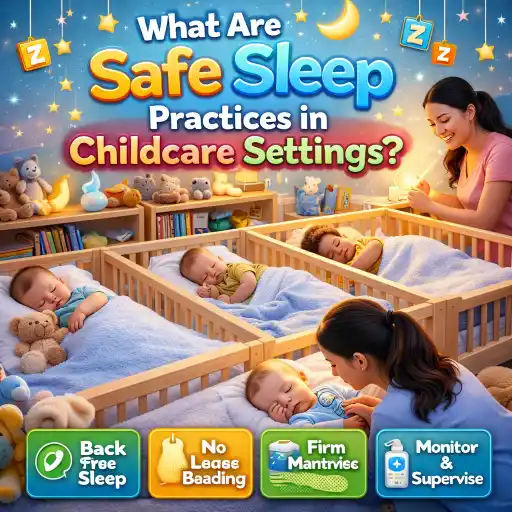
- 🔎 Inspect cribs and mattresses:
- Use only cribs that meet current safety standards. Resources like Nemours KidsHealth and Health Canada explain what to look for.
- Mattress must be firm, fit snugly (no large gaps), and have a fitted sheet only.
- 🧰 Check used or donated cribs carefully. If parts are missing or it’s older than safe standards, don’t use it. See ChildCareEd crib checks.
- ⚠️ Remove hazards near the crib: cords, blinds, wall hangings, and loose cords from monitors.
- 🧼 Clean and disinfect surfaces and sleep linens per the CDC cleaning guidance. Keep chemicals stored safely and out of reach.
- 📋 Post a crib checklist and keep a log of visual checks during naps.
How do we train staff and communicate with families?
Everyone must follow the same rules. Make training, policy, and family talks simple and routine. Emphasize to staff how training reduces SIDS risk and promotes infant well-being by reviewing the evidence and practical steps in why safe sleep training matters: preventing SIDS and promoting infant well-being.
- 📄 Write a short safe sleep policy that follows AAP/CDC guidance. Use template resources like ChildCareEd’s Simple Guide Buy Now $0.00 and sample policies available on ChildCareEd.
- 🎓 Train all staff (including substitutes) before they work with infants. ChildCareEd offers courses such as Safe Sleep Training
 Buy Now $16.00 and Prevention of SIDS Buy Now $8.00.
 - 🤝 Talk with families at enrollment. Share your written policy and ask parents to sign acknowledgment. If they request a different sleep plan, accept only a signed medical order from a health provider.
- 🗂️ Keep records: training certificates, crib inspection logs, sleep logs, and any medical exceptions.
State rules may add steps — state requirements vary - check your state licensing agency. Training and clear notes help your team be consistent and confident.
What common mistakes should we avoid, and how do we fix them?
Many sleep problems are fixable with simple habits. Watch for these common mistakes:
- 🟠 Adding blankets, bumpers, or toys to the crib. Fix: Use wearable sleepers or sleep sacks instead.
- 🔵 Letting babies nap long-term in car seats, swings, strollers, or bouncy seats. Fix: Move sleeping infants to a firm crib as soon as practical.
- 🟣 Using wedges, positioners, or inclined sleepers. Fix: Stop using these; the AAP and FDA advise against them. See AAP summary.
- 🟢 Inconsistent sleep position among staff. Fix: Train, test, and post the rule: back for every sleep.
- ⚠️ Poor supervision or closed doors during naps. Fix: Use active supervision—visual checks and logs. Never leave a sleeping baby alone in a closed room.
Quick FAQ
- Q: Can a baby sleep with a pacifier? A: Yes if parents agree. Offer it at sleep time but don’t force it.
- Q: When can a baby sleep on their tummy? A: Only when they can roll both ways on their own. Until then, always back to sleep.
- Q: Do monitors prevent SIDS? A: No — monitors don’t prevent SIDS. They can help with alarms for medical needs but are not a substitute for safe sleep practices (see CDC).
- Q: What if a parent refuses the safe sleep policy? A: Explain kindly, share facts and resources, and accept only a signed medical order for exceptions.
Conclusion
Safe sleep in childcare is simple when staff follow clear, practiced steps: Back, firm Crib, Bare is best, and active Supervision. Use checklists, train every staff member, and keep good records. ChildCareEd offers many helpful courses and tools like posters Buy Now $0.00, handouts Buy Now $0.00, and online trainings to support your program. For medical exceptions always get a written order, and remember state requirements vary - check your state licensing agency. You and your team make naps safer every day with steady, gentle consistency.
For core guidance, see the CDC, AAP summaries like the one shared on AAP/American Family Physician, and ChildCareEd resources above.
- Help Me Sleep Safely: SIDS/SUID Prevention
- How To Keep A Healthy Class for Infants/Toddlers
- SIDS: Saving Babies: A Change of Position, A Change in Tradition
- SIDS: Saving Babies: A Change of Position, A Change in Tradition
- Basic Health & Safety and Breastfeeding Awareness
- Success in Safety for Babies
- Positive Attention: Interactions & Supervision for Infants & Toddlers
- Safe Sleep Training
- Texas Director Credential
- Prevention of Sudden Infant Death Syndrome and Use of Safe Sleep Practices
- Safe sleep basics (and common mistakes to avoid)
- Why Safe Sleep Training Matters: Preventing SIDS and Promoting Infant Well-Being
- Recursos en Español sobre el Sueño Seguro del Bebé
- Capacitación en Salud y Seguridad Preventiva en Línea para Proveedores de Cuidado Infantil
- Lista para Guardería en Casa en Illinois: Cómo Iniciar una Guardería en el Hogar
- Cómo Ser Maestra de Preescolar en Dakota del Norte
- How can California child care providers create safer classrooms for infants, toddlers, and preschoolers?
- How can childcare centers use simple health and safety best practices every day?
- What are the infant care best practices Minnesota child care providers should follow?
- What are safe sleep practices in childcare settings?
- How can Safe Sleep Training help childcare providers keep babies safe?
- What are the basic child care safety standards we must follow?
- What Are Pennsylvania's Rules for Safe Daycare Temperatures and How Do We Follow Them?
- How can child care providers consistently implement safe sleep practices for infants and toddlers?
- How can responsive caregiving during feeding, diapering, and rest improve infant care in group settings?
- What Must Texas Child Care Programs Put in Writing for Safe Sleep?
- Child Care Facility Rules and Regulations DCF Practice Test: What Should You Study?
- When an Infant’s Daily Pattern Changes, How Can Providers Adjust the Routine Together?
- Infant Room Storage: How Can You Keep Extra Items Out of Sleep Spaces?
