Caring for babies is one of the most important jobs in child care. This article is for directors and providers who want clear, simple steps to plan or choose infant care #training. You will learn what training covers, why it matters, how to finish required courses, and how to turn learning into safer daily routines. State requirements vary - check your state licensing agency.
Why it matters:
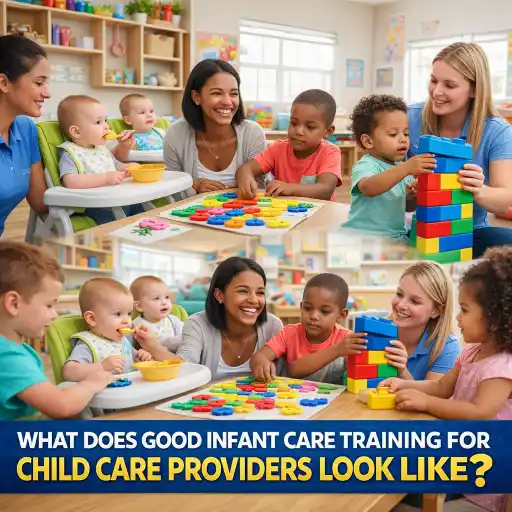
1. Babies grow fast and need safe, predictable care. Training helps staff notice needs and support early learning. See the full 45-hour course content for lots of useful topics on ChildCareEd's 45-Hour Infant and Toddler Curriculum  Buy Now
 $399.00$275.00.
2. A few safety steps—like correct sleep methods and CPR—save lives. Learn more about safe sleep training at ChildCareEd Safe Sleep Training Buy Now $16.00 and the CDC’s safe sleep guidance here.
What is infant care training and who should take it?
1. Infant care training is learning that helps staff safely care for babies (birth to 3 years). Good programs mix facts, videos, and practice.
2. Who should take it?
- 👶 Lead teachers and assistants who work with babies.
- 🧑🏫 Directors and supervisors who set policy and watch staff.
- 🏠 Family child care providers and substitutes who may care for infants.
3. What formats are common?
- Online self-paced courses (good for busy schedules).
- Instructor-led Zoom or in-person classes for discussion and practice.
- Blended options that add hands-on skills like CPR or feeding demos (see ChildCareEd first aid & CPR options at ChildCareEd CPR/First Aid Buy Now $95.00).
4. A common choice for deep learning is a 45-hour course. It covers many topics from safe sleep to development and can count toward state credentials in some places—check your licensing office and the ChildCareEd 45-hour page here Buy Now $399.00$275.00.
What should a good infant care training teach me?
1. Safety basics: safe sleep, diapering, cleaning, illness prevention. For safe sleep rules, review ChildCareEd’s safe sleep resources poster Buy Now $0.00 and the CDC guidance here. #SafeSleep
2. Feeding and nutrition: paced bottle feeding, breastmilk handling, starting solids, allergy plans, and clean bottle care. ChildCareEd has step-by-step guides like how to handle food and mealtimes. #nutrition
3. Development and observation: how babies grow, milestones to watch, and simple notes you can share with families. Use CDC milestones from Learn the Signs. Act Early.
4. Emergency skills: infant CPR, choking response, and first aid. Many programs require in-person skill checks. Find in-person child & infant CPR on ChildCareEd here Buy Now $95.00 and compare options like the Red Cross course here. #CPR
5. Family partnerships and policies: how to talk with parents, share feeding logs, and require physician notes for sleep or feeding exceptions. ChildCareEd offers templates and free resources at Keeping Them Safe: Infants & Toddlers.
How can I finish training and make it useful in my program?
1. Plan your time. Example plan for 45 hours:
- 🗓️ Do 5 hours per week and finish in about 9 weeks.
- 📌 Block quiet time to study—don’t take online training while supervising children.
- 📥 Save certificates right away: print and store PDF copies for staff files.
2. Use practice tasks to make learning stick:
- 📝 After each module, pick 1 idea to try the next day (for example, a new crib checklist).
- 👥 Share one tip at staff meetings and practice a short drill (e.g., unresponsive infant response).
- 📋 Put new policies in writing and post them where staff and families can see them.
3. Check approvals. Some states need specific trainers or in-person skill checks. State requirements vary - check your state licensing agency before you enroll.
4. Use free tools and follow-up trainings. ChildCareEd has focused short courses (safe sleep, feeding, observation) and free PDFs to support staff learning: free resources.
How do I keep babies safe every day: sleep, feeding, and emergencies?
1. Safe sleep checklist (simple and required):
- 😴 Place baby on back for every sleep—naps and night.
- 🛏️ Use a firm, flat mattress with a fitted sheet only (no blankets, bumpers, or toys).
- 📍One baby per crib, and put cribs in same room as caregivers when possible.
These steps follow the CDC safe sleep advice here and ChildCareEd trainings like Safe Sleep Training Buy Now $16.00.
2. Feeding safety:
- 🍼 Label and date all bottles and breastmilk. Throw away leftovers after a feeding.
- 🍽️ Cut foods small and soft to prevent choking. Supervise every bite.
- ⚠️ Keep an allergy list in the kitchen and classroom and follow action plans for allergic reactions.
ChildCareEd guidance on feeding and starting solids is clear and practical: From Bottles to Bites.
3. Emergencies and CPR:
- 🚑 Train at least some staff in pediatric CPR and keep certificates current (many programs choose ChildCareEd or Red Cross classes).
- 🧰 Keep a stocked first aid kit and post emergency numbers.
- 🔁 Practice drills so staff know what to do and who calls 911.
4. Common mistakes and how to avoid them:
- ❌ Letting soft bedding stay in cribs — remove and use sleep sacks.
- ❌ Mixing up bottles — label and do a two-item check (name + date).
- ❌ Waiting until the last minute to train staff — make a yearly training calendar and spread hours across months.
5. Where to keep help: Use ChildCareEd pages for core courses (45-hour curriculum link Buy Now $399.00$275.00, safe sleep link Buy Now $16.00, CPR/First Aid link Buy Now $95.00) and the CDC milestones page Learn the Signs for development checks. #infant
Summary
1. Choose training that covers safety, feeding, development, family partnerships, and emergency skills. ChildCareEd offers full-length and short courses to meet many needs.
If you want help comparing formats and flexible delivery, read our guide on why ChildCareEd is the ideal choice for your training needs.
2. Make a plan: set study time, save certificates, practice new steps in your classroom, and keep a training calendar for staff.
3. Remember: state requirements vary - check your state licensing agency. You are doing important work. Each hour of training helps you keep babies safer and supports their growth.
FAQ (quick)
- Q: How long is the 45-hour course? A: It is 45 clock hours; often offered online or blended—see ChildCareEd Buy Now
$399.00$275.00. - Q: Do I need in-person CPR? A: Many states require in-person skill checks for CPR—check your licensing agency.
- Q: Where can I get free resources? A: ChildCareEd free resources page has posters and handouts: Keeping Them Safe resources.
- Q: How often refresh training? A: Aim for yearly refreshers and re-certify CPR per course rules.
- CDA Family Child Care Credential with Portfolio Review
- CDA Bridge Bundle: Preschool
- CDA Bridge Bundle: Family Child Care
- 24 Hour Texas Pre-Service
- CDA Bridge Bundle: Family Child Care without Portfolio Review
- CDA Bridge Bundle: Infant/Toddler without Portfolio Review
- CDA Bridge Bundle: Preschool without Portfolio Review
- CDA Bridge Bundle: Infant/Toddler
- 45-Hour Infant and Toddler Curriculum
- Texas Director Credential
- Does Maryland's Basic Health and Safety Training Cover Today's Biggest Risks?
- 🌙 ¿Cómo afecta el tiempo frente a las pantallas el sueño y el comportamiento infantil? 😴
- Cómo Abrir Una Quardería En Casa Sin Dinero?
- Cómo usar tu certificación de 90 horas en Maryland para completar tu CDA
- Capacitación en Salud y Seguridad Preventiva en Línea para Proveedores de Cuidado Infantil
- Regulaciones de Licenciamiento de Cuidado Infantil en California para Centros y Hogares de Cuidado Infantil Familiar
- Normas de Licenciamiento de Cuidado Infantil en Virginia para Centros Diurnos Infantiles y Hogares Diurnos Familiares
- Proporciones de Cuidado Infantil y Tamaños de Grupo por Edad en Maryland (Guía Rápida para Centros y Hogares)
- Horas de Capacitación Anual para Proveedores de Cuidado Infantil en Maryland
- Lista para Abrir una Guardería en Casa en Virginia: Cómo Empezar
- Lista para Guardería en Casa en Illinois: Cómo Iniciar una Guardería en el Hogar
- Lista para Guardería en Casa en Texas: Cómo Iniciar una Guardería en el Hogar
- Capacitación Previa al Servicio para Proveedores de Cuidado Infantil en Dakota del Norte
- Capacitación Previa al Servicio para Proveedores de Cuidado Infantil en Maryland
- What should child care providers learn in SIDS training?
- What is the best infant care training for child care providers?
- Online CDA Classes: A Flexible Path Toward Your CDA Credential
- Which First Aid Course Do Child Care Providers Need for Licensing?
- How Can Providers Notice Developmental Progress Hidden in an Infant’s Daily Routine?
