Seeing the same activity return on your schedule isn’t wasted time—it’s a powerful way to turn familiar moments into cumulative learning. If you want practical ways to plan repeated experiences, measure progress, and use those cycles to strengthen teaching practice, start with Lesson Planning for Preschoolers  Buy Now $24.00 and Tracking Progress, Shaping Futures: Observation & Assessment Skills Buy Now $55.00. These courses help you embed intentional repeats into lesson design and document outcomes so repetition drives measurable #development and professional growth. Complement these with Teaching with Purpose to ensure your repeated activities are explicitly aligned to children's developmental levels and inclusive teaching strategies.
Why does revisiting the same activity matter for learning?
Revisiting an activity across weeks or months converts short experiences into durable learning by spacing practice, varying context, and deepening complexity. For children, repetition supports consolidation of motor patterns, vocabulary, and social routines: the same puzzle or song repeatedly offered becomes a scaffold where new language or problem-solving is layered in over time. In your #classroom, planned repetition builds predictability (which lowers stress and frees cognitive resources), creates opportunities for assessment, and supports individualized scaffolds for children at different levels.
Practical benefits for providers include stronger lesson coherence, easier transitions between centers, and clearer documentation for families and licensors. Embed a single measurable target (e.g., a vocabulary word, a fine-motor step, or a turn-taking routine) and return to it in three different formats: a circle-time prompt, a center activity, and a brief home suggestion. That triangulation accelerates transfer and helps you show progress.
How does repetition change the brain and behavior?
From a neurodevelopmental perspective, repeated practice strengthens synaptic connections and creates multisensory memory traces. Spaced repetitions (short, frequent returns with mild variations) produce more durable retention than massed repetition. Repetition also supports regulation: predictable sequences let children shift from coping toward refinement of skills. The pedagogical implication is simple: repetition must be purposeful—paired with new language, slightly harder challenges, or alternate materials—so each revisit is refinement rather than rote imitation.
Use observation data to decide when to escalate challenge. For example, a block tower activity that a child rebuilds each month can be nudged with new constraints (smaller blocks, a blindfolded partner, or counting labels) to broaden spatial reasoning and introduce quantitative language. That cycle—repeat, observe, tweak—turns everyday play into targeted instruction and meaningful #language growth.
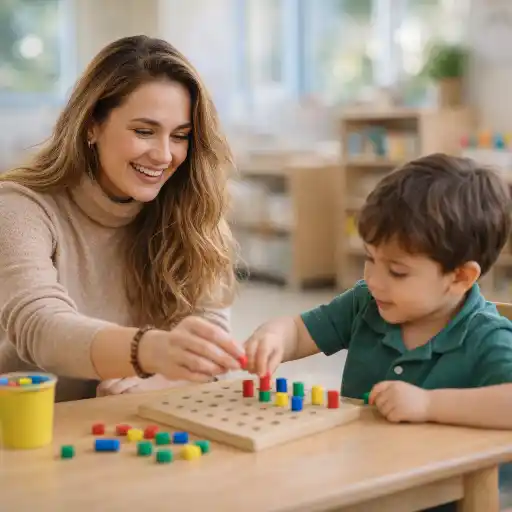
How do you design a year-long cycle of repeated activities?
Designing cycles means planning anchors, variations, and assessment points. Start with three planning tiers: entry (familiar setup), stretch (one or two added challenges), and transfer (new context or peer-teaching). Map a simple calendar: introduce the activity, revisit weekly for 2–3 weeks with small changes, and schedule a deeper revisit monthly. Over a semester, rotate 3–5 anchor activities so children practice across domains.
- 🎯 Pick one measurable target per activity (vocabulary, sequencing, or motor outcome).
- 🔁 Vary one variable each repeat: material, partner, language cue, or time limit.
- 📋 Embed a 1–2 item observation routine: photo + single sentence note.
- 🧭 Link to other centers: a song from circle time becomes a dramatic play prompt the next day.
For help turning this into written plans, ChildCareEd’s Lesson Planning for Preschoolers Buy Now $24.00 gives templates to map cycles and align repeats to learning objectives. If you need a broader view of growth across ages, consider the 45 Hour Child Growth and Development Buy Now $399.00 training to deepen your understanding of developmental sequences.
How should you document progress, share results with families, and use repeats for assessment?
Short, consistent documentation turns repetition into evidence. Use a weekly photo + one-line progress note for a target child and sync that with a simple rubric (emerging, developing, mastered). Share one clear family tip tied to the repeat ('Read this book three times this week and point to the red car—use the word 'big' once each read'). That keeps families involved and helps generalization at home.
Formalize at least one assessment loop per month: select 1–2 children, one target, and collect two snapshots (beginning and end of cycle). The course Tracking Progress, Shaping Futures Buy Now $55.00 offers concrete observation tools and guidance on translating notes into short- and long-term goals. And remember: state requirements vary - check your state licensing agency when you document records or plan family notifications.
What common mistakes occur and how can you avoid them?
Programs often repeat activities without variation, neglect documentation, or keep the same supports for children who need escalation. Avoid these pitfalls by following three rules: (1) change one variable each revisit; (2) pair repeats with targeted language prompts or a slightly harder success step; and (3) record one data point per child per cycle. Common mistakes and fixes:
- ❌ Repeating with no variation → ✅ Change one thing each time (material, tempo, or partner).
- ❌ No documentation → ✅ Use a 30-second photo + sentence routine and link it to a goal.
- ❌ Assuming all children benefit equally → ✅ Differentiate: same activity, layered expectations.
- ❌ Overusing screens for repeats with young children → ✅ Prefer hands-on, social repeats for infants/toddlers.
To deepen play-based repetition strategies, explore ChildCareEd’s Role of Play in Learning Buy Now $16.00, which shows how play cycles naturally scaffold developmental practice.
FAQ — Practical questions providers ask
Q: How often should I repeat an activity? A: Short, frequent returns (daily short bursts or several times a week) combined with spaced monthly deep revisits work well. Q: How long should each repeat be? A: Keep repeats brief—5–20 minutes—embedded in play or routine. Q: What if a child shows no growth? A: Document examples, adjust supports, and involve families. If concerns persist, follow referral guidance—state requirements vary - check your state licensing agency. Q: Which training helps my team implement this? A: Tracking Progress, Shaping Futures Buy Now $55.00 and Lesson Planning for Preschoolers Buy Now $24.00 pair well for planning and documenting repeated learning cycles.
Conclusion
Revisiting the same activity across the year is not a fallback—it’s a deliberate strategy to build stronger neural pathways, scaffold social-emotional safety, and produce measurable learning gains. Plan purposeful cycles, vary a single element each repeat, document brief snapshots, and involve families in small, actionable ways. Use targeted professional learning—Lesson Planning for Preschoolers Buy Now $24.00, Tracking Progress, Shaping Futures Buy Now $55.00, and Role of Play in Learning Buy Now $16.00—to strengthen team practice. When you design repeats with purpose, your everyday rituals become engines of #repetition, #development, and meaningful #observation that lead to clearer outcomes for children and stronger classroom practice.
- 45 Hour Child Growth and Development
- CDA Home Visitor Subject Area 3 Part 3 Birth to 5
- 45 Hour Preschool Methods and Materials
- From Tantrums to Triumphs: Equipping Preschoolers with Self-Regulation Skills
- Birth to Five CDA Credential with Portfolio Review
- Pediatric RSV First Aid & CPR/AED
- 45 Hour School Age Methods and Materials
- Texas Director Credential
- Wellness in Action: Teaching Healthy Habits to Children
- Every Moment Matters: Schedules and Transitions
- “The CDA Chronicles: Adventures of a CDA in Training
- CDA Certification en Español: Recursos y Consejos para Educadores Bilingües
- Recursos en Español sobre el Sueño Seguro del Bebé
- 10 Ejemplos de Cómo la Cultura Influye en el Desarrollo Infantil
- Proporciones de Cuidado Infantil y Tamaños de Grupo por Edad en Nueva Jersey (Guía Rápida para Centros y Hogares)
- Proporciones de Cuidado Infantil y Tamaños de Grupo por Edad en Virginia (Guía Rápida para Centros y Hogares)
- Canciones, juegos y preguntas de círculo para niños
- Why do repeated books, songs, and activities help children master new concepts?
- How to Manage a Preschool Classroom with Confidence
- How can daily reflection transform your practice as a child care professional?
- How Can Revisiting the Same Activity Throughout the Year Improve Learning and Classroom Practice?
- Can You Build a Leaf Bridge? Fall STEM Challenges for Pre-K
- Glow and Grow for Teacher Self-Reflection: What Went Well—and What Will You Try Next?
- How Can We Celebrate Every Family and Create a Classroom Where Everyone Is Represented?
- How Can Child Care Providers Teach Young Children About Fairness and Equity?
- Why Is Upper- versus Lowercase Sorting Great for Letter Recognition?
- How Can Child Care Providers Teach Holiday Vocabulary with Context and Care?
- How Can Child Care Providers Plan a Balanced Summer Learning Routine for Young Children?
- How Can Independent Practice Connect Numerals and Number Words?
- How Can Photographing the Same Outdoor Spot Help Children Notice Change?
