A classroom can do more than hold materials: it can invite children to notice a challenge, try an idea, and adjust without waiting for an adult to solve it. Explore Spaces that Support Discovery  Buy Now $24.00 to build practical knowledge about arranging environments that foster exploration; pair that learning with the Advanced Kids Maze Activity Buy Now $1.49, a printable resource offering progressively challenging mazes for children to practice visual tracking and problem-solving. Thoughtful changes to space and materials can help your team encourage capable, confident learners.
Why do learning spaces matter for independent problem-solving?
Young children solve problems throughout the day: a block structure tips, a puzzle piece resists, a route through a maze reaches a dead end, or a peer wants the same prop. These moments become learning opportunities when children have time, accessible materials, and supportive adults who do not rush to provide the answer. A thoughtfully arranged space can make the next step visible and manageable.
Head Start’s guidance on designing environments notes that accessible, well-organized spaces can help children independently reach materials, engage creatively, and practice problem-solving. The physical arrangement also affects what educators can observe and how readily they can keep children safe while allowing meaningful exploration.
For providers and directors, this is practical pedagogy, not simply decoration. When children can understand where materials belong and how to begin, educators may spend less time repeating directions and more time observing, listening, and offering a timely scaffold. Children gain repeated practice in decision-making, persistence, flexible thinking, and communication. A sense of agency grows through these ordinary, everyday chances to try.
How should you arrange a space so children can begin on their own?
Start with the child’s point of view. Can children see what is available, reach it safely, and tell where it belongs afterward? Low shelves, clearly defined centers, and picture-and-word labels reduce barriers to participation. Keep pathways open and maintain sightlines so children can move with purpose while staff provide active supervision.
Separate quiet, focused areas from noisier active play when the room allows. Use baskets or trays to make materials easy to select and return. Instead of presenting every item at once, offer a considered set of choices; a manageable selection can invite deeper engagement than crowded shelves. These principles are consistent with research and practice guidance on fostering engagement in inclusive settings, which emphasizes adapting physical, social, and temporal features to support children’s participation.
- Place familiar tools and materials within children’s reach, with clear labels showing where they go.
- Define centers with furniture, rugs, or shelves while preserving safe movement and supervision.
- Provide a calm spot where a child can pause, regulate, and return to a challenge when ready.
- Check the arrangement from different heights and consider mobility, sensory, and communication needs.
A small change—such as moving a puzzle basket to a child-height shelf—can make a real difference. Observe how children use the space before deciding what to change next.
Which materials and activities invite children to test ideas?
Choose materials that make thinking visible and allow more than one approach. Blocks, loose parts, simple puzzles, ramps, art tools, and pretend-play props can support planning, trial and error, and revision. An activity works best when the goal is understandable but the path is not prescribed: for example, “Can you make a path for the car?” leaves room for children to test and redesign.
Mazes can offer a focused, low-cost way to practice following a route, noticing choices, and responding to a dead end. The Advanced Kids Maze Activity Buy Now $1.49 includes five mazes that increase in difficulty and provides an opportunity to observe how children approach a challenge. Use it as one option among many—not as a substitute for hands-on, social, and open-ended play.
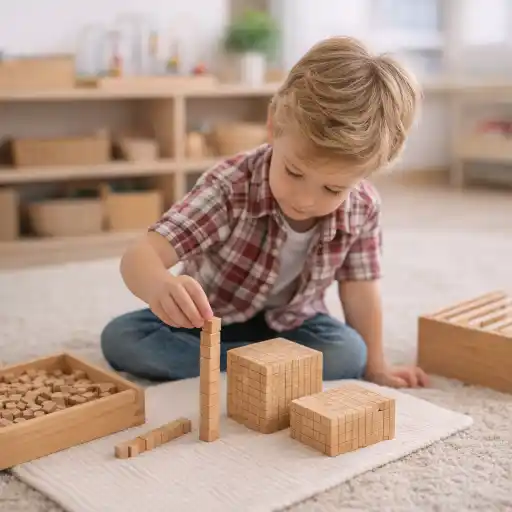
- Invite children to build a bridge that lets a toy pass underneath, then test and revise it.
- Offer a maze for finger-tracing, moving a small token, or drawing a route with a crayon.
- Provide loose parts and ask children what they might build, sort, or connect.
- 🌟 Ask, “What could you try next?” and give the child time to think before stepping in.
Notice the strategy, not only the finished product. A wrong turn or collapsed tower gives useful information; children learn when they can consider what happened and choose a next step.
How can educators support thinking without taking over?
Independent problem-solving does not mean leaving a child alone with frustration. It means offering responsive support while preserving the child’s role in the thinking. Pause to observe before intervening. A child may already be testing a solution, looking for a tool, or asking a peer for help. If the child is safe and engaged, a few moments of wait time can make room for initiative.
Use brief, genuine prompts rather than a string of questions. Descriptive observations can be especially useful: “The bridge moved when the car went over it.” Then allow the child to respond in words, gestures, drawing, or action. Guidance on encouraging problem-solving without giving the answer similarly emphasizes observation, open prompts, and just-enough scaffolding.
- Observe first: What is the child trying, noticing, or communicating?
- Name the challenge neutrally: “The piece isn’t fitting yet.”
- Offer one prompt: “What else could you try?” Then wait.
- If needed, provide a small scaffold, such as a tool, visual cue, or two choices.
- Step back when the child resumes planning or acting, while maintaining supervision.
Specific feedback strengthens reflection: “You noticed the path ended and tried another route.” If a child becomes overwhelmed, connect and support regulation first; a shorter or simpler challenge may be the right next step.
How can you make problem-solving accessible to every child?
Children may show their reasoning in different ways. One child may explain a plan aloud; another may point, move a token, communicate through pictures, use a home language, or work alongside a peer. Make sure the learning goal does not depend unnecessarily on one communication mode, fine-motor skill, or level of visual complexity.
Inclusive environments are created through responsive adjustments rather than expecting every child to use materials in the same way. NAEYC’s guidance on the physical-social-temporal environment describes modifications such as accessible furniture and materials, visual supports, planned peer interactions, and flexible timing. Families and specialists can help teams identify adaptations that build on a child’s strengths.
- Widen or simplify a maze, enlarge a picture, or reduce visual clutter.
- Let a child trace with a finger, move a token, point to a route, or describe it rather than use a pencil.
- Use picture cues, object cues, home-language words, or communication tools as appropriate.
- Offer additional time, a quieter location, or a supportive peer when helpful.
Observe progress over time rather than comparing children or treating one activity as a test. Brief notes can record what the child noticed, which strategy they tried, what support helped, and how they responded when a plan changed. State requirements vary - check your state licensing agency.
How can teams reflect, avoid common pitfalls, and keep improving?
Directors can help staff connect environment design with children’s observed experiences. Choose one area to review together: Are materials reachable? Do children initiate activity? Where do they get stuck, and what kinds of help do they seek? Use short, objective examples to guide decisions—for instance, “Three children began the maze by tracing with a finger” is more useful than “The activity was a success.”
Common pitfalls are usually well-intentioned. Too many materials can overwhelm; a task with only one approved solution can narrow exploration; frequent adult corrections can interrupt children’s thinking. Instead, simplify the invitation, make room for different approaches, and offer a small prompt before demonstrating. If children repeatedly cannot begin, review the setup and task difficulty rather than assuming they lack interest or ability.
- Plan one manageable challenge and identify the skill or strategy you hope to observe.
- Invite children to explain, show, or revisit their approach after trying.
- Share observations with colleagues and families, and adapt materials based on what you learn.
For professional learning focused on designing environments for exploration, consider Spaces that Support Discovery Buy Now $24.00. It offers providers a more complete learning experience to strengthen their understanding of how classroom design can support discovery and learning. Teams can also explore these relevant English-language ChildCareEd courses:
- Supporting Children’s Independence Buy Now $24.00 — practical strategies for supporting self-regulation and age-appropriate independence.
- The Prepared Environment: Montessori Class Design Buy Now $16.00 — explores accessible spaces, choice, independence, and exploration.
- Spicing Up the Classroom: Learning Centers Buy Now $16.00 — supports intentional center planning and learning experiences.
- CDA: Approaches to Learning Buy Now $24.00 — helps educators consider individual learning styles and development.
Conclusion: What makes a learning space support independent problem-solving?
Learning spaces encourage independent problem-solving when they make materials accessible, choices understandable, and challenges inviting without removing adult support. Clear organization, open-ended materials, inclusive adaptations, and responsive teacher language all help children plan, try, reflect, and revise. A maze can be one practical invitation, but the same thinking develops through blocks, puzzles, social play, and everyday routines.
Begin with one area of the room. Make one material easier to access, introduce one manageable challenge, and observe what children do before deciding on the next change. When adults remain attentive while allowing children room to think, the environment becomes a partner in learning—and children get meaningful opportunities to experience themselves as capable problem-solvers.
- CDA Home Visitor Subject Area 3 Part 3 Birth to 5
- Birth to Five CDA Credential with Portfolio Review
- Pediatric RSV First Aid & CPR/AED
- Mysteries of Challenging Behavior Solved
- CDA Bridge Bundle: Family Child Care without Portfolio Review
- CDA Bridge Bundle: Infant/Toddler without Portfolio Review
- CDA Bridge Bundle: Preschool without Portfolio Review
- Spaces that Support Discovery
- Environments That Inspire Independence and Exploration
- Every Moment Matters: Schedules and Transitions
- Scaffolding Instruction
- CDA Certification en Español: Recursos y Consejos para Educadores Bilingües
- A Path to Engaged Learning: Play!
- 10 Ejemplos de Cómo la Cultura Influye en el Desarrollo Infantil
- Proporciones de Cuidado Infantil y Tamaños de Grupo por Edad en Virginia (Guía Rápida para Centros y Hogares)
- Celebrando la amistad en el cuidado infantil durante el Día de los Mejores Amigos
- Canciones, juegos y preguntas de círculo para niños
- Do Toys Come Alive: How Can Pretend Play Spark Creativity in Your Daycare?
- How can we host a Costume & Character Day that truly builds imagination and learning?
- How do you build a classroom that encourages independent thinking?
- How Can Educators Teach Problem-Solving Without Always Solving the Problem?
- Your Classroom Is Teaching Too: How the Environment Supports Children’s Learning
- Types of Curriculum in Early Childhood Education: Which Approach Fits Your Classroom Best?
- Stop Giving the Answer: How Teachers Can Build Independent Thinkers in the Classroom
- How Can You Create Easy Preschool Math Centers with Print, Prep, and Start Learning?
- How Can Open-Ended Summer Art Encourage Planning and Creativity?
- How Can Teachers Help Children Move From Parallel Play to Cooperative Play?
- How Can Child Care Providers Encourage Children to Stay Engaged During Independent Play?
- How Can Learning Spaces Encourage Independent Problem-Solving?
