Supporting preschoolers’ independence during daily routines helps children build confidence, self-regulation, responsibility, and the practical skills they need for kindergarten and beyond. This article gives child care providers and directors step-by-step, classroom-ready strategies for helping children dress themselves, wash their hands, manage personal belongings, serve food, clean up, follow short schedules, and complete other everyday tasks with increasing autonomy. It also includes encouraging teacher language, accessible classroom setup ideas, family partnership strategies, and solutions for common challenges such as frustration, rushing, or adults stepping in too quickly. To strengthen staff practice, explore ChildCareEd’s self-paced online course Supporting Children’s Independence  Buy Now $24.00, which focuses on creating opportunities for children to practice independence, develop self-regulation, resolve conflicts, and build essential kindergarten-readiness skills. Programs can also benefit from Every Moment Matters: Schedules and Transitions Buy Now $55.00, which helps educators create predictable routines and smoother transitions that allow preschoolers to participate successfully throughout the day. Remember that state requirements vary, so always check with your state licensing agency.
1) Why does independence matter for preschoolers — and why should we care?
- Children who dress, wash hands, and clean up feel competent — that builds #confidence.
- Predictable routines lower behavioral disruptions and improve transitions (see CSEFEL guidance on transitions: What Works Brief #4).
- Self-help skills free adults to teach and coach higher-level learning.
Practical takeaway: name 3–5 daily moments (arrival, snack, toileting, clean-up, line-up) to deliberately teach, model, and practice each week.
2) Which daily routines are best for practicing independence, and how do I break them down?
- 🟢 Morning self-care (dressing, coat, backpack)
- Step 1: Hang coat on the low hook.
- Step 2: Put the backpack on the shelf.
- Step 3: Put the name card in the basket.
- 🔹 Snack and mealtime (wash hands, set place, serve)
- 🔸 Toileting and hygiene (pull pants down, wipe, flush, wash hands)
- 🔹 Clean-up (3-item pick-up game; put into labeled bins)
- 🔸 Transition to circle/line (2-minute warning, cue, visual checklist)
Use picture steps of 3–5 images per routine at the child's eye level. For printable visuals and simple formats, try ChildCareEd’s visual schedule resources (How can visual schedules help) and free cards from partners like No Time for Flash Cards or And Next Comes L. Keep practice 3–7 minutes and repeat multiple times per day.
3) How should classroom setup and teacher strategies support daily practice?
- 🌟 Environment for success
- Low hooks, child-sized pitchers and utensils, labeled bins and reachable toiletries.
- Designate clear job stations (line helper, nap-laundry, plant waterer) and rotate jobs weekly.
- 📷 Visual scaffolds
- Post 3-step charts for each routine and individual flip-books for children who need extra structure (visual schedule guide).
- ✅ Teacher language & scaffolding
- Use brief, specific praise: “You zipped three buttons—you kept trying!”
- Offer choices of two to build decision-making and reduce power struggles.
- Model one step, prompt once, then step back—fade supports over days.
Training note: align staff on the same words and steps; short role-plays in staff meetings boost fidelity. When changing room layout or materials, remember: state requirements vary - check your state licensing agency.
4) What common mistakes block independence, and how do I avoid them?
Common pitfalls are predictable — and fixable. Below are five frequent mistakes and quick corrections based on classroom-tested practice and CSEFEL guidance.
- 😕 Mistake: Doing tasks for children when they could try.
Fix: Pause, offer one small prompt, then wait for the child to act. Celebrate attempts. - 🫧 Mistake: Too many choices at once.
Fix: Limit options to two; give clear start and stop cues. - ⏰ Mistake: Long, boring practice sessions.
Fix: Keep practice 3–7 minutes and embed it into natural loops (before snack, after play). - 🗣️ Mistake: Vague praise (“Good job”).
Fix: Use specific, descriptive praise that names the skill practiced (CSEFEL on positive acknowledgement: Acknowledging Positive Behaviors). - 😢 Mistake: Ignoring big feelings during practice.
Fix: Co-regulate first (name feeling, breathe), then offer a tiny step the child can succeed at.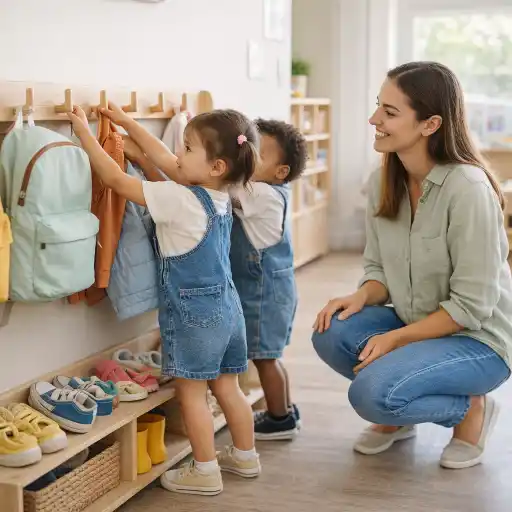
How to avoid pitfalls in one page: (1) start with one routine, (2) use visuals and child-sized items, (3) train staff to use common words, (4) celebrate effort and small wins.
5) How do we partner with families and meet documentation and licensing needs?
Family partnership turns classroom practice into sustained skill at home. Use strengths-based communication, share simple tools, and coordinate records. For parent partnership strategies, see ChildCareEd’s article Beyond the Daily Report.
- 📬 Communicate simply
- Send a one-page routine sheet with 3–5 small home activities families can do in 5–15 minutes.
- Share photos or short videos (with permission) of the child completing a routine.
- 🤝 Invite and align
- Ask: “What helps your child try new things at home?” Add family strategies to the child’s plan.
- Offer one brief tip at pick-up: e.g., two-choice dressing the night before.
- 🗂 Documentation & safety
- Keep dated observation notes and any individual supports in the child’s file.
- state requirements vary - check your state licensing agency for records and ratio rules when changing routines.
Practical equity move: proactively send visuals and a short video tour to families with limited time or language differences so they can reinforce the same steps at home (see family transition resources at ChildCareEd: Transitions to Kindergarten).
Summary and FAQs
Summary: Small, repeated practice embedded in everyday #routines and supported by a child-friendly environment, consistent teacher language, and family partnership builds real #independence and #selfhelp skills in #preschoolers. Use visuals, short practice blocks, and clear praise. Train staff together and keep family communication brief and strengths-based.
- Q: How long to see change?
A: Noticeable small wins in days; steady habit-building takes weeks of consistent practice. - Q: What if a child refuses?
A: Offer two small choices, try a peer model, and break the routine into a tinier step the child can do immediately. - Q: Can Montessori ideas help?
A: Yes — Montessori setups and practical life activities support independence; see ChildCareEd’s Montessori pieces for practical tips. For a detailed overview of Montessori principles and classroom strategies that foster independence and a love for learning, see The Montessori Classroom: Fostering Independence and a Love for Learning. - Q: Where to get visuals and templates?
A: ChildCareEd’s visual schedule article and partner printables (No Time for Flash Cards and Next Comes L) are good starting points (visual schedule guide).
Final encouragement: small, consistent steps practiced kindly will yield confident children who can join group life more fully. For ready courses and printable tools, start at ChildCareEd’s training library and the linked articles used here.
- Lesson Planning for Preschoolers
- Beyond the Classroom: Connecting Families to Essential Services
- Building Equity: Inclusionary Practices in Preschool
- Birth to Five CDA Credential with Portfolio Review
- Art from the Heart for Preschoolers: Open Ended Art Projects that Build Self-Esteem
- Self-Regulation & Change: Helping Children Cope
- Texas Director Credential
- Environments That Inspire Independence and Exploration
- Every Moment Matters: Schedules and Transitions
- Supporting Children's Independence
- Confidence Boosters for Preschoolers
- CDA Certification en Español: Recursos y Consejos para Educadores Bilingües
- 💛🧩 ¿Cómo puedo hacer que mi enseñanza sea inclusiva para los niños con autismo?
- Capacitación en Salud y Seguridad Preventiva en Línea para Proveedores de Cuidado Infantil
- Child Care Daily Routine Examples for Infants, Toddlers, and Preschoolers
- Celebrando la amistad en el cuidado infantil durante el Día de los Mejores Amigos
- Cómo simplificar la capacitación para sus empleados de daycare
- What skills do preschoolers need to be ready for school?
- How can we best prepare preschool children for kindergarten?
- How can we develop classroom routines that preschoolers can follow?
- How can I support preschoolers’ independence during daily routines?
- First Week of Preschool Lesson Plans: 5 Days of Easy Activities and Routines
- Preschool Classroom Routines: What Should You Teach During the First Week?
- Preschool Visual Schedule: What to Do When Kids Stop Looking at It
- How Can Child Care Providers Set Age-Appropriate Expectations for Young Children?
- How Can Child Care Providers Help Children Develop Self-Control?
- What Is Co-Regulation and How Can Child Care Teachers Use It?
- How Can Child Care Providers Help Children Develop Self-Control?
- How Can You Create a Daily Routine That Helps Preschoolers Feel Secure?
- When a Preschool Rule Expects More Self-Control Than Children Can Manage, What Should Educators Do?
