A new year can offer preschoolers a joyful chance to notice how they have grown and choose something they would like to practice next. With small, child-led goals, you can make reflection feel encouraging rather than demanding—and build independence through everyday classroom routines. Explore Observations and Goal Setting in Childcare  Buy Now $24.00 to strengthen your observation and goal-planning skills, and consider Supporting Children’s Independence Buy Now $24.00 for practical strategies that help children practice self-help skills and persistence.
Why are New Year’s goals meaningful for preschoolers?
For young children, a New Year’s goal is not a test of discipline or a promise to behave perfectly. It is a gentle invitation to think about something they enjoy, something they are learning, or a way they would like to contribute. When goals grow from children’s interests and familiar experiences, the process supports agency: children see that their ideas matter and that they can take small steps toward what they want to do.
Reflection can help children notice their own learning. Looking at photos, revisiting a favorite project, or talking about a new skill gives them concrete reminders of effort and change. This is especially useful because preschoolers are still developing the language and self-regulation skills needed to think about progress over time. A warm, brief conversation is often more effective than asking a child to make a long-term plan.
Goals can connect aspiration with real life: trying a new puzzle, asking a friend to play, putting away a book, or practicing a calming strategy. These everyday moments nurture #confidence and #independence without turning growth into a competition. The aim is not to make every child choose the same resolution; it is to notice strengths and offer supportive opportunities to practice.
As summarized in research on the development of self-regulation across early childhood, children’s development follows varied pathways. Individualized expectations and patient repetition therefore matter. A new year can be a useful calendar cue, but goals can be introduced or revisited at any time when a child is ready.
How can educators guide a child-friendly reflection?
Begin with a relaxed conversation, not a worksheet or a demand for an answer. Some children will tell a detailed story; others may point to a photo, act out a memory, draw, or listen before joining in. Offer accessible ways to participate and keep the questions concrete. A simple “star and wish” format can help: name something the child enjoyed or learned, then ask what they might like to try next.
Use prompts that invite, rather than steer, the child’s thinking:
- “What was something fun you did with your friends?”
- “What can you do now that you were still practicing before?”
- “What would you like to try next?”
- “Would you like to draw it, tell me, or show me?”
Photos, children’s artwork, dictated words, and brief observations can make reflection more vivid. Educators can record a child’s own words without correcting their choice or turning it into an adult-selected learning target. If a child says, “I want to make a huge tower,” help clarify a small next step—perhaps trying a new block arrangement—while keeping the child’s interest at the center.
Keep the tone appreciative and specific. “You kept trying different pieces until the puzzle fit” helps the child recall a strategy. Avoid comparisons between classmates or questions that imply there is one correct answer. Reflection should help a child recognize their own experiences and possibilities, not evaluate whether they have achieved enough.
What makes a preschool goal realistic and motivating?
Preschool goals work best when they describe a visible action that can be practiced in a familiar context. “Be good” or “be more responsible” is too broad to guide a child. Instead, help the child choose one small action: “I will put the crayons in the basket after art,” or “I will ask for a turn when my friend is finished.” These examples can be adjusted to a child’s language, abilities, interests, and daily routines.
Ask the child to help choose the goal and make the steps manageable. A larger interest can become a short practice goal: if a child wants to build a tall tower, the next step might be trying a wider base during block play. The child should experience the goal as an invitation, not a demand. One goal at a time is often plenty, especially when the skill is new or the classroom routine is changing.
Consider whether the goal is:
- Concrete: Can the child understand what to do?
- Achievable: Can the child practice it with reasonable support?
- Relevant: Does it connect to the child’s interests, relationships, or routines?
- Flexible: Can adults adapt the steps if circumstances or needs change?
Examples might include washing hands with a visual reminder, carrying a light classroom item, trying one new play area, or using words or a communication tool to ask for help. Goals are not a substitute for individualized supports, accommodations, or developmental services. Keep the focus on learning and participation, not on expecting a child to master a skill by a specific date.
For useful professional learning on noticing children’s strengths and translating observations into goals, see Tracking Progress, Shaping Futures: Observation & Assessment Skills Buy Now $55.00.
How can classroom routines build independence and confidence?
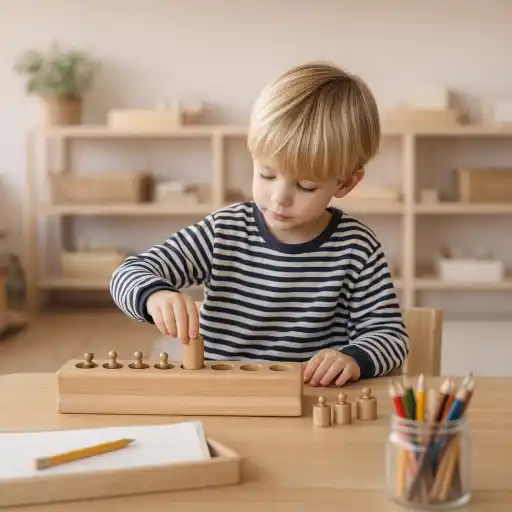
Daily routines provide natural, repeated opportunities for children to practice a chosen goal. A child who wants to help might place napkins on the snack table; a child practicing self-help might hang up a coat with a picture cue nearby. Repetition makes the steps familiar, while a predictable sequence lets children anticipate what comes next. When the environment is accessible—materials within reach, clear labels, and child-sized tools—children can try with less reliance on adult reminders.
Model the task slowly, break it into small parts, and give the child time to act. If support is needed, use the least intrusive prompt that helps the child take the next step: a gesture, a short verbal cue, or a brief demonstration. Then pause. A child may need more practice, a different tool, or a moment to regulate before trying again. Being available without taking over communicates both trust and safety.
Helpful educator language includes:
- “You put the book back where it belongs.”
- “You tried the zipper. Would you like a hint or more time?”
- “You asked for help when you needed it.”
- “What could you try next?”
- 🧩 “Let’s practice one small step together, then you can try.”
Describe the effort or strategy rather than praising only the result. If a goal becomes frustrating, simplify it, offer choices, or pause and return later. Mistakes are information for adults, too: they may signal that the task needs a smaller step, more accessible materials, or a different time of day. The Child Mind Institute’s guidance on encouraging independence in preschoolers likewise emphasizes routines, choices, and opportunities to solve manageable problems.
How can families and educators support progress together?
Children benefit when school and home communicate respectfully about their interests and emerging skills. Invite families to share what their child enjoys doing, what routines they are beginning to manage, and what words or supports help at home. A family’s ideas can make a classroom goal more meaningful, while educators’ observations can offer caregivers a positive window into the child’s day.
Keep communication simple and strengths-based. A short note might say, “Maya chose to carry the book basket today and asked for help when it felt heavy.” This is more useful than a broad judgment such as “Maya is independent.” Share a possible next step and invite the family’s perspective, without assuming that every household has the same routines, resources, or expectations.
Families and educators can try these approaches:
- Share a photo, drawing, or one-sentence account of the child’s progress, following program privacy practices.
- Offer one optional home idea connected to the classroom goal, such as helping put away a book.
- Ask caregivers what motivates or reassures the child and incorporate that insight.
- Celebrate effort in ways that feel comfortable and culturally responsive to the family.
Family partnership is more than sending updates: it is listening and making plans together. A review of preschool approaches to supporting family involvement in children’s social-emotional readiness underscores the value of collaboration that recognizes families’ different contexts and needs.
State requirements vary - check your state licensing agency when program policies or documentation practices are involved. For educators who want to deepen family partnership skills, Bienvenido! Welcoming All Families Buy Now $16.00 offers focused learning on engaging families in child care programs.
What common pitfalls should educators avoid?
Well-intended New Year activities can become stressful if they feel like adult performance targets. Keep the purpose clear: children are practicing, not making a binding promise. Avoid introducing too many goals at once, setting goals that are vague or too difficult, or using public charts that invite comparison. A sticker or visual tracker can help some children see progress, but it should not become a measure of a child’s worth or a source of shame when practice is uneven.
Be careful not to choose a goal solely because it would make the classroom more convenient. A child’s goal should connect to their development and interests, while classroom responsibilities should be introduced as meaningful contributions and taught with supportive guidance. Similarly, do not interpret a child’s need for help as unwillingness or failure. Asking for help, using an adapted tool, or taking extra time can all be appropriate parts of growing independence.
To avoid common pitfalls:
- Replace “You have to” with a choice or a collaborative invitation when possible.
- Focus on effort and strategies rather than perfection or speed.
- Adjust the goal if repeated practice brings distress instead of learning.
- Do not compare children or rank who has made the most progress.
- Use observation to decide what support or next step would be helpful.
If a child loses interest, that is useful feedback, not a reason for criticism. Revisit the goal together, choose a smaller step, or set it aside. Educators can document what they notice and discuss patterns with families and relevant program support staff when appropriate. The goal is a responsive process that preserves each child’s dignity and sense of belonging.
Conclusion: How can New Year’s goals nurture young children’s growth?
New Year’s goals can help preschoolers reflect on meaningful experiences, practice emerging skills, and feel proud of their contributions—when adults keep the process small, flexible, and child-centered. Invite children to look back through stories, photos, and play; help them choose one concrete next step; and embed practice into familiar routines. Give enough support to make trying possible, then allow time and space for the child to take the lead.
Celebrate effort, curiosity, asking for help, and trying again—not only a finished outcome. Partner with families, adapt expectations to each child, and treat setbacks as signals to adjust the plan. The central question is not whether a preschooler can keep a resolution all year; it is how caring adults can turn a fresh beginning into everyday opportunities for reflection, independence, and confidence. Start with one small goal, listen closely, and notice the growth already unfolding.
Which ChildCareEd courses can support your practice?
- Observations and Goal Setting in Childcare Buy Now $24.00 — practice using observation to inform meaningful goals.
- Supporting Children’s Independence Buy Now $24.00 — explore ways to support self-help, self-regulation, and persistence.
- Student Success: Expectations & Independence Buy Now $16.00 — consider developmentally appropriate expectations and how much support to offer.
- From Tantrums to Triumphs: Equipping Preschoolers with Self-Regulation Skills Buy Now $25.00 — explore strategies for confidence and self-regulation.
- Bienvenido! Welcoming All Families Buy Now $16.00 — strengthen respectful family engagement.
- Engaging Families During a Pandemic
- What Makes Me Special: An Overview of Autism and ADHD
- CDA Bridge Bundle: Preschool
- Pediatric RSV First Aid & CPR/AED
- Anxiety: Signs & Strategies
- CDA Bridge Bundle: Family Child Care without Portfolio Review
- CDA Bridge Bundle: Infant/Toddler without Portfolio Review
- CDA Bridge Bundle: Preschool without Portfolio Review
- Lesson Planning for Preschoolers
- Preparing Your Child for a New School Year: Social Skills and Independence
- CDA Certification en Español: Recursos y Consejos para Educadores Bilingües
- 🎉STEM-sational Fun: How Can You Spark Preschoolers’ Curiosity with Engaging STEM Activities? 🔬🧪🔢
- 👶 ¿Cuáles son las proporciones y grupos requeridos en Dakota del Norte? 🏫
- Curso de Comunicación de 9 Horas de Maryland
- Apoyo en Español para Capacitaciones Grupales Presenciales y por Zoom en Cursos Selectos
- 10 Ejemplos de Cómo la Cultura Influye en el Desarrollo Infantil
- Cómo Crear Tu Portafolio CDA Paso a Paso
- Proporciones de Cuidado Infantil y Tamaños de Grupo por Edad en Maryland (Guía Rápida para Centros y Hogares)
- Proporciones de Cuidado Infantil y Tamaños de Grupo por Edad en Virginia (Guía Rápida para Centros y Hogares)
- Actividades de Otoño Fáciles para Preescolares esta Temporada
- Cómo Trabajar en el Cuidado Infantil en Carolina del Norte: Requisitos y Pasos
- How Do Art Activities Support Cognitive Growth in North Dakota Preschoolers?
- Celebrando la amistad en el cuidado infantil durante el Día de los Mejores Amigos
- After the Mentor Demonstrates, How Can Classroom Leadership Return to the Teacher?
- What Are Developmentally Appropriate Ways to Introduce Goal Setting to Young Children?
- How Can Preschool Teachers Turn Children’s Mistakes Into Opportunities for Learning?
- How Can District of Columbia Child Care Directors Build Stronger Teams Through Mentoring?
- How Can New Year’s Goals Help Preschoolers Build Reflection, Independence, and Confidence?
- How Can Directors Support New Teachers During Their First 90 Days?
