You care for little people who grow fast. Good lesson plans help you stay calm, keep families informed, and give each child chances to learn. This short guide gives quick steps, easy activities, and simple ways to check progress for infants and toddlers. Use small goals, lots of #play, and follow routines. For ready templates and sample plans see the Infant and Toddler Weekly Lesson Plan Template Buy Now $0.00 and the Sample Weekly Lesson Plan Buy Now $0.00 from ChildCareEd. Remember: state requirements vary - check your state licensing agency.
How can I write simple infant and toddler lesson plans?
- 📘 Goal: One short sentence that tells what skill or behavior you will support this week. Example: "Practice reaching for toys and looking at faces." See ideas in Lesson Planning for Infants and Toddlers.
- 🧰 Materials: List 3–6 items and where they live (bin, shelf).
- 🧩 Steps: 2–4 quick steps (greet, main play, close with a song).
- 📸 Assessment: One observation note and one family message.
Why this works: infants and toddlers have short attention spans and big changes each week. Pick one clear target per day and use routine moments (diapering, feeding, arrival) as teaching moments. For infant-focused guidance see Infant Lesson Planning. If you need training, check the course Playing with a Purpose  Buy Now $24.00 from ChildCareEd.
What activities work best for babies and toddlers?
- 🎵 Story & Talk: Read a short board book, point to pictures, and add 2 questions. See toddler story ideas at ChildCareEd in Lesson Plans for Toddlers.
- 🧺 Sensory Bin: Rice, water, or safe textured materials with scoops. Great for calming and exploring; pair with supervision and simple goals.
- 🖍️ Process Art: Big paper or safe paint. Focus on the doing, not the picture. Helps fine motor and creativity.
- 🌳 Nature Walk: Collect leaves, listen to birds, point out colors and sounds.
- 🤝 Social Play: Puppets or small group songs to practice turn-taking.
Keep setups easy: prep one materials bin for the week and repeat favorites. For full weekly-themed ideas try the Sample Weekly Lesson Plan Buy Now $0.00. Always think safety first and follow your licensing rules—state requirements vary - check your state licensing agency.
How do I watch progress and adapt lessons for each child?
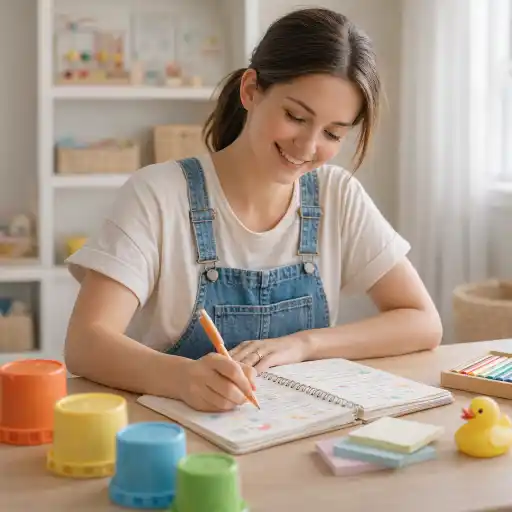
Assessment for infants and toddlers is gentle. Use play, observation, and family input. The goal is to learn about each child so you can support their next step. ChildCareEd explains assessment ideas in Lesson Planning for Infants and Toddlers.
Try this 3-step routine:
- 🔎 Observe: Spend 3–5 minutes during the activity watching one child. Note one strength and one small next step. Record a quick sentence.
- 📝 Document: Take a photo or write an anecdote tied to the goal. Keep it in the child’s portfolio (example templates at ChildCareEd).
- 🤝 Share & Plan: Tell the family one positive note and one easy idea to try at home. Families partner in learning.
Adapt by changing materials or offer roles: more time, larger tools, or a helper job. For children with special needs, consult IFSP/IEP resources and consider ChildCareEd’s inclusion and infant/toddler training courses like the 45-Hour Infant and Toddler Curriculum Buy Now $399.00$275.00. Remember: state requirements vary - check your state licensing agency.
What common mistakes happen and how can I avoid them?
We all make mistakes—what matters is learning from them. Here are frequent pitfalls and quick fixes:
- 😬 Too many goals at once — Fix: Pick one simple goal per day or week.
- 😩 No observation time — Fix: Block 5 minutes after an activity for notes.
- 😕 Overprepared materials out at once — Fix: Offer 1–2 items and rotate the rest.
- 😵 Forgetting routines — Fix: Use short songs or visuals for transitions.
- 😶 Not involving families — Fix: Send one sentence home about the child’s day and a simple activity to try together.
Why it matters: Small, steady plans build trust and healthy #development. When infants and toddlers feel safe, they try new things, learn language, and grow motor skills. Your thoughtful lesson plans make rooms calmer and learning stronger. For more examples and templates, see the ChildCareEd articles and templates linked above.
Conclusion & Quick Checklist
You're the most important tool in the room. Use short goals, sensory play, observation, and family partnerships. Here is a quick checklist you can copy and use:
- 📘 One clear goal this week (#lessonplans).
- 🧰 3–6 materials in a labeled bin.
- 🧩 2–4 simple steps for the activity.
- 📸 One quick observation note per child.
- 🤝 One family message or idea to try at home.
Want more help? Look at ChildCareEd’s templates and courses: the weekly template Buy Now $0.00, the sample plan Buy Now $0.00, or trainings like Playing with a Purpose Buy Now $24.00 and the 45-Hour Curriculum Buy Now $399.00$275.00.
FAQ
- Q: How long should an activity last? A: 5–15 minutes for infants; 10–15 minutes for toddlers.
- Q: Do I need a written plan every day? A: A short weekly plan plus a quick daily note works well for busy teams.
- Q: How often should I do sensory play? A: 2–4 short sessions per week is great.
- Q: Where can I get templates? A: Try the ChildCareEd template: Infant and Toddler Weekly Lesson Plan Template Buy Now $0.00.
Keep it simple, kind, and tuned to each child. Your consistent care and small lesson choices make a big difference for #infants and #toddlers learning and thriving.
Keep plans short and useful. Try a 4-part plan you and your team can read in 30 seconds:Young children learn by using their senses, moving, and watching people they trust. Use lots of #sensory, movement, and talking. Choose activities you can repeat often.- 45 Hour Child Growth and Development
- CDA Home Visitor Subject Area 3 Part 3 Birth to 5
- CDA Infants/Toddlers: Lesson Planning Made Easy
- 45 Hour Infant and Toddler Methods and Materials
- 45-Hour Infant and Toddler Curriculum
- Texas Director Credential
- Baby Steps to Milestones ONLINE
- Playing with a Purpose: Infant/Toddler Lesson Planning
- Lesson Planning for Infants and Toddlers
- CDA Certification en Español: Recursos y Consejos para Educadores Bilingües
- Recursos en Español sobre el Sueño Seguro del Bebé
- ¿Cuáles son los pasos, requisitos y opciones en línea para la certificación de 90 horas en cuidado de Infantes/Toddlers en Maryland?
- Proporciones de Cuidado Infantil y Tamaños de Grupo por Edad en Virginia (Guía Rápida para Centros y Hogares)
- Cómo Ser Maestra de Preescolar en Maryland
- A Simple Guide to Toddler and Preschool Lesson Plans
- How can I design age-appropriate lesson plans that really work?
- Canciones, juegos y preguntas de círculo para niños
- Cómo simplificar la capacitación para sus empleados de daycare
- How to Modify Activities for Children with Special Needs
- Toddler Lesson Plans for Play, Learning, and Development
- Weekly Lesson Plans for Infants, Toddlers, and Preschoolers
- How can I make easy infant and toddler lesson plans that really work?
- How Can DC Providers Support Pre-K–8 Children Through Out-of-School Time Programs?
- How can I make infant and toddler lesson plans that really work?
- Free Infant Lesson Plans for Daycare and Early Learning
- From Tummy Time to First Steps: Free Lesson Plans for Infants 0–12 Months
- How Can You Help an Infant Resume Exploring After Care Interrupts Play?
