Designing lesson plans that match children’s ages helps teachers feel calm and children learn more. This short guide is for child care providers and directors. It gives clear steps, simple templates, and ideas you can use today. State requirements vary - check your state licensing agency.
We use play, observation, and small goals. If you want more templates and step-by-step help, see How to Create Developmentally Appropriate Lesson Plans and the Lesson Plan Template for Early Childhood Activities Buy Now $0.00.
How do I pick clear goals that match each age?
Start with one or two small goals. Goals are simple things children can try during play or a short activity. Pick goals that match what most children this age can do, plus what each child can handle. This idea is central to #DAP and explained at What Is Developmentally Appropriate Practice.
Use this quick, numbered plan to choose goals:
- Observe: Watch children for 5–10 minutes. Note what they choose and how they play.
- Ask three questions: 1) What can most children this age do? 2) What can this child do? 3) What fits the family culture?
- Pick 1–2 goals: Make them short (example: "practice sharing a turn" or "use thumb and fingers to pick up small objects").
- Match activities: Choose play that helps the goal (blocks for turn-taking, water table for scooping).
- Write it down: Put the goal at the top of your #lessonplans so staff know the plan.
For infants and toddlers, use the ideas in Lesson Planning for Infants and Toddlers. You can also consult a step-by-step resource with daily routines, sample plans, and assessment ideas specifically for infants and toddlers: A Guide for Success: Lesson planning for infants and toddlers. For preschoolers, try the tips in Lesson Planning for Preschoolers. Keep goals simple, linked to play, and focused on the child’s next step. #preschoolers #toddlers
What must a simple, usable lesson plan include?
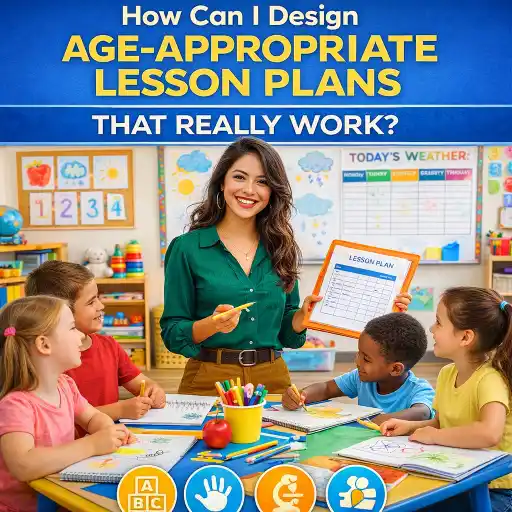
Keep plans short and easy for staff to use. Use one page or a weekly template. The ChildCareEd lesson plan template Buy Now $0.00 has the right parts. Here are the must-have pieces, with ideas you can copy.
- Theme or focus (one short phrase).
- Learning goal(s) — 1 or 2 clear goals at the top.
- Materials — quick list and where to find them.
- Steps — 2–4 short steps so staff can lead the activity without long scripts.
- Questions & assessment — two open questions to ask and a quick note line for observations.
Use numbered timings to help staff keep pace (example: 1. Welcome — 5 min; 2. Activity — 10–15 min; 3. Song/clean-up — 5 min). For step-by-step help, read How to Write an Early Childhood Lesson Plan Step by Step.
Practical tips:
- 🧺 Prep once: Put materials in a labeled bin for the week.
- 🎵 Use short songs for transitions so children know what happens next.
- 📸 Assessment: Take one photo and write one short sentence about what you saw.
Keep plans flexible. If children show a different interest, follow them. For templates and printable resources, check ChildCareEd’s free resources. #lessonplans #assessment
How can one activity work for mixed ages and different needs?
Layering an activity means offering the same play idea but changing the challenge for each child. This saves time and keeps every child involved. ChildCareEd explains mixed-age tips in resources like Mixed-Age Group Activities.
Try this 3-step approach to adapt an activity:
- 🔍 Observe first: See what each child does. Note a strength and a next step.
- 🔧 Offer three levels: simple, guided, and challenging.
- 🤝 Use roles: Give helpers or jobs so children take part in ways that match their skills.
Example: "Seed play" theme
- 👶 Infants: Touch a sealed sensory bag with seeds (safe, sensory exploration).
- 🧒 Toddlers: Scoop seeds and count to three with the teacher.
- 🧑 Preschoolers: Plant seeds, predict what will happen, and record observations.
For children with special needs, use adaptations like picture schedules, thicker paintbrush grips, or quieter spaces. See Adaptations that support children's learning. Work with families and specialists to choose the best supports. Small changes help big time.
How will I know the plan worked and what mistakes should I avoid?
Assessment in early childhood is watching, noting, and planning next steps. Use simple tools so staff can do this every day without stress. The ChildCareEd guide How to Write an Early Childhood Lesson Plan has easy assessment ideas.
Use this quick assessment routine:
- 📷 One photo + one sentence: Capture engagement and a skill you saw.
- 🗒️ One-line note: Strength, target, and next step for one child each day.
- 🔁 Weekly review: Staff meet to share what worked and plan small changes.
Common mistakes and fixes:
- 😬 Too many goals. ✅ Fix: Pick 1–2 goals a week.
- 😴 Overlong activities. ✅ Fix: Keep toddler activities 10–15 minutes, preschool 15–20 minutes.
- 📋 Skipping observation. ✅ Fix: Schedule 5–10 minutes daily to watch and write one note.
- 📱 Overuse of screens. ✅ Fix: Use tech rarely and with purpose; make play the main method.
Watch for developmental milestones and warning signs using resources like the CDC milestone guidance at CDC Watch Me. If you see delays, partner with families and specialists early.
FAQ (quick):
- Q: How long is a toddler activity? A: About 10–15 minutes.
- Q: Do I need a written plan every day? A: A short weekly plan + daily notes works well.
- Q: How many goals per week? A: 1–2 clear goals is best.
- Q: Where to get help? A: ChildCareEd courses like Meaningful Lesson Planning for Infants/Toddlers
 Buy Now $24.00 and local training programs.
Conclusion
Good, age-appropriate lesson plans are simple, flexible, and child-centered. Use short #lessonplans, pick 1–2 goals, observe often, and adapt one activity for many ages. Use the ChildCareEd templates and articles for ready resources and training. State requirements vary - check your state licensing agency. Small steps each day help staff feel confident and help children thrive. You are doing important work—keep it simple, playful, and kind.
- 45 Hour Child Growth and Development
- 45-Hour School Age Curriculum
- CDA Preschool Credential with Portfolio Review
- 45 Hour Preschool Methods and Materials
- Birth to Five CDA Credential with Portfolio Review
- CDA Family Child Care Credential with Portfolio Review
- 45 Hour School Age Methods and Materials
- Texas Director Credential Renewal
- Texas Director Credential
- Labor Day Activities
- CDA Certification en Español: Recursos y Consejos para Educadores Bilingües
- What Are DAP Guidelines in Early Childhood Education?
- How can I design age-appropriate lesson plans that really work?
- How can we build developmentally appropriate programs for young children?
- Canciones, juegos y preguntas de círculo para niños
- How can I make easy, useful lesson plans for my childcare program?
- How can I make easy infant and toddler lesson plans that really work?
- How can I make infant and toddler lesson plans that really work?
- How do we apply Developmentally Appropriate Practice in mixed-age groups?
- How can I create clubs and interest groups for school-age children?
- How can we use Developmentally Appropriate Practice to make mixed-age groups work?
- School-Age Lesson Plan Ideas: STEM, Art, Movement, Reading, and More
- How Should Lesson Plans for Infants 0–12 Months Change by Age?
- After School Lesson Plans That Don’t Feel Like More School
- What Do You Need to Open a Daycare at Home? Start With Your House, Not the Toys
- Common After School Activities Kids Get Bored With—and What to Try Instead
- How Much Structured Learning Do Preschoolers Really Need?
