Michigan’s Quality Rating System (often called Great Start to Quality) looks at many parts of your program to decide how well you care for young kids. This article explains what the system measures, how ratings work, and clear steps you can take to raise your program’s score. You will find simple ideas you can use with your team today. Remember: state requirements vary - check your state licensing agency.
Why it matters: High ratings help families find good care, can bring extra money or supports, and they show parents you put #children first. Better ratings also mean safer spaces and stronger learning. Improving ratings is not just paperwork — it makes your program a happier, safer place for kids and staff.
1) What exactly does Michigan's Great Start to Quality measure?
- Staff skills and learning (education, training, and teacher plans). See Great Start to Quality overview for details.
- Family and community partnerships — how you work with families and local groups.
- Administration and records — your policies, staff files, and leadership practices.
- Environment and safety — the classroom, playground, and how you manage health. For measuring space guidelines, check measuring space guidance Buy Now $0.00.
- Curriculum and instruction — how you plan learning, observe children, and support development. For sample lesson plans and comprehensive curriculum guides tailored for child care settings, see early childhood curriculum resources.
These categories combine to form a program’s #quality score. For a clear description of how trainings and professional development connect to ratings, review state-approved trainings in Michigan. Michigan also uses a reporting system called MiRegistry as part of tracking staff training and credentials.
2) How are Quality Levels or stars decided?
- Programs complete a self-assessment and upload documents (education, policies, lesson plans, and certificates).
- Reviewers compare evidence to the rating indicators found in the Great Start to Quality materials and ChildCareEd summaries like this overview.
- Programs receive a Quality Level (the old star system is now Quality Levels) and notes about what to improve; see local guidance at state program info.
Key things reviewers look for:
- ✅ Staff qualifications and ongoing #training
- ✅ Written policies that match practice
- ✅ Safe, clean, developmentally appropriate environments
- ✅ Evidence of family engagement and curriculum planning
Small centres can earn higher levels by collecting good evidence and focusing on a few great changes at a time. For example, link training to staff files and upload them to ChildCareEd course records or MiRegistry to make sure credit posts.
3) What practical steps can my program take to improve its rating?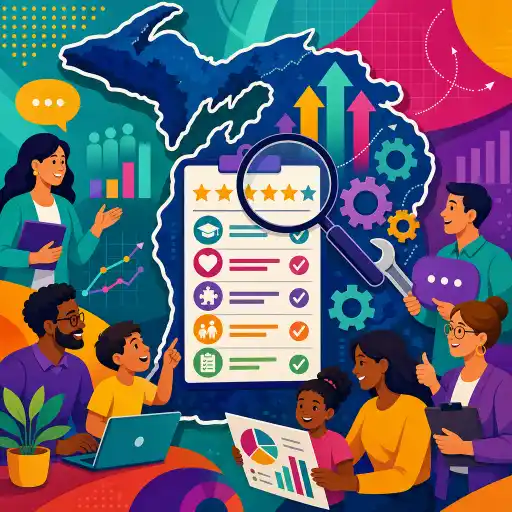
- 🔎 Do a quick gap check: list what you already have (policies, lesson plans, certificates).
- 🛠️ Pick 3 high-impact fixes to do this quarter. Suggestions:
- 📄 Update your written illness and medication policies.
- Health and safety requirements: To make sure staff training covers the specific health and safety topics Great Start to Quality reviewers expect, ChildCareEd's Health & Safety Requirements for Childcare Providers
 Buy Now $79.00 is a 10-hour online course covering illness policies, medication administration, emergency planning, and safe environments — completing it and uploading the certificate to MiRegistry is one of the fastest, most visible ways to strengthen your staff training evidence.
 - 🧸 Create a folder of sample lesson plans and child observations for each classroom.
- 🏫 Improve space layout so children have clear pathways (see measuring space guidance Buy Now $0.00).
- 👥 Train staff and track it: use state-approved courses and record certificates in #MiRegistry. ChildCareEd has training bundles for Michigan in Top Trainings for Michigan.
- 📁 Collect proof: photos of classrooms, dated sample lesson plans, staff resumes, and signed family communication logs.
- 📆 Meet monthly to check progress and adjust the plan.
Common mistakes to avoid:
- ❌ Not linking training to staff files (keep certificates and upload to MiRegistry).
- ❌ Doing only paperwork without changing practice (ratings need both evidence and consistent routines).
4) How can training, staff records, and community supports help me move up?
Training and clear records are some of the fastest ways to improve a rating because they are easy to show reviewers. Here are practical tips:
- 📚 Build a training plan: list who needs what training this year (health & safety, child development, curriculum). ChildCareEd offers many Michigan-focused courses at Michigan courses and guides like this training guide.
- 🏫 Program administration and leadership: For directors working to strengthen policies, records, and leadership practices that reviewers look for, ChildCareEd's Early Childhood Program Administration Buy Now $120.00 is a comprehensive 32-hour online course covering program management, staff supervision, documentation systems, and administrative best practices — a strong investment for any Michigan program working toward a higher Quality Level.
- 🖇️ Use MiRegistry: add staff IDs to training accounts so completions post automatically. See steps in preservice training guide.
- 🤝 Partner with local supports: Great Start resource centres can offer coaching and free workshops — find them through the state Great Start to Quality pages and ChildCareEd summaries. ChildCareEd will also be attending the Michigan AEYC Conference with training sessions, giveaways, and special discounts for Michigan providers; see details at ChildCareEd at the Michigan AEYC Conference.
- 💵 Look for funding: grants and wage initiatives in Michigan may support staff pay and retention; read about local grants and the Early Education Wage Initiative at Early Education Wage Initiative.
When staff see investment in their learning and pay, they stay longer. Longer staff tenure improves classroom stability and helps your program keep a higher #quality score.
Conclusion and FAQ
Summary: Michigan’s Quality Rating System measures staff qualifications, family partnerships, administration, environment, and curriculum. To improve, focus on three big moves: train staff and record it in #MiRegistry, collect clear evidence (policies, lesson plans, photos), and use local supports like Great Start resource centres and affordable trainings from ChildCareEd. Remember: state requirements vary - check your state licensing agency.
FAQ
- Q: How fast can we raise our level?
A: It depends, but small, clear changes in 3–6 months can show improvement. - Q: Are online trainings accepted?
A: Many are. Use state-approved providers and post completions to MiRegistry; see this guide. - Q: Do photos and sample lesson plans help?
A: Yes — reviewers want to see real examples of your work. - Q: Where do we get help?
A: Great Start resource centres and online platforms like ChildCareEd can help with coaching and courses.
You are doing important work. Focus on steady steps, celebrate small wins, and use the many Michigan resources to support your team and your #children. Good luck — your program can grow stronger one step at a time.
- Tracking Progress, Shaping Futures: Observation & Assessment Skills
- CDA Family Child Care Credential with Portfolio Review
- CDA Bridge Bundle: Preschool
- Pediatric RSV First Aid & CPR/AED
- CDA Bridge Bundle: Family Child Care
- CDA Bridge Bundle: Family Child Care without Portfolio Review
- CDA Bridge Bundle: Infant/Toddler without Portfolio Review
- CDA Bridge Bundle: Infant/Toddler
- Texas Director Credential
- Great Start to Quality in Michigan and ChildCareEd's Role in Advancement
- Invest in Your Skills, Invest in Children: ChildCareEd Training for Michigan Providers
- CDA Certification en Español: Recursos y Consejos para Educadores Bilingües
- 📊¿Cómo puedo hacer un seguimiento de la capacitación de mi personal en GAPDS como proveedor?✨
- Cómo Trabajar en el Cuidado Infantil en California: Requisitos y Pasos
- What Does Michigan's Quality Rating System Really Measure and How Can We Improve?
- How does ChildCareEd help Michigan providers move up their Great Start to Quality rating?
- How can Michigan childcare providers use MiRegistry and ChildCareEd to track and finish training hours online?
- How can Michigan childcare programs raise their Great Start to Quality rating with online training?
- Celebrando la amistad en el cuidado infantil durante el Día de los Mejores Amigos
- How can we improve child care program quality?
- How can family child care homes in Michigan participate in the PreK for All home-based pilot?
- What are the most important Quality Child Care Indicators?
- How do I document staff credentials in MiRegistry for Great Start to Quality?
- How can I make the case for play-based learning in my Michigan program?
- Can You Reduce Staff Turnover Without Raising Wages?
- How can assessment results be used to plan meaningful activities in early childhood programs?
- How Should We Measure the Quality of an Early Childhood Program?
- How Can Child Care Providers Create Family Surveys That Produce Useful Information?
