Farm-to-table experiences give toddlers a concrete, hands-on way to discover where food comes from while building early science, language, motor, social-emotional, and nutrition skills. Through simple routines such as planting seeds, watering herbs, washing produce, visiting a garden, sorting fruits and vegetables, and helping prepare a snack, children can begin to understand the journey from seed to plate. This practical guide gives child care providers and directors developmentally appropriate ways to bring #farm-to-table learning into everyday routines, with safety considerations, sensory experiences, family-engagement ideas, and opportunities to encourage curiosity, responsibility, and healthy food exploration.
To strengthen garden-based learning, explore ChildCareEd’s self-paced online course Creating the Natural Outdoor Classroom  Buy Now $16.00. The course helps educators plan natural outdoor environments, select appropriate materials and activities, and use outdoor spaces to support children’s development across learning domains. Providers can also take Food Preparation and Nutrition Buy Now $32.00 to build their understanding of essential nutrition and safe food-preparation practices in early childhood settings. Together, these trainings can help educators connect gardening, food preparation, healthy eating, and sensory exploration in ways that are meaningful and manageable for toddlers.
Why it matters:
1) Early exposure shapes preferences and health: the CDC explains that repeated, positive experiences with fruits and vegetables during early childhood support healthy growth and later eating patterns; see Good Nutrition Starts Early.
2) Rich, hands-on experiences build language, fine motor skills, and curiosity.
Why does farm-to-table learning matter for toddlers?
Farm-to-table education connects everyday meals to living systems in simple, memorable ways. For toddlers, the goal is not mastery but meaningful exposure: touching soil, seeing seeds sprout, tasting a vegetable they helped plant. These experiences scaffold #learning, sensory development, and positive attitudes toward #food.
Benefits (enumerated):
- Developmental growth: toddlers improve fine motor and observational skills while digging, planting, and watering. See practical gardening activities at No Time For Flash Cards and planting-with-toddlers examples at Learning and Exploring Through Play.
- Nutrition and preference building: the CDC recommends repeated exposure and variety for young children—farm-to-table offers just that (CDC).
- Curriculum links: connect science, math (counting seeds), literacy (farm books), and social studies (where food comes from). ChildCareEd resources like Little Bites, Big Learning provide classroom-friendly nutrition ideas.
How can we bring planting and gardening into daily routines?
Small-scale gardening fits nearly any program—windowsill, containers, raised beds, or even sprouting jars. Use a predictable plan so staff can sustain the work and children can see progress.
Step-by-step (enumerated):
- 🌱 Choose easy plants: beans, peas, radishes, herbs (basil, mint). These sprout quickly and are forgiving.
- 🪴 Adapt containers: use pots, recycled tubs, or zip bags on a sunny window. Try the "watch-bean-sprout" method from Pre-K Printable Fun for visible roots and shoots.
- 📋 Schedule care: assign daily watering, weekly observation notes, and a simple growth chart—children can draw leaves or count nodes (1–3 minutes each day).
- 👩🌾 Make it sensory: soil scooping, seed sorting by color/size, and smelling herbs—see sensory ideas at No Time For Flash Cards.
- 🍴 Connect to tasting: when ready, prepare small, no-heat snacks that use harvested items. For no-cook classroom recipes, see Easy No Bake Recipes.
- 📚 Reflect and read: pair gardening with books about farms—Scholastic lists age-appropriate titles (13 Best Children's Books About Farms).
Practical tip: start with 1–2 planters and a simple routine—consistency beats scale. For curriculum resources and planning support, check the gardening and planning guides at Nourish Wellness.
What classroom activities and food experiences teach where food comes from?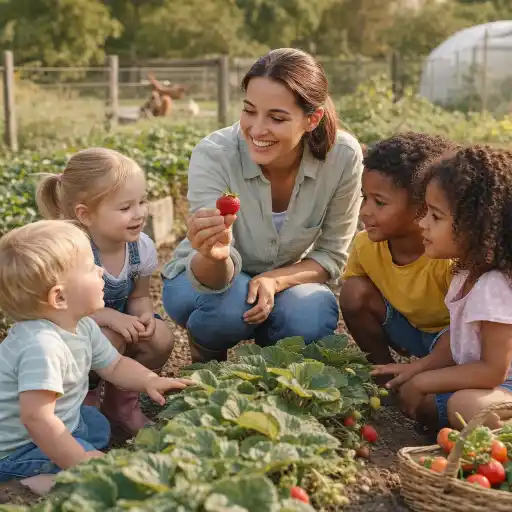
Design short, repeatable activities (15–25 minutes) that let toddlers act and then reflect. Use a combination of play, cooking, stories, and sensory tables.
Top activities (enumerated):
- 🎨 Farm small-world play: create a miniature farm tray with toy animals, hay-like filler, and a barn. See ideas at Pre-K Printable Fun.
- 🌾 Seed-to-plate sequence: 1) plant seeds, 2) observe growth, 3) harvest, 4) taste. Document with one photo + one sentence per child as suggested in in-house field trip planning (In-House Field Trips).
- 🧁 No-cook food projects: fruit kebabs, yogurt parfaits, or herb butter on crackers—safe, inclusive, and developmentally appropriate (No Bake Recipes).
- 📚 Story + taste: read a farm book t, then offer a related tasting (e.g., an apple story, then sliced apples). Scholastic and ag-accurate lists can guide book choice (Scholastic, MN Farm Living).
- 🔬 Simple science: which food rots first? germination experiments; butter-making to show physical change—ideas compiled at Living Life and Learning.
Keep activities short, scaffold vocabulary, and repeat. Use the child-centered, strengths-based approach from ChildCareEd’s eating-habits guidance to support autonomy and positive mealtimes.
How do we keep farm-to-table experiences safe, inclusive, and compliant?
Food-based learning is rewarding but requires strong systems for safety, allergies, and licensing. Follow these enumerated steps:
- 🧾 Train staff: invest in food prep and allergy training, such as Food Preparation and Nutrition Buy Now $32.00 from CChildCareEdEd, to understand storage, cross-contact, and safe handling.
- 🧴 Allergy and medical plans: keep updated forms, post allergy alerts in food areas, and use dedicated utensils. Always check labels with each purchase—the same product can change.
- 🔪 Choking and age-appropriate modifications: follow CDC guidance for textures and cutting (e.g., halve grapes, mash as needed). See general nutrition tips at CDC.
- 🧼 Sanitation and illness prevention: clean surfaces, supervise handwashing, and follow illness policies. Use ChildCareEd's illness and allergy materials as refreshers (Nutrition Month resources include safe-handling reminders).
- 📜 Licensing & local rules: state requirements vary - check your state licensing agency. For any off-site farm visits, follow your state’s transportation and permission rules (see In-House Field Trips).
Common mistakes and how to avoid them (enumerated):
- ❌ Not checking labels every time. ✅ Do: read ingredients with each purchase.
- ❌ Using food as a reward. ✅ Do: use non-food praise and model tasting behavior.
- ❌ Skipping documentation of allergies/permission. ✅ Do: audit files monthly and confirm at pickup.
How can we involve families and the community without blowing the budget?
Families and local partners make farm-to-table credible and sustainable. Use small, low-cost strategies that build connection and respect family preferences.
Practical steps (enumerated):
- 📣 Communicate simply: send a one-page month preview with learning goals, simple at-home tips, and an invitation to share family recipes. ChildCareEd models these family-engagement templates in their Nutrition Month materials (Little Bites, Big Learning).
- 🤝 Invite local partners: a farmer or community gardener can visit (or host a virtual tour). Use Farm-to-School resources for partnership ideas (Farm to School overview).
- 💌 Low-cost family options: seed packets to plant at home, photo updates of seedlings, or a simple taste-kit (sample of herb leaf) to try with caregivers.
- 🌍 Honor culture: ask families to share foods or planting traditions; include those items in dramatic play and taste activities.
- 📷 Share documentation: one photo + one sentence per child works well for busy staff and delights families—borrowed from ChildCareEd’s field-trip documentation tips (In-House Field Trips).
Budget-friendly note: partner with local garden centers for seed donations, use recycled containers for planters, and use frozen produce for tastings when fresh is seasonal or costly. Farm-to-school grants may be available for schools and districts; see Farm to School for models and funding ideas.
Conclusion
- Farm-to-table learning for toddlers is hands-on, curricular, and achievable: start small, repeat often, and connect planting to tasting.
- Prioritize safety: train staff (Food Preparation and Nutrition Buy Now $32.00), update allergy plans, and follow licensing rules—state requirements vary - check your state licensing agency.
- Engage families and community through simple invitations, shared photos, and culturally responsive food choices.
FAQ (quick answers):
- Q: How long should a planting activity be for toddlers? A: 10–20 minutes—keep it short and sensory-focused.
- Q: Can infants participate? A: Infants can be included via observation, smelling herbs, or picture-based activities—avoid shared food until appropriate.
- Q: What if a child refuses to taste? A: Offer without pressure; model tasting and celebrate any small attempt (see ChildCareEd guidance). For additional non-coercive approaches and playful strategies to encourage healthy eating without bribery or meltdowns, see A witty take on getting kids to eat healthy without bribery or meltdowns.
- Q: Where can staff get training? A: ChildCareEd offers relevant courses like Food Preparation and Nutrition and Nutrition Month resources (Food Preparation and Nutrition Buy Now $32.00, Nutrition Month).
Try one micro-project this week: a windowsill herb pot, a three-seed sprout jar, or a no-bake fruit snack tied to a farm story. Small, repeated experiences are where big #learning happens—and they make the origins of our #food feel real, local, and joyful for little learners.
- CDA Home Visitor Subject Area 3 Part 3 Birth to 5
- CDA Home Visitor Subject Area 2 Part 3 Birth to 5
- From Tantrums to Triumphs: Equipping Preschoolers with Self-Regulation Skills
- Nutrition Essentials for Child Care Providers
- CDA Bridge Bundle: Infant/Toddler without Portfolio Review
- History, Policy, and Practice in ECE
- CDA: Stand With Respect and Professionalism
- National Eat Your Vegetables Day June 17
- CDA Certification en Español: Recursos y Consejos para Educadores Bilingües
- 😤💬 ¿Qué Le Digo a un Niño que Acaba de Morder a Otro?
- 10 Ejemplos de Cómo la Cultura Influye en el Desarrollo Infantil
- Proporciones de Cuidado Infantil y Tamaños de Grupo por Edad en Maryland (Guía Rápida para Centros y Hogares)
- Proporciones de Cuidado Infantil y Tamaños de Grupo por Edad en Nueva Jersey (Guía Rápida para Centros y Hogares)
- Proporciones de Cuidado Infantil y Tamaños de Grupo por Edad en Virginia (Guía Rápida para Centros y Hogares)
- Lista para Guardería en Casa en Texas: Cómo Iniciar una Guardería en el Hogar
- Consejos de Supervisión Activa para Salones de Preescolar y el Juego al Aire Libre
- Cómo Trabajar en el Cuidado Infantil en Carolina del Norte: Requisitos y Pasos
- Cómo Trabajar en el Cuidado Infantil en California: Requisitos y Pasos
- Cómo Ser Maestra de Preescolar en Maryland
- How can we bring a farmers market and fresh fruit activities to preschoolers in California?
- How can Georgia farm field trips teach young children about animals and food?
- Which Oklahoma Farms and Ranches Offer Preschool Field Trips That Teach About Animals and Community?
- Capacitación CDA gratuita en Illinois
- Celebrando la amistad en el cuidado infantil durante el Día de los Mejores Amigos
- Canciones, juegos y preguntas de círculo para niños
- How Can Farm-to-Table Experiences Teach Toddlers Where Food Comes From?
- After Nap, Before Snack: Helping Toddlers Through the Hardest 15 Minutes
