What looks like a simple request to “say please” or try a new food may reflect deeply held family values, traditions, and expectations. By examining culture with curiosity rather than judgment, providers can create mealtimes where children feel respected while learning shared classroom routines; Strength in Differences: Cultural Diversity  Buy Now $24.00 offers three hours of focused professional learning to strengthen culturally responsive practice and support inclusive relationships with children and families.
Why does culture matter at the child care table?
Mealtime is both a care routine and a social curriculum. Children learn what food means, how adults and children relate, who serves whom, whether conversation is encouraged, and how respect is communicated. These lessons begin at home and are shaped by religion, geography, language, family structure, migration experiences, economics, and individual preference.
Culture is not a checklist of holidays or foods. It is a dynamic system of meaning that influences caregiving practices and children’s developing sense of identity. A child who waits for an adult to begin eating, prefers to eat with hands, avoids certain foods, or speaks softly to adults may be following familiar expectations rather than demonstrating defiance or a developmental concern.
When programs treat one set of manners as universally correct, children may experience unnecessary correction or shame. Conversely, when providers establish clear safety and community expectations while making room for variation, children learn that differences can coexist with belonging.
- 🌱 Mealtimes provide opportunities to practice language, turn-taking, independence, and #respect.
- Shared routines help children anticipate what happens next and feel secure.
- Inclusive food practices affirm children’s identities and strengthen family trust.
Predictable routines are valuable, but they should remain flexible and responsive to individual needs. State requirements vary - check your state licensing agency.
How can providers recognize cultural influences without stereotyping?
The first step is to replace assumptions with respectful inquiry. A family’s cultural identity does not determine every preference, and no child should be expected to represent an entire community. Ask families what matters to their child, document their responses, and revisit the conversation as the child grows.
Useful questions include: “What foods are familiar or important at home?” “Are there foods your family avoids for religious, medical, ethical, or personal reasons?” “How does your family invite children to participate during meals?” and “What words or gestures communicate courtesy in your home?” These questions invite partnership rather than requiring families to defend their practices.
Observe patterns across settings before interpreting behavior. A child’s reluctance to make eye contact, speak directly to adults, or self-serve may have a culturally meaningful explanation. Observation should be paired with family knowledge, not used as a substitute for it.
- Describe what you see instead of labeling behavior as rude, difficult, or noncompliant.
- Ask open-ended questions and listen without rushing to correct.
- Separate nonnegotiable safety practices from flexible social conventions.
- Record family preferences in a way that is accessible to the whole team.
These habits reflect cultural competence in early childhood education: learning about each child and intentionally adapting care to the child’s strengths, needs, and family context.
How do food traditions appear in menus and food exploration?
Food traditions influence what families purchase, how recipes are prepared, which foods are served together, and when eating occurs. Canada’s guidance on teaching food traditions explains that culture affects where people obtain food, how families prepare it, and how, what, and when they eat. These influences can become meaningful curriculum resources when introduced authentically and safely.
Begin with the children and families enrolled in the program. Invite families to suggest familiar ingredients, describe a preparation method, share a food-related story, or recommend a children’s book. Avoid turning one family into a spokesperson for a broad cultural group. Instead, present food as one child’s or family’s experience and acknowledge that traditions vary within every community.
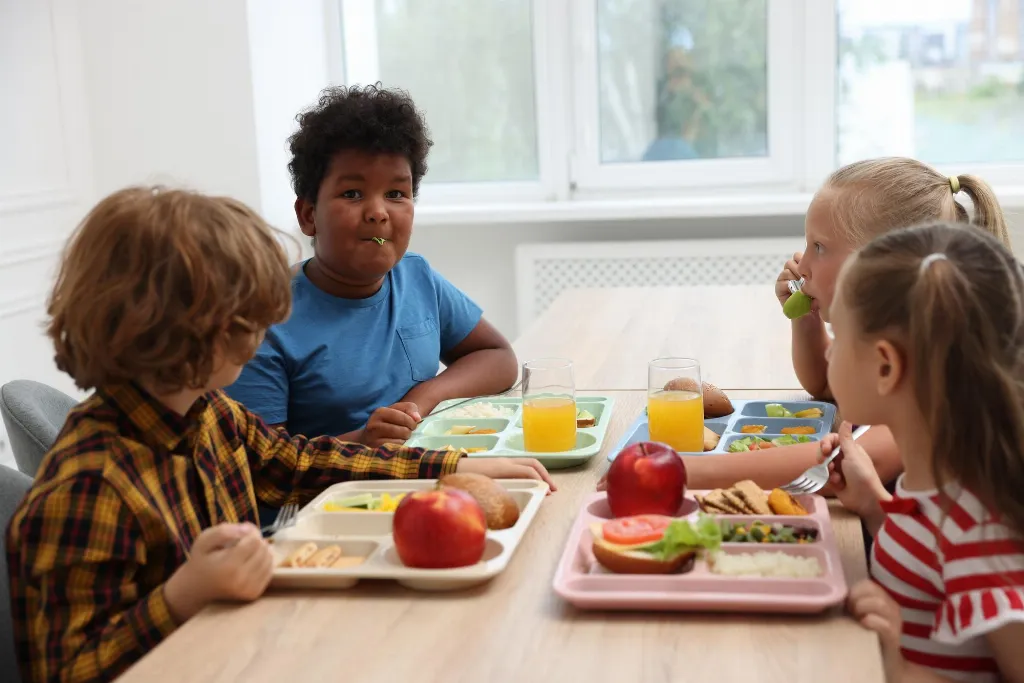
Menus can include familiar foods alongside new foods, provided they meet nutritional, allergy, texture, and choking-safety requirements. Traditional Indigenous foods and other culturally specific ingredients may sometimes fit CACFP meal patterns through the Food Buying Guide or comparable items. Directors should consult their sponsoring organization or the appropriate USDA and state resources before making crediting decisions.
- Offer small portions and allow children to decide whether and how much to eat.
- Use neutral language such as “This recipe includes herbs” rather than ranking foods as strange or normal.
- Explore color, texture, smell, origin, and preparation without requiring a taste.
- Consider family-style serving when it is safe, developmentally appropriate, and permitted.
Family-style meals can support self-regulation, language, and social learning. The family-style meal guidance emphasizes shared bowls, adult modeling, and children’s participation while maintaining supervision and safety.
How can children learn manners while honoring different family expectations?
Manners are social tools, not proof of character. Families may teach courtesy through words, gestures, waiting, serving others first, quiet attention, or participation in conversation. A classroom can teach common expectations without implying that children’s home practices are inferior.
Choose a small number of clear, observable routines: sit safely, keep food on the table, use utensils or hands appropriately for the food, ask before taking from another person’s plate, and speak respectfully. Explain the purpose behind each expectation. “We pass the bowl so everyone gets a turn” communicates community more effectively than “That is not polite.”
Model the language you want children to use. Providers might say, “May I have more, please?” “No thank you,” “I am still using that,” or “Would you like some?” At the same time, children should not be forced to say a particular phrase before receiving care. Communication can be supported through gestures, visuals, home-language words, and alternative responses.
- Teach routines explicitly through modeling, role-play, songs, and picture cues.
- Accept culturally familiar forms of greeting, gratitude, and refusal when they are respectful.
- Use “please,” “thank you,” and “no thank you” as invitations and tools, not tests.
- Correct privately and calmly when possible, protecting the child’s dignity.
Providers can say, “In our classroom, we pass the serving bowl with two hands,” while also acknowledging, “Families may do this differently at home.” This approach builds shared #community without demanding cultural conformity.
How can programs partner with families around meals and routines?
Strong family partnerships prevent many misunderstandings. At enrollment, gather practical information about food preferences, dietary restrictions, feeding routines, language, religious observances, and family goals. Treat the conversation as reciprocal: share the program’s routines and invite families to explain what helps their child feel comfortable.
Communication should be accessible and strengths-based. Use translated materials or qualified interpreters when needed rather than relying on children to interpret important health or dietary information. Ask families how they prefer to receive updates and whether certain terms have a particular meaning in their language or community.
When a difference arises, start with shared goals: the child’s safety, nourishment, dignity, and participation. For example, a provider might say, “We want mealtime to feel successful for your child. We notice that your child waits for an adult to serve. Can you tell us how serving works at home, and how we can support independence here?”
- Invite family input on menus, recipes, food-related stories, and classroom materials.
- Share what the child tried, touched, or enjoyed rather than focusing only on quantity eaten.
- Document agreed substitutions and allergy procedures clearly for all staff.
- Review practices with families when the child’s needs or circumstances change.
Professional learning such as Training Guide for Families from Diverse Language and Cultural Backgrounds Buy Now $35.00 can help providers strengthen communication with families who use languages or cultural practices different from those of the program.
What common mistakes should providers avoid?
Even caring professionals can unintentionally communicate bias during ordinary routines. The most common mistake is treating personal experience as the standard for everyone. A provider may view direct eye contact, individual self-serving, verbal assertiveness, or trying every food as evidence of good manners, although families may define respect differently.
Another mistake is tokenism: introducing a food or celebration once and presenting it as representative of an entire culture. Authentic inclusion is ongoing and connected to real relationships. It also requires attention to power. Families should not have to educate staff repeatedly or disclose private information to receive respectful care.
- Avoid: “That food is weird.” Try: “This food is new to me. What do you notice about it?”
- Avoid: forcing a child to taste, finish, or perform gratitude. Try: offering choices and repeated, pressure-free exposure.
- Avoid: assuming a food preference represents an entire culture. Try: asking the individual family.
- Avoid: changing safety procedures informally. Try: documenting adaptations and consulting licensing, health, and nutrition authorities.
- Avoid: using children as interpreters for sensitive information. Try: arranging appropriate language support.
Food safety, allergy management, sanitation, and choking prevention remain nonnegotiable. Cultural responsiveness does not mean serving unsafe foods or disregarding medical care plans. It means finding respectful, safe ways to honor identity within professional responsibilities.
Conclusion: How can everyday mealtimes become culturally responsive?
Cultural influences show up in child care through food choices, serving patterns, conversation, body language, expectations about adults and children, and definitions of courtesy. The central question is not which culture has the “right” manners. It is how providers can create a shared classroom culture that protects safety, supports development, and respects the many cultures children bring with them.
Begin with practical steps:
- Gather family perspectives about food, language, routines, and respectful interaction.
- Audit menus, books, dramatic-play materials, and mealtime language for inclusion and bias.
- Teach classroom routines explicitly while acknowledging that families may practice them differently.
- Use responsive feeding: offer nutritious choices, avoid pressure, and respect hunger and fullness cues.
- Document adaptations and train every staff member so expectations remain consistent.
When providers approach mealtime with humility and curiosity, children learn more than manners. They learn #empathy, self-advocacy, cooperation, and the confidence that their family’s knowledge belongs in the classroom.
Which ChildCareEd courses can support this work?
- Strength in Differences: Cultural Diversity Buy Now $24.00 — a three-hour course focused on cultural competence, acceptance, and inclusive environments.
- Training Guide for Families from Diverse Language and Cultural Backgrounds Buy Now $35.00 — practical support for communication and collaboration with diverse families.
- From Play to Planning: Building Culturally Competent, Child-Centered Curriculum Buy Now $55.00 — strategies for integrating culture and anti-bias materials into curriculum.
- Nutrition Essentials for Child Care Providers Buy Now $16.00 — nutrition, food preparation, allergies, and feeding challenges.
- Bridging Cultures: Family Communication & Collaboration Buy Now $55.00 — culturally and linguistically responsive family partnerships.
- 45 Hour Child Growth and Development
- Roots & Resilience: Understanding What Shapes a Child
- From Play to Planning: Building Culturally Competent, Child-Centered Curriculum
- Bienvenido! Welcoming All Families
- 45 Hour Infant and Toddler Methods and Materials
- 45 Hour School Age Methods and Materials
- Staff Supervision, Observation & Feedback
- Creating Environments that Nurture Growth and Community
- Texas Director Credential
- 🥦✨ ¿Cómo apoyar a los niños selectivos a probar nuevos alimentos sin presión?
- 🌎 ¿Cómo apoyo a las familias diversas mientras honro su cultura y valores? 💜
- Menos Estrés a la Hora de Comer: Rutinas Simples Que Sí Funcionan
- Cómo ser director de cuidado infantil en Maryland
- Que es Título 22 en California?
- 10 Ejemplos de Cómo la Cultura Influye en el Desarrollo Infantil
- Cómo Solicitar una Licencia de Guardería en Texas
- ¿Cómo solicito la licencia para una guardería en California?
- Regulaciones de Cuidado Infantil en Maryland para Centros y Hogares de Cuidado Infantil Familiar
- Regulaciones de Licenciamiento de Cuidado Infantil en California para Centros y Hogares de Cuidado Infantil Familiar
- Reglas de Cuidado Infantil en Illinois
- Proporciones de Cuidado Infantil y Tamaños de Grupo por Edad en Nueva Jersey (Guía Rápida para Centros y Hogares)
- Lista para Abrir una Guardería en Casa en Dakota del Norte: Cómo Empezar
- Lista para Guardería en Casa en California: Cómo Iniciar una Guardería en el Hogar
- Lista para Guardería en Casa en Texas: Cómo Iniciar una Guardería en el Hogar
- Apoyo en Preescolar para Retrasos del Habla: Estrategias Simples que Ayudan
- Cómo Trabajar en el Cuidado Infantil en California: Requisitos y Pasos
- Cómo Ser Maestra de Preescolar en Maryland
- La mejor manera de hacer seguimiento a la capacitación de su equipo de daycare How to Organize Staff Training for Your Child Care Center Cómo organizar la capacitación del personal para su centro de cuidado infantil
- From Mealtime to Manners: How Cultural Influences Show Up in Everyday Child Care
