When a child arrives absorbed in a phone, moving into classroom life can be difficult for everyone involved. Agree on a predictable handoff with the family, then use the Morning Arrival Routine Cards Buy Now $1.99 to show what comes next, such as putting belongings away and choosing a familiar activity. Acknowledge the child’s feelings and offer steady support as they transition. For deeper professional learning on guiding technology use, explore Technology as a Classroom Tool  Buy Now $16.00. To strengthen your everyday transition strategies, consider Moving About the Classroom: Effective Transitions for Everyday Buy Now $24.00. Read on for ways to make putting the phone away part of a calm, welcoming arrival.
Why can putting a phone away at drop-off be so hard?
Arrival asks a young child to manage several changes at once: leaving a familiar adult, entering a busy setting, shifting attention, and giving up an engaging device. A phone may also be helping the child cope with a rushed morning, a long commute, or separation feelings. Protest is not necessarily defiance; it can be a sign that the child needs support with predictability, connection, and regulation.
Digital media is designed to hold attention, and stopping it can feel abrupt—especially when a child has not been prepared for the change or does not know what comes next. The American Academy of Pediatrics’ Early Childhood Development and Screen Time Toolkit encourages early childhood professionals to support healthy media habits and work with families. NAEYC also highlights the value of clear, consistent routines during daily transitions.
A supportive goal is not to shame families or demand an instant, tear-free handoff. It is to establish a respectful routine that children can learn through repetition. When adults respond consistently, the phone can be put away without turning arrival into a daily power struggle.
What should educators do in the moment?
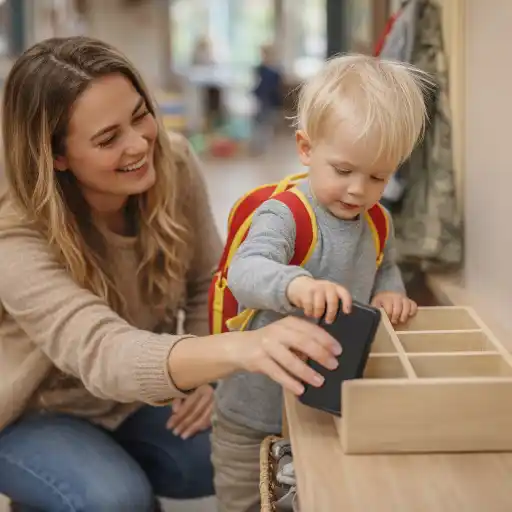
Prepare to receive the child warmly rather than beginning with a correction. A familiar educator, a calm greeting, and a clear next step can make the transition feel safer. If the child is upset, acknowledge the feeling and keep the boundary: “You want to keep watching. It’s hard to stop. We’re putting the phone away now, and I’ll help you choose a book or blocks.”
- Greet the child by name and make a brief connection at the child’s level.
- Ask the family to put the device away before entering the classroom when that is workable and consistent with program policy.
- Give the child a specific, immediate next step: hang up a coat, place a family photo in a cubby, or choose a welcome activity.
- Offer two acceptable choices rather than reopening the question of whether the phone stays out.
- Stay calm and nearby; allow the child time to recover without demanding instant participation.
📱 If a child needs a short goodbye ritual, build one that does not involve continuing the screen: a wave at the window, a high-five, or a brief family photo check-in if your policy permits. Children learn regulation through supportive relationships and predictable practice, not through embarrassment or threats.
How can a consistent arrival routine prevent phone battles?
Routines reduce uncertainty because children can anticipate the sequence. Agree on a few repeatable steps with families and the classroom team. For example: arrive, say goodbye, put the phone in the adult’s bag, store belongings, greet the teacher, then choose a first activity. Keep the sequence short enough to work on busy mornings and flexible enough to respect a child’s developmental needs.
Use language that makes sense to young children. Instead of relying only on minutes, pair a brief warning with a concrete cue: “When we reach the classroom door, the phone goes away. Then you can choose the puzzle or the play dough.” For a child already using a device, a warning before arrival can help: “One more song in the car; then we turn it off before we go inside.”
Make the first classroom activity inviting and accessible. Put a favorite book, blocks, drawing materials, or a simple classroom job within reach. A visual arrival sequence can help children who benefit from pictures, language support, or additional processing time. NAEYC’s transition suggestions include predictable goodbyes and clear communication between families and educators.
Consistency matters more than a perfect script. When all staff members use similar words and steps, the child receives a clearer message and families are less likely to encounter conflicting expectations.
How should programs partner with families without creating blame?
Start with curiosity. A caregiver may offer a phone at drop-off because it has helped during a difficult morning, not because they are disregarding classroom expectations. Ask what the child watches, what helps them stop at home, and whether changes in schedule, sleep, or family routines may be affecting arrival. Listen before proposing a plan.
Explain the program’s approach in plain language: devices are put away during arrival so staff can supervise, connect with children, and help them join play. Share the routine before a difficult morning occurs—in an enrollment conversation, family handbook, or brief update—rather than introducing a new rule during an emotional handoff. If the program uses a written media policy, make sure it reflects applicable regulations and is applied consistently.
- Agree on a brief goodbye phrase and who will carry or store the phone.
- Ask families to give a clear goodbye instead of leaving secretly.
- Share a short, factual update when the child settles, following program privacy practices.
- Offer options that fit the child: a family photo, comfort object, greeting routine, or preferred screen-free activity.
- Use respectful, culturally and linguistically responsive communication; arrange interpretation when needed.
Partnership is most effective when it recognizes each family’s strengths and circumstances. The AAP toolkit includes family-facing resources in English and Spanish that programs can share to encourage conversation about media habits.
What common pitfalls can make the handoff harder?
Several well-intentioned responses can accidentally prolong the conflict. Negotiating for “just one more minute” after the limit has been stated makes the boundary unpredictable. Snatching a device or criticizing the family can increase distress and weaken trust. On the other hand, allowing a phone to remain visible and available after the agreed stopping point may keep the child focused on getting it back.
- Changing the rule from day to day: Set a routine that the whole team can follow.
- Giving warnings without a next step: Tell the child both what is ending and what comes next.
- Using shame or threats: Name the feeling and hold the boundary with a steady, respectful voice.
- Expecting instant calm: Allow time for co-regulation before inviting participation.
- Assuming every protest has the same cause: Consider fatigue, hunger, sensory needs, language, recent changes, and the child’s temperament.
Observe patterns rather than labeling the child. Note when distress begins, how long it lasts, what helps, and whether the child joins activities afterward. If the behavior is persistent or interferes significantly with participation, discuss observations privately with the family and consider whether additional support is appropriate. Do not diagnose; collaborate and follow program procedures.
How can providers keep the plan practical and developmentally responsive?
Choose a small plan and test it consistently for several mornings before making major changes. A useful plan identifies the family’s goodbye, the adult receiving the child, where the phone goes, the first classroom activity, and how staff will communicate. Keep notes brief and objective so the team can identify what is working without turning routine arrival into a burdensome data exercise.
Adapt support to the individual child. A toddler may need a concrete object or repeated phrase; a preschooler may understand a picture schedule or help with a classroom job. Children with communication, sensory, or developmental differences may need added processing time, visual supports, or an individualized transition approach. Ask families what has helped in other settings and coordinate with relevant specialists when appropriate.
Review the plan with staff so that the educator greeting the child is not left to improvise while supervising a group. Directors can make arrival calmer by clarifying staff roles, keeping the entrance uncluttered, and ensuring families know where to complete the handoff. Self-Regulation & Change: Helping Children Cope Buy Now $16.00 is another ChildCareEd course to explore for professional learning on routines and children’s responses to change. For more background on intentional classroom technology practices, consider Technology as a Classroom Tool Buy Now $16.00.
State requirements vary - check your state licensing agency, and follow your program’s policies on devices, supervision, privacy, and family communication.
Conclusion: What helps a child put the phone away at drop-off?
A calmer handoff grows from connection, clarity, and follow-through. Welcome the child, acknowledge that stopping may be hard, and guide them into a predictable screen-free arrival routine. Plan the goodbye and next activity with families, keep staff language consistent, and adapt support to the child rather than treating protest as misbehavior.
Most of all, measure progress by growing familiarity and recovery—not by expecting every arrival to be tear-free. With a clear plan and empathetic teamwork, providers can help children put the phone away and begin the day feeling supported, connected, and ready to participate.
Additional ChildCareEd professional learning:
- Technology as a Classroom Tool Buy Now $16.00
- Moving About the Classroom: Effective Transitions for Everyday Buy Now $24.00
- Self-Regulation & Change: Helping Children Cope Buy Now $16.00
- Community and Family Engagement in Childcare Buy Now $24.00
- Staying Positive: Guidance for Preschoolers Buy Now $24.00
- CDA Certification en Español: Recursos y Consejos para Educadores Bilingües
- Preventing Injuries in Child Care Classrooms
- What routines really help toddlers with separation anxiety?
- Maryland Child Care Ratios and Group Sizes by Age (Center + Home Quick Guide)
- Proporciones de Cuidado Infantil y Tamaños de Grupo por Edad en Maryland (Guía Rápida para Centros y Hogares)
- Proporciones de Cuidado Infantil y Tamaños de Grupo por Edad en Virginia (Guía Rápida para Centros y Hogares)
- How can teachers and parents ease separation anxiety at daycare?
- How can I make a family media plan for young children?
- How can Washington, D.C. child care providers keep children safe during transitions, drop-off, and pick-up?
- How Can California Early Childhood Educators Keep Classrooms Safe During Earthquake Drills and Daily Routines?
- How can Oklahoma early childhood educators keep children safe from poisonous plants, spiders, and snakes outdoors?
- Child Care Sign-In and Sign-Out: Time In and Time Out Records
- Power Outage at Daycare: Safety, Licensing, and Next Steps
- Medication Records in Daycare: Parent Consent, Dosage, and Timing
- How can child care centers be ready for emergencies?
- How Can Child Care Programs Prevent Staff Burnout?
- How Can Child Care Providers Support Children Who Struggle with Transitions?
- How Often Should Daycare Toys and Classroom Materials Be Cleaned and Sanitized?
- How Can Child Care Providers Help a Child Put the Phone Away at Drop-Off?
