Every day you care for children. Being ready for an emergency helps you keep them safe. This article gives clear steps you can use at your #childcare site. It explains what to put in plans and go-bags, how to practice, and how to tell families what happened. Use the links to ChildCareEd and trusted agencies for templates and training.
Why should our center prepare for emergencies?
1. Safety first: Emergencies like storms, fires, or medical events can happen fast. A plan helps staff act quickly and calmly to protect #children and #staff. See ChildCareEd's Emergency Preparedness Plan for guidance: Emergency Preparedness Plan for Child Care Providers Buy Now $0.00.
3. Legal and practice: Many rules expect drills, plans, and records. state requirements vary - check your state licensing agency. FEMA and the CDC have tools for child care sites: FEMA resources and CDC reunification guidance.
Why it matters:
1. Children are small and depend on adults to keep them safe. Quick, calm action saves lives.
2. A plan keeps your program open and helps families trust you. Prepared centers recover faster after an event.
What should be in our written plan and Go-Bag?
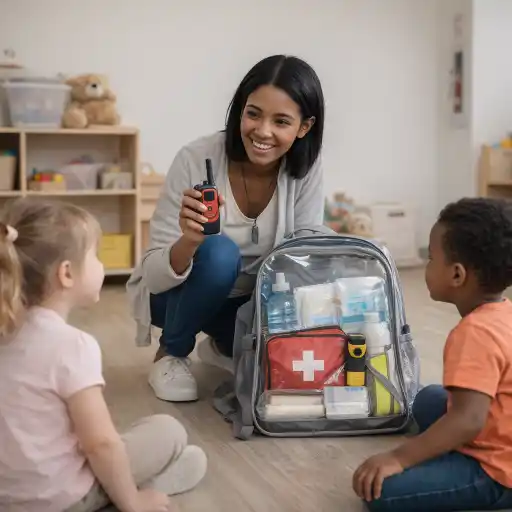
Every center needs a written plan and a ready-to-grab Go-Bag (or bags). Follow these key pieces. For templates, see ChildCareEd's full plan and Go-Bag checklist: Emergency Preparedness in Childcare and Your Emergency Go-Bag.
- 📋 Written plan items:
- Evacuation routes and meeting spots (primary and backup).
- Shelter-in-place and lockdown procedures and safe rooms.
- Designated staff roles: who calls 911, who takes attendance, who grabs the Go-Bag.
- Reunification steps and locations. See CDC reunification tips: CDC Reunification.
- 🎒 Go-Bag items (keep in waterproof bags):
- Daily attendance list, emergency contacts, health forms, and allergy info.
- First aid kit, extra meds (EpiPens, inhalers) per policy.
- Water, snacks, diapers, wipes, blankets, comfort items.
- Flashlight, radio, phone charger/power bank, whistle.
- 🛠️ Tools & updates:
- Save paper copies and digital copies. Rotate food and check meds/batteries every 3–6 months.
- Include a small map and printed directions to alternate sites.
How do we train, run drills, and communicate with families?
Practice makes responses easier and calmer. Use these steps and the ChildCareEd drill and course resources: Emergency and Disaster Preparedness course  Buy Now
 $55.00$45.00 and the communication article: How to Communicate with Families.
- 😊 Plan drills schedule:
- Fire drills monthly, shelter and lockdown drills at least quarterly or as local rules require.
- Make drills age-appropriate. Explain drills simply to children so they are not scared.
- 📞 Practice family messages:
- Use short templates: What happened; What we did; What parents must do; Where to go. See ChildCareEd templates.
- Use two channels: automated text/phone + email. Keep a paper phone tree for backups.
- 📋 After-action review:
- After each drill, log time, who led it, problems found, and fixes. Update the plan.
- Invite local responders to review your plan and join a drill when possible.
How do we avoid common mistakes and reunify children safely?
Common mistakes happen, but you can stop them before they harm children. Use these tips and refer to FEMA and CDC resources for deeper guidance: FEMA IS-36 and CDC Reunification.
- ❌ Mistake: Outdated contact lists. Fix: Verify contacts at drop-off and require two backups for every child.
- ❌ Mistake: No one assigned to roles. Fix: Put names on the plan and practice them until they are routine.
- ❌ Mistake: Long confusing messages. Fix: Use short scripts and one staff person to approve messages before sending.
- Reunification steps (simple):
- Confirm ID: Ask for photo ID and match to emergency form.
- Use sign-out logs and check names off the attendance list from the Go-Bag.
- Keep a central reunification site and tell families where to go via your main channels.
Conclusion and FAQ
Summary: Write a clear plan, pack and maintain Go-Bags, practice drills, and keep families informed. Use ChildCareEd templates and training, and check CDC and FEMA for extra tools.
Short FAQ:
- Q: How often update contact lists? A: Check daily if possible; verify at drop-off and update at enrollment.
- Q: Who leads during an emergency? A: A designated director or on-shift leader; list alternates in the plan.
- Q: Should we include special needs plans? A: Yes — include meds, equipment, and staff assignments. See FEMA and CDC guidance.
- Q: Where can we get training? A: ChildCareEd courses: Emergency and Disaster Preparedness Buy Now
$55.00$45.00. You can also save on emergency preparedness training through H&H Child Care Training, which offers affordable courses tailored to childcare providers: Save on Emergency Preparedness Training.
For templates and more help, start with ChildCareEd's Emergency Preparedness resources: Emergency Preparedness Plans for Child Care Programs. Also consult the Red Cross kit list: Red Cross Make a Plan.
Remember: being ready takes small steps you can do today. Update one form, pack one Go-Bag, and run one practiced drill. Your calm action becomes every child's safety net.
#emergency #preparedness #children #communication #staff
2. Trust and calm: When families know your plan, they feel safer. Clear plans build trust and lower panic. For help writing family messages, use ChildCareEd's communication guide: How to Communicate with Families During a Daycare Emergency.- Life in the Fast Lane: Why First Aid Training & CPR is Critical for Those Working With Children
- CDA Certification en Español: Recursos y Consejos para Educadores Bilingües
- 🌪️Fire Drills, Flashlights & Fast Thinking: Why Emergency Preparedness Is a Must
- Proporciones de Cuidado Infantil y Tamaños de Grupo por Edad en Maryland (Guía Rápida para Centros y Hogares)
- Proporciones de Cuidado Infantil y Tamaños de Grupo por Edad en Nueva Jersey (Guía Rápida para Centros y Hogares)
- Proporciones de Cuidado Infantil y Tamaños de Grupo por Edad en Virginia (Guía Rápida para Centros y Hogares)
- Cómo Trabajar en el Cuidado Infantil en Wisconsin: Requisitos y Pasos
- How can Georgia early childhood educators build confidence with CPR and AED training?
- Why Is CPR and AED Training Important in California Child Care?
- Group Training for Child Care Staff: What Directors Need to Know
- Celebrando la amistad en el cuidado infantil durante el Día de los Mejores Amigos
- Cómo simplificar la capacitación para sus empleados de daycare
- How can child care centers be ready for emergencies?
- How can child care centers get ready for emergencies?
- MN Daycare Rules and Regulations 2026: Current Requirements and Upcoming Changes
- How Do You Start a Daycare in Illinois: Home Daycare or Child Care Center?
- Can You Open a Daycare Just for Children With Special Needs? Licensing, Training, and Staffing Explained
