When a child’s home language is welcomed in the classroom, it becomes a bridge to relationships, learning, and belonging—not a barrier to English. Child care providers can build that bridge through everyday routines, responsive teaching, and meaningful family partnerships; the Building Bridges for Dual Language Learners course  Buy Now $16.00 offers focused professional learning in these areas. Explore it as a practical next step for strengthening classroom strategies and your understanding of dual language development.
Why does supporting dual language learners matter?
Dual language learners (DLLs) are children learning two or more languages at once, or learning another language while continuing to develop their home language. Their language experiences are not all the same: some children hear multiple languages from birth, while others encounter English when they begin child care. In either case, children bring knowledge, relationships, and ways of communicating that deserve recognition.
Language is closely connected to family, identity, and a child’s understanding of the world. When a child’s home language is treated as an asset, the classroom sends a clear message: you and your family belong here. That sense of security can support participation, peer relationships, and willingness to explore new words. NAEYC guidance emphasizes supporting young children as they acquire another language while continuing to develop their home language.
Supporting a home language does not mean setting aside English learning. Children can connect concepts they already understand in one language to new words and experiences in another. A child may know how to describe a shape, retell a familiar story, or ask for comfort in their home language before using the English equivalents. Providers can build on that foundation instead of asking children to start from scratch.
This work also benefits the whole group. When books, songs, and classroom conversations reflect multiple languages, all children have opportunities to learn curiosity, respect, and communication across differences.
How can providers create a welcoming language-rich environment?
The classroom communicates belonging through what children can see, reach, and use. A multilingual label has the most value when it is part of everyday interaction—not just decoration. Choose materials with families’ input and make sure children can access and explore them independently. The Multilingual Learning Toolkit’s classroom environment guidance recommends giving home-language print and culturally relevant materials a meaningful, active place in the room.
- Use picture labels alongside English and family-verified home-language words. Make both languages visible and easy to use.
- Include bilingual and home-language books, audio stories, songs, and rhymes that reflect the children and families in your program.
- Display family photographs and invite caregivers to share familiar objects, stories, or images if they wish.
- Use visual schedules and picture-based cues for arrival, meals, handwashing, transitions, and cleanup.
- Learn a few useful words or phrases—such as a greeting, “help,” or “all done”—with guidance on pronunciation from families.
Predictable routines also help children understand what is happening without relying on spoken English alone. A familiar cleanup song, a picture cue, and the same sequence of steps can reduce uncertainty and make transitions easier. These supports are useful for every child, including children who are tired, new to the setting, or communicating nonverbally.
Represent languages and cultures throughout the year, not only during a special celebration. Ask families how they would like their languages and experiences represented. Avoid assuming that one child can speak for an entire language or cultural community.
What everyday teaching strategies help DLLs participate and learn?
Providers do not need to speak every language represented in the classroom to support children well. Responsive interaction, time to process, and meaningful context are powerful tools. Follow a child’s attention, describe what is happening, and connect words to objects, gestures, pictures, and actions. The NAEYC article Embracing Linguistic Diversity to Support Multilingual Learners describes ways to encourage children to use their languages and build on what they already know.
- Use clear, manageable phrases and emphasize the important words without making conversation feel like a test.
- Pair spoken directions with demonstrations, gestures, real objects, and photographs.
- Repeat a child’s message and add a small extension. If a child says “truck,” you might respond, “Yes, a big blue truck.”
- Pause after asking a question. Children may need additional time to understand, plan, and respond.
- Accept communication through home-language words, English, gestures, facial expressions, drawing, movement, or a combination.
- Build language into play, meals, outdoor exploration, art, music, and book sharing rather than restricting it to a separate lesson.
For example, during a block-building activity, an educator might say, “You put the long block on top,” then pause to let a child respond in any way. During a read-aloud, invite children to point, predict, retell, or act out a scene. A child’s use of more than one language in a sentence—sometimes called code-switching or translanguaging—can be a resource for making meaning, not a mistake to correct.
Some children observe and listen for a while before speaking in a new setting. Welcome their participation without pressure. A smile, a gesture, or a carefully chosen word can be an important contribution.
How can family partnerships strengthen language development?
Families know the child’s communication patterns, meaningful routines, favorite stories, and words for comfort and daily needs. Treat caregivers as partners and experts, not simply as recipients of program messages. Start with open-ended questions and keep the conversation strengths-based.
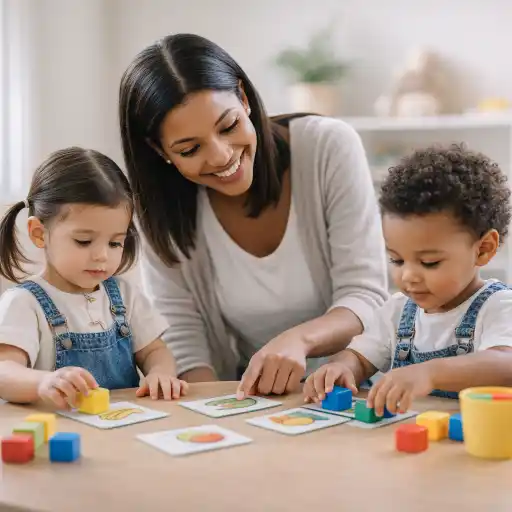
- Ask which languages the child hears, understands, and uses, and whether language use varies by person or setting.
- Learn the child’s name pronunciation and family-preferred words for routines such as eating, resting, or asking for help.
- Invite families to share a song, story, photograph, recording, or translation when they are comfortable doing so.
- Offer simple, enjoyable home activities—such as telling a story, looking at a picture book, or singing—in any language the family prefers.
- Use translated materials, visual messages, or qualified interpreters when appropriate, especially for complex or sensitive conversations.
Family contributions do not need to be elaborate. A caregiver’s voice recording of a familiar song or a short list of useful words can help staff connect with a child and bring home knowledge into classroom routines. Check translations and pronunciations with families or qualified language support; words can vary by community and region.
Reassure families that continuing to use their strongest language is welcome. Rich conversations, stories, and songs at home support children’s communication and connection with family. They also give children knowledge and concepts that educators can connect to English during classroom experiences.
Communication should flow both ways. Share specific positive observations and invite families to add context: “Nora kept trying different ways to fit the pieces together. What kinds of puzzles does she enjoy at home?” This recognizes family expertise and makes collaboration concrete.
How can providers observe progress and avoid common mistakes?
Children’s English words alone do not show the full range of their understanding or abilities. Observe how children communicate across languages and modes, engage with peers, follow routines, solve problems, and use materials. Combine classroom observations with family perspectives and, when available, information from staff or specialists who understand the child’s home language.
Document the context: what the child was doing, who was present, which language or communication mode they used, and what support helped. This gives teams a fuller picture over time. If a developmental concern persists across languages, settings, and communication modes, discuss it respectfully with the family and consult appropriate specialists rather than assuming bilingual development explains every difficulty.
Common pitfalls are usually avoidable with curiosity and reflection:
- Do not tell families to stop using the home language. Encourage them to keep communicating in the language they know best.
- Do not treat limited English, language mixing, or a quiet observation period as evidence of limited understanding.
- Do not use an English-only snapshot as the sole basis for judging a child’s knowledge or development.
- Do not ask a child to interpret sensitive information for adults or require a child to perform their home language for the group.
- Do not rely on cultural stereotypes or occasional themed activities in place of everyday, authentic representation.
Directors can support consistent practice by providing staff reflection time, multilingual books and visuals, clear interpretation procedures, and a shared approach to documenting children’s strengths. State requirements vary - check your state licensing agency, especially for rules related to communication, records, and staff training.
What can providers put into practice starting this week?
Supporting DLLs does not require a complete classroom redesign or fluency in another language. Small, consistent actions can make the day easier to understand and help children feel that their full identities are welcome. Begin with one routine or area, ask families for input, and notice how children respond.
- Choose one transition and add a picture cue, consistent gesture, or familiar song.
- Ask each family about preferred language, useful comfort words, and communication preferences.
- Add one book, song, photograph, or family-informed material that reflects a language in your group.
- During play, describe children’s actions, wait for their responses, and accept different ways of communicating.
- At a staff meeting, share one observation of a child’s strength and agree on one practical next step.
To build your knowledge further, consider the Building Bridges for Dual Language Learners Buy Now $25.00 course, which focuses on language development, classroom activities, family communication, and culturally responsive environments. Directors looking to strengthen broader family partnership practice may also explore Bridging Cultures: Family Communication & Collaboration Buy Now $55.00$42.00, Supporting Families and Caregivers in Language and Literacy Buy Now $16.00, and Assessment of Language and Literacy Skills Buy Now $24.00. Review each course’s details and check your local requirements when selecting professional learning.
Progress may be visible in small moments: a child points to a picture to ask for help, joins a familiar song, shares a word with a peer, or sees a family story reflected in the room. Those moments are meaningful evidence that the environment is becoming more accessible and welcoming.
Conclusion: How can child care providers better support dual language learners?
Providers better support DLLs by treating every language as a strength and building on children’s knowledge through responsive interactions, predictable routines, visual supports, and engaging materials. Home-language development and English learning can grow together; one does not need to be sacrificed for the other.
Strong family partnerships help educators understand each child more fully and make classroom support more authentic. Observe progress across languages and communication modes, avoid English-only assumptions, and ask families for guidance instead of relying on stereotypes. Begin with one practical change, reflect on its impact, and build from there. The central goal is simple and consequential: help every child feel understood, included, and ready to participate.
Frequently asked questions
Do providers need to speak a child’s home language?
No. Learn a few family-provided phrases when possible, and use gestures, visuals, demonstrations, responsive listening, and family collaboration.
Will using a home language confuse a child or slow English learning?
Supporting a child’s home language is not the same as limiting English exposure. Children can draw on concepts and knowledge from one language as they learn another.
What if a child is quiet in the classroom?
Some children listen and observe before speaking in a new environment. Offer unpressured ways to participate and document communication through speech, gestures, play, and other modes.
How should staff track a DLL’s progress?
Use ongoing observations, work samples, and family input. Consider the child’s full language repertoire and context, and consult qualified specialists if concerns persist across languages and settings.
Where should programs start?
Choose one daily routine to make more predictable and language-accessible, then ask families what words, visuals, or materials would help their child feel included.
- Building Bridges for Dual Language Learners
- Building Bridges for Dual Language Learners: For Workforce Solutions
- What Makes Me Special: An Overview of Autism and ADHD
- CDA Bridge Bundle: Family Child Care
- CDA Bridge Bundle: Family Child Care without Portfolio Review
- CDA Bridge Bundle: Infant/Toddler without Portfolio Review
- CDA Bridge Bundle: Preschool without Portfolio Review
- Texas Director Credential
- Building Bridges for Dual Language Learners
- Bridging Cultures: Family Communication & Collaboration
- Language for Our Littlest Learners: Building Communication From the Start
- Language and Literacy Preschool Curriculum
- Apoyo en Español para Capacitaciones Grupales Presenciales y por Zoom en Cursos Selectos
- Apoyo en Preescolar para Retrasos del Habla: Estrategias Simples que Ayudan
- How can child care programs best support Dual Language Learners?
- How can Michigan early educators use culturally responsive teaching in their classrooms?
- How can New York childcare workers in the Bronx find Spanish-language CEU courses?
- How can Minnesota child care settings support Dual Language Learners?
- How can child care programs best support Dual Language Learners?
- How Can Child Care Programs Celebrate Mexican Culture Beyond Stereotypes?
- Dr. Seuss Book List for Teachers: Easy Ways to Use It for Story Time and Learning
- Why Do Bilingual Classroom Activities Matter for Dual Language Learners?
- How Can Child Care Programs Build Meaningful School Readiness?
- How Can Spanish Printable Resources Support Dual Language Learners?
- How Can Child Care Providers Support Children Who Learn at Different Speeds?
- How Can You Support a Dual Language Learner Who Knows the Idea but Not the English Word?
- How Can District of Columbia Child Care Providers Help Dual Language Learners Thrive?
- How Can Child Care Providers Better Support Dual Language Learners?
