Are you ready to move from one-day costumes to meaningful, everyday learning about Mexican life and traditions? Thoughtful, family-centered celebrations help teachers build language, #Mexican identity pride, and stronger classroom relationships while avoiding harmful caricature. A good next step is Strength in Differences: Cultural Diversity — take this 3-hour ChildCareEd course  Buy Now $24.00 to deepen staff cultural competence and practical strategies for inclusion. Also consider Building Bridges for Dual Language Learners Buy Now $25.00 if Spanish-speaking children are in your program; it offers concrete techniques to support language development and family partnerships.
What is a respectful celebration of Mexican #culture that actually teaches?
Respectful celebrations foreground everyday life—foodways, music, stories, language, and family routines—rather than costumes, stereotypes, or single-day performances. Start with a short learning goal (for example: “learn two Spanish greetings and one family story”) and design low-pressure ways for children to participate. Use real-photo books, simple maps, and short songs to anchor lessons in facts and lived experience. Culturally responsive materials make children feel seen and supported, and they create teaching moments for vocabulary, counting, and social-emotional learning.
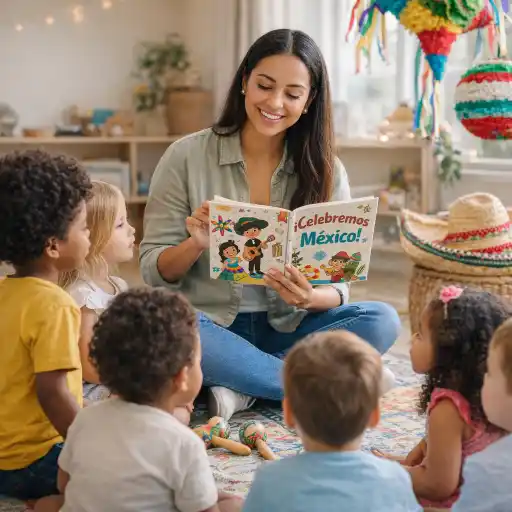
Why it matters: when you center family voices and accurate materials, you strengthen trust with families and model respect for diverse identities. For classroom activity ideas and quick crafts, see Mexican-Themed Activities That Teach Culture and Creativity — ChildCareEd article.
How do I plan hands-on activities that teach skills and avoid caricature?
Design stations that map to learning goals: language & literacy, fine motor, music & movement, and social studies. Keep activities short, scaffold steps, and offer choice so children participate at their comfort level.
- Language & Literacy: read a real-photo picture book, teach one greeting, and add a postcard-writing center with sentence starters.
- Fine Motor / Art: tissue-paper flowers or safe papel picado templates—focus on process, not “perfect” flags.
- Music & Movement: make egg maracas (plastic eggs + rice) and use simple folk rhythms for a movement song.
- Social Studies: point to Mexico on a child-level map and add photos of homes, markets, and instruments.
- 🍎 Food learning (safe option): use labeled photos, pretend food, or teacher-led tastings with written permissions and alternatives for allergies.
Tip: rotate stations so every child visits three centers in a session. If you include food, follow your allergy plan and remember state requirements vary - check your state licensing agency.
How can I authentically involve #families and community partners?
Family input is essential. Offer low-effort, optional ways to contribute—one photo, a recorded greeting, a recipe card, or a short song title. Make requests brief and flexible: a single-sentence form or a drop-off station for photos and notes works best. Partner with local cultural artists, librarians with bilingual collections, or community dancers for short visits—invite them for 10–20 minutes and provide clear expectations.
Organizationally, strong family engagement benefits when program leaders model partnerships and support staff to follow up. For staff training on family partnerships and culturally responsive assessment, consider Engaging Families for Child Success Buy Now $55.00 and Culture, Communication, and Collaboration in Assessment Buy Now $55.00 for practical tools to build trust and co-create goals.
What common mistakes lead to harm — and how do I avoid them?
Many well-meaning activities unintentionally reinforce stereotypes. Watch for these pitfalls and their fixes:
- 🚫 Mistake: costume days or caricature props. Fix: choose everyday artifacts (photos, musical instruments, recipes) and teach the meaning behind items.
- 🚫 Mistake: asking one child to represent their whole culture. Fix: use multiple stories, books, and family voices; never single out a child as “the expert.”
- 🚫 Mistake: food activities that exclude children because of allergies, cost, or religious restrictions. Fix: offer pretend food, photos, or smell jars so all children engage.
- 🚫 Mistake: superficial “fun facts” without context. Fix: teach one clear fact at a time (e.g., Cinco de Mayo commemorates the Battle of Puebla) and connect it to music, art, or family stories rather than treating it as a party theme.
Use real-photo multicultural books carefully: evaluate for accuracy and avoid texts that exoticize. See ECRP research on selecting multicultural picture books for guidance on possibilities and pitfalls (reference for deeper study).
How do I adapt activities for ages, Dual Language Learners, and measure success?
Adaptation is straightforward: infants and toddlers need sensory photos and short songs; preschoolers benefit from passport stickers, postcards, and guided centers; school-age children can research, compare maps, and present short reports.
- Assessment ideas (quick and practical):
- • One-line observation notes after activities (new words used, joined group, followed steps).
- • Collect a sample: a postcard, a drawing, or a passport page to document participation.
- • Family feedback: one-question survey—“Did your child bring home a new word or story today?”
Supporting Dual Language Learners is especially important when celebrating Mexican culture. Use home language labels, play recorded family greetings, and include bilingual books. ChildCareEd’s Building Bridges for Dual Language Learners Buy Now $25.00 provides classroom strategies to strengthen language and inclusion. For another perspective, explore how a Montessori approach can nurture young bilingual learners while honoring Spanish heritage and cultural pride.
Conclusion
Celebrating Mexican culture well means centering family voices, teaching everyday life, and designing short, scaffolded activities that build skills and belonging rather than relying on costumes or caricatures. Remember to document small learning wins, offer optional ways for families to participate, and train staff in cultural competence. For immediate staff development, start with Strength in Differences: Cultural Diversity Buy Now $24.00 to build program-wide practices and Building Bridges for Dual Language Learners Buy Now $25.00 if you serve Spanish-speaking children. Also explore Creating Environments that Nurture Growth and Community Buy Now $55.00 to design caring spaces that reflect family cultures. State requirements vary - check your state licensing agency. Thoughtful planning and family partnership will help your #classroom become a place where Mexican #families and children feel valued, seen, and proud.
- Building Bridges for Dual Language Learners
- 45 Hour Child Growth and Development
- Building Bridges for Dual Language Learners: For Workforce Solutions
- From Play to Planning: Building Culturally Competent, Child-Centered Curriculum
- Moving About the Classroom: Effective Transitions for Everyday
- Texas Director Credential
- Building Bridges for Dual Language Learners
- Montessori Cultural Activities: Exploring the World Through Play and Learning
- Moving About the Classroom: Effective Transitions for Everyday
- CDA Certification en Español: Recursos y Consejos para Educadores Bilingües
- ❤️ ¿Cómo ayudan los educadores a las familias a acceder a los servicios que necesitan?
- Recursos en Español sobre el Sueño Seguro del Bebé
- 10 Ejemplos de Cómo la Cultura Influye en el Desarrollo Infantil
- Actividades de Fiesta para Niños de Preescolar y Primaria
- Proporciones de Cuidado Infantil y Tamaños de Grupo por Edad en Virginia (Guía Rápida para Centros y Hogares)
- Cinco de Mayo Crafts and Activities for Preschool and Daycare
- How Can Early Childhood Classrooms Celebrate Diversity and Inclusion?
- Celebrando la amistad en el cuidado infantil durante el Día de los Mejores Amigos
- Mexican-Themed Activities That Teach Culture and Creativity
- Cómo simplificar la capacitación para sus empleados de daycare
- How can my classroom celebrate multiple traditions in ways that are fair, meaningful, and sustainable?
- How Can Child Care Providers Teach Día de los Muertos With Cultural Sensitivity?
- How Can Child Care Programs Celebrate Mexican Culture Beyond Stereotypes?
- How Can We Celebrate Every Family and Create a Classroom Where Everyone Is Represented?
- How Can Child Care Programs Celebrate Hispanic Heritage Month Meaningfully?
- How Can Preschools Celebrate Hispanic Heritage Month Meaningfully?
- What Are Age-Appropriate Ways to Honor Latino Cultures in the Classroom?
