Introduction
Promoting mental health in young children helps them feel safe, learn, and grow. This short guide gives practical ideas for child care providers and directors. We focus on easy steps you can use every day. We want to help the #children in your #classroom grow strong with #resilience, #selfregulation, and good #mentalhealth.
Why this matters: Healthy feelings let children play, make friends, pay attention, and try new things. Early help makes a big difference for a child’s future. Programs that teach and support emotional skills also make classrooms calmer and kinder. For research on long-term benefits, see the summary from RAND.
Where to learn more: ChildCareEd has many practical articles and courses you can use today, like Techniques for Childcare Providers to Promote Emotional Well-Being and Trauma-Informed Care in Childcare Settings. State requirements vary - check your state licensing agency.
Why does early childhood mental health matter?
Short answer: It shapes learning, relationships, and lifelong health. When young children feel safe and supported, they explore and learn more. When they feel stressed or alone, they struggle to pay attention and make friends.
Key reasons it matters:
- 😀 Brain growth: Early years are rapid brain growth times. Good care helps healthy wiring for emotion and learning. See the ChildCareEd resources on Mental Health in Early Childhood
 Buy Now $24.00.
 - 🙂 Social skills: Young children learn trust, sharing, and kindness from adults and friends. Programs that teach these skills help children succeed in school and life.
- 💡 Long-term benefits: Evidence shows quality early supports can improve school results and reduce problems later. Read a summary from RAND.
- 🤝 Community impact: Supporting kids early lowers stress for families and the whole program. It is part of preventing bigger harms like those described by the CDC on ACES.
Why it matters to your program: Strong mental health supports make classrooms calmer, reduce challenging behaviors, and help staff feel more effective. For step-by-step ideas, look at Nurturing Young Minds.
How can daily routines and relationships support children's mental health?
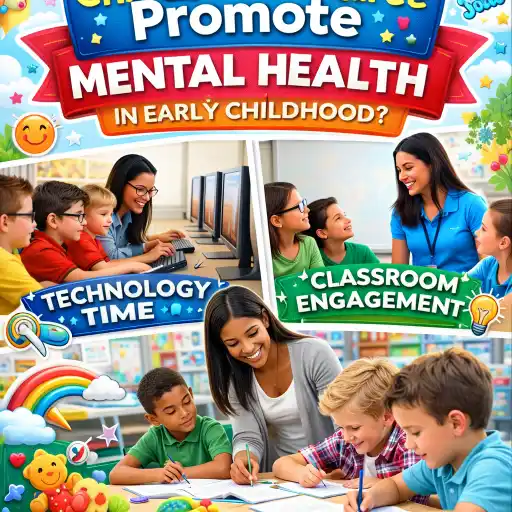
Daily routines and warm relationships give children a sense of safety. That safety is the first building block for strong mental health. Use these simple steps every day.
- 😀 Create consistent routines:
- 1.1 Use a clear schedule with pictures or a board. Predictable days lower anxiety.
- 1.2 Give countdowns before transitions ("5 minutes until cleanup").
- 🙂 Build warm connections:
- 2.1 Greet children by name each morning and say good-bye. Small moments add up.
- 2.2 Get down to their level, listen, and name feelings ("You look sad").
- 💬 Teach feeling words and coping tools:
- 3.1 Use books, songs, and feeling faces to grow emotional vocabulary. See ideas from Fostering Healthy Social & Emotional Development Buy Now $0.00.
- 3.2 Practice calm-down steps like balloon breaths or the Turtle Technique from CSEFEL (CSEFEL Module).
- 🤝 Use choices and routines to teach independence:
- 4.1 Let children pick between two activities to practice decision-making.
- 4.2 Teach simple self-help steps (put on coat, wash hands).
Quick tip: Offer a calm corner with soft items and picture choices for what to do there. This is a teaching place, not a punishment. For more on calming spaces and self-regulation, see How to Promote Self-Regulation Skills.
What classroom strategies teach emotional skills and self-regulation?
Teaching emotional skills and self-regulation helps children manage feelings and act safely. Use short, fun activities and practical routines.
Steps you can use right away:
- 😀 Use games to practice control:
- 1.1 Play quick games like Red Light/Green Light, Freeze Dance, or Simon Says (2–5 minutes).
- 🙂 Build emotion vocabulary:
- 2.1 Read stories that name feelings and ask, "How do you think she feels?"
- 2.2 Make a feelings chart and practice labeling faces each day.
- 💪 Teach simple coping tools:
- 3.1 Practice balloon breathing, Turtle Technique, and five-finger breathing when kids are calm.
- 3.2 Create a small calm kit with safe sensory items. For more tools, see Self-Regulation & Change.
- 📚 Use modeling and role-play:
- 4.1 Teachers show calm behavior and narrate what they do ("I feel upset; I will take three deep breaths").
- 4.2 Role-play how to ask for a turn, apologize, or fix a problem.
Common mistakes and how to avoid them:
- 😀 Mistake: Teaching during a melt-down. Fix: Teach skills when children are calm.
- 🙂 Mistake: Giving too many tools at once. Fix: Pick 1–2 tools and practice daily.
- 💬 Mistake: Saying "use your words" without teaching the words. Fix: Teach exact phrases and practice with puppets or games.
For trauma-aware practices that protect all children, review Trauma-Informed Care in Childcare Settings and the CDC guidance on school mental health strategies at CDC Action Guide.
When should we seek extra help and how do we partner with families?
Some children need more than classroom supports. It’s important to know when to get extra help and how to work with families and community partners.
Signs to consider extra support (look for patterns, not one-off days):
- 😀 Frequent or long meltdowns that don’t calm with usual supports.
- 🙂 Hurting self or others often.
- 💤 Big changes in sleep, eating, or play that last for weeks.
- 📉 Dropping skills or withdrawal from peers and activities.
Steps to get help:
- 1. Talk with the family: Share observations, listen to concerns, and plan next steps together. Be kind and nonjudgmental.
- 2. Use screening tools: Consider social-emotional screeners like ASQ:SE-2. See guidance from ASQ resources at ASQ-SE and screening lists like the Minnesota recommended instruments.
- 3. Consult experts: Talk with your program’s mental health consultant or local early intervention team. See toolkits from CECMHC.
- 4. Refer when needed: If risk is high, help families find pediatric, behavioral, or community supports. The CDC has resources on preventing and responding to adversity at CDC ACEs.
Remember: state requirements vary - check your state licensing agency. Training for staff matters. ChildCareEd offers courses like A Thoughtful Approach to Children's Mental Health Buy Now $24.00 and Early Emotional Wellness Buy Now $16.00 to build skills and confidence.
Conclusion
Promoting mental health in early childhood is doable with steady routines, warm relationships, short teaching moments, and clear plans for extra support. Use simple games, feeling words, calm corners, and family partnerships to make daily life better for children and staff.
Quick checklist to get started:
- 😀 Add a morning greeting and a consistent daily schedule.
- 🙂 Teach one calm-down tool and practice it every day.
- 💬 Build feeling words with stories and charts.
- 🤝 Make a plan with families for screening or referrals if needed.
FAQ
- Q: When should we screen a child? A: Use screening when you see ongoing worry, big behavior changes, or when families ask. Routine screening at key ages is best. See ASQ resources at ASQ.
- Q: Can one teacher do all this? A: No. Teamwork helps. Directors should support staff training and consult mental health specialists. ChildCareEd courses can help teams learn together.
- Q: Is trauma-informed care only for kids with trauma? A: No. These practices help all children by creating safer, more predictable classrooms. Read Trauma-Informed Care.
- Q: How do we measure progress? A: Watch for calmer transitions, more emotional words, fewer meltdowns, and better peer play. Use screenings and notes to track change.
Keep learning, be kind to yourselves, and use small steps. For practical lesson ideas and training, explore ChildCareEd.
- Not Just a Bad Day: 10 Subtle Signs Your Kid Might Be Battling Depression and AFSP walks near you
- Eat, Play, Grow: Essential Nutritional Tips for Growing Minds
- Mental Health for Tiny Elves: Supporting Kids Through Winter Blues
- CDA Certification en Español: Recursos y Consejos para Educadores Bilingües
- Recursos en Español sobre el Sueño Seguro del Bebé
- Cómo Ser Maestra de Preescolar en Maryland
- The Top Rewards of Working in Early Childhood Education
- How Can Child Care Programs Support Children’s Mental Health?
- How Do Minnesota Winters Affect Young Children's Mental Health?
- After DC Early EdX 2026: Why Do Early Educator Mental Health and Advocacy Matter More Than Ever?
- How can Florida providers connect early learning, health, and family support in 2026?
- How Can Early Childhood Programs Support Mental Health?
- Cómo simplificar la capacitación para sus empleados de daycare
- What Does Michigan's Well-Being Data Mean for Child Care Providers?
- How Can Child Care Programs Best Support Young Children's Emotional Wellbeing?
- How Can Child Care Programs Make Early Childhood Truly Trauma-Sensitive?
- Can Play Be a Primary Strategy for Supporting Children’s Mental Health?
- How can child care programs build strong relationships with licensing and community agencies?
- What Would the Proposed Head Start Changes Mean for Children and Families?
- How Can Child Care Providers Support Children’s Mental Wellness?
