A strong emergency response is more than knowing isolated procedures—it is the ability to act together when children need help. These ten first aid games give directors and providers a practical, low-pressure way to test communication, judgment, and hands-on readiness; for a more complete foundation, explore ChildCareEd’s Pediatric Blended First Aid & CPR/AED course Buy Now $85.00$80.00, which combines self-paced learning with skills verification for infant, child, and adult emergencies.
Why do first aid games matter for child care teams?
Staff meetings often prioritize schedules, curriculum, and staffing concerns, leaving little time for emergency practice. Yet a written plan does not automatically translate into coordinated action. A game-based drill creates a safe opportunity to discover whether staff can locate supplies, communicate clearly, assign supervision, and begin appropriate care without becoming overwhelmed.
Games are not intended to replace certification or clinical instruction. They are rehearsal tools that strengthen #confidence and help teams identify gaps before a real incident occurs. They also make professional learning more engaging for experienced providers who may be tired of passive lectures.
Effective practice should be brief, respectful, and connected to the children, routines, and hazards in your setting. Use current training guidance, program policies, and emergency action plans as the standard for judging performance.
- Practice one priority skill at a time.
- Rotate leadership, caller, equipment, and classroom-supervision roles.
- Debrief with curiosity rather than blame.
- Document one improvement after every activity.
How can a first-minute relay test team coordination?
Write essential response actions on separate cards: check scene safety, assess responsiveness and breathing, call 911, retrieve the first-aid kit or AED, begin care within training, supervise the remaining children, and meet responders. Divide the team into small groups and give each group a brief scenario, such as an unresponsive child on the playground.
One participant starts with the first card and names the next action. The next person continues, adding a specific verbal direction such as, “Taylor, call 911 and give our address.” Continue until the group completes the sequence. Repeat with roles changed.
The purpose is not speed alone. Listen for vague commands, duplicated tasks, missing supervision, or uncertainty about equipment locations. A useful variation removes one staff member from the scenario to represent an absence or staff break.
Afterward, ask:
- Were directions assigned to specific people?
- Who maintained the children’s supervision?
- Could everyone state the program address and emergency access point?
- What step needs more hands-on practice?
Which games reinforce choking, CPR, and AED readiness?
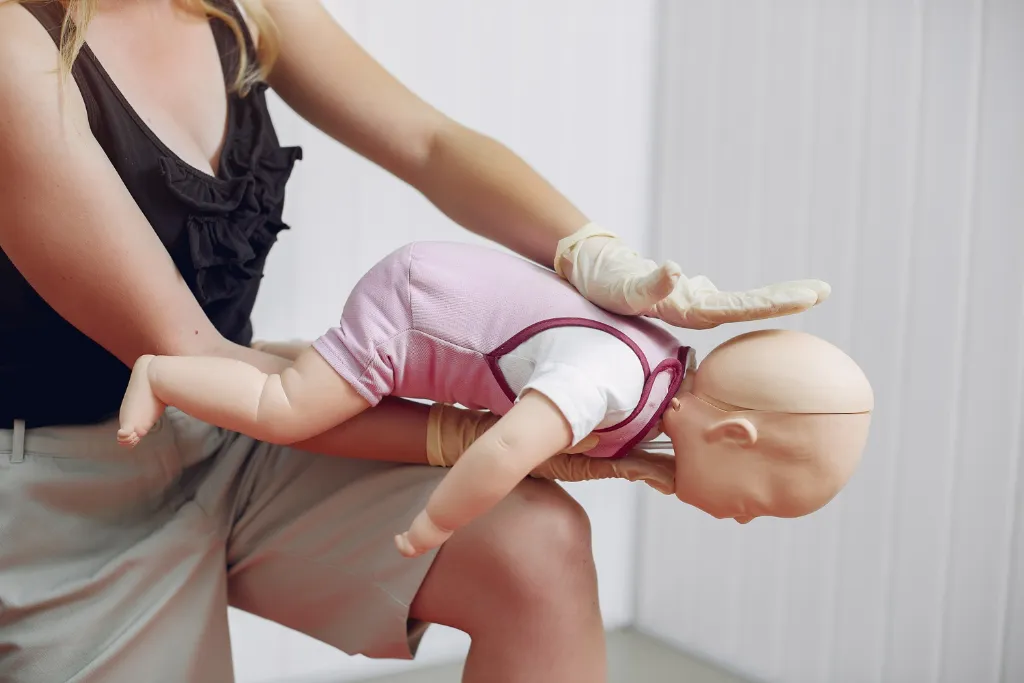
Use stations rather than a single long demonstration. Set up an infant manikin station for age-appropriate CPR practice, a child manikin station for choking-response rehearsal, and an AED station where staff identify the device, turn on a trainer, place pads according to instruction, and follow prompts. Staff should never practice compressions, rescue breaths, or choking maneuvers on real children. A quick review of the differences between infant and child CPR can help staff practice age-appropriate techniques at each station.
At each station, one person performs, one coaches with a checklist, and one observes teamwork. Rotate every few minutes. Coaches should focus on one specific strength and one actionable correction. This approach makes feedback manageable and reduces embarrassment.
Use a “silent setup” challenge as an additional test: ask staff to locate barriers, gloves, the emergency binder, and the AED without verbal hints. The exercise can reveal whether supplies are visible, accessible, and consistently stored.
These activities support, but do not replace, current pediatric First Aid and CPR/AED certification. Technique must be taught and evaluated by an appropriate instructor using current standards.
 How can scenario cards test first aid judgment?
Create cards with only the information a responder would initially know. Examples include a deep playground cut, a suspected head injury, a child with hives and breathing difficulty, a seizure, a burn, or a toddler who cannot speak or cough during lunch. The responder explains what they would do next, while teammates handle calling, equipment, supervision, and documentation.
For a refresher on core response steps for common emergencies, review these essential first aid tips for parents and caregivers alongside your program’s current training and health plans.
Do not ask staff to diagnose. Ask them to recognize danger signs, activate help, follow individualized health plans, and provide care within their training. For medication-related scenarios, use a labeled training device or role card—not real medication.
Increase complexity gradually:
- Round one: one responder and one patient.
- Round two: add a full classroom requiring supervision.
- Round three: remove a key staff member or relocate the event outdoors.
Debrief how the team balanced immediate care with the needs of the other children. The goal is coordinated decision-making, not theatrical performance.
What low-cost games make emergency learning memorable?
Several activities require little equipment and work well during staff meetings. In a first-aid-kit scavenger hunt, teams locate items and explain their purpose. In “911 words,” staff practice stating the program address, location, symptoms, number of children involved, and callback number. In true-or-false corners, staff move to a designated side of the room and then explain their reasoning. To help staff distinguish what a classroom first-aid kit can provide from the training and actions needed for CPR, review how first-aid kits and CPR response differ in the classroom.
Try “teach the teddy” for communication practice: one participant explains a care step to a stuffed animal while another evaluates whether the instructions are calm, clear, and age-appropriate. A matching game can pair hazards with first actions, such as chemical exposure with moving away from the source and seeking professional guidance.
- 🧰 Kit relay: identify and return supplies to their designated locations.
- 📞 Emergency-call script: practice concise information for dispatchers.
- 🎭 Role rotation: switch responder, caller, runner, and supervisor roles.
- 🧠 Myth or method: distinguish safe procedures from common misconceptions.
Keep games aligned with certified instruction. Never turn an unsafe shortcut into a joke or reward guessing over correct technique.
How should directors score and improve the drills?
Use a short checklist with observable behaviors rather than personality judgments. Suggested criteria include scene safety, recognition of a possible emergency, specific delegation, timely activation of 911, access to equipment, age-appropriate response, continued supervision, calm communication, and documentation.
Score each item as “demonstrated,” “needs coaching,” or “not observed.” Avoid ranking employees publicly. A psychologically safe process encourages staff to admit uncertainty and request practice.
Build a recurring schedule:
- Monthly: one 10–20 minute skill or scenario.
- Quarterly: a team-based tabletop exercise with role rotation.
- At onboarding: emergency-plan review, supply locations, and role expectations.
- Before certification expiration: verify renewal plans and required documentation.
Review the first-aid kit, emergency contacts, medication plans, barriers, and AED access after each drill. State requirements vary - check your state licensing agency, and confirm whether your chosen course format, practice documentation, and renewal interval meet local expectations. ChildCareEd’s Pediatric In-Person First Aid & CPR/AED course Buy Now $95.00 is another option for teams that benefit from instructor-led, hands-on practice. Directors may also review Responding to Emergencies  Buy Now $16.00, Stay Alert! Steps for Emergency Prep Buy Now $25.00, and Creating an Emergency and Disaster Preparedness Plan Buy Now $16.00 as complementary professional-development options.
Conclusion: Can your team explain and perform the next step?
First aid games help answer a practical question: can the team move from recognizing a problem to coordinated action? The most effective activities combine realistic scenarios, age-appropriate skills, clear delegation, safe equipment, and supportive feedback.
Choose one game, schedule it regularly, and use the results to improve supplies, policies, and training—not to shame staff. Formal certification remains essential, while short rehearsals keep skills accessible between courses. With consistent practice, your team can build a calmer, clearer response that supports children, families, and one another.
Frequently asked questions
How often should we use first aid games?
Brief monthly practice is practical for many programs, supplemented by formal renewal and additional drills when staffing, policies, or hazards change.
Do games count as certification?
No. Games reinforce learning but do not replace a recognized First Aid, CPR, or AED course and skills evaluation.
Can substitutes participate?
Yes. Include substitutes and newly hired staff in orientation, emergency-plan review, and role-based practice appropriate to their responsibilities.
Should children participate?
Only in developmentally appropriate safety activities, such as learning to tell an adult. Adults should practice technical procedures with approved manikins and training equipment.
- Adult/Child/Infant CPR AED and Adult First Aid Blended
- Basic Health & Safety and Breastfeeding Awareness
- Adult Only CPR AED and Adult First Aid Blended
- Birth to Five CDA Credential with Portfolio Review
- Pediatric Blended First Aid & CPR/AED Adult, Child, Infant
- Pediatric RSV First Aid & CPR/AED
- Pediatric In-Person First Aid & CPR/AED Adult, Child, Infant
- Adult First Aid Only - Blended
- Texas Director Credential
- Summer Fun Meets Summer Safety: The Importance of Pediatric First Aid and CPR Training
- CDA Certification en Español: Recursos y Consejos para Educadores Bilingües
- ¿Cómo pueden los equipos de cuidado infantil practicar habilidades rápidas de primeros auxilios en situaciones reales?
- Regulaciones de Licenciamiento de Cuidado Infantil en California para Centros y Hogares de Cuidado Infantil Familiar
- Lista para Abrir una Guardería en Casa en Dakota del Norte: Cómo Empezar
- Consejos de Supervisión Activa para Salones de Preescolar y el Juego al Aire Libre
- Cómo Trabajar en el Cuidado Infantil en California: Requisitos y Pasos
- Gross Motor Games for Preschool and Kindergarten
- Team-Building Activities for Daycare: Helping Children Learn Together
- Animal Races for Kids: Fun Movement Activities
- Babysitting Training Online: How to Build Skills, Safety, and Confidence
- Mexican-Themed Activities That Teach Culture and Creativity
- Canciones, juegos y preguntas de círculo para niños
- Superhero Activities for Preschoolers: Play, Create, and Learn
- How Can I Use Fun Math Activities for Preschoolers Every Day?
- What Makes a Great Home Daycare? 10 Things Parents Notice First
- First Aid Scenarios for Child Care Staff: 10 “What Would You Do Next?” Challenges
- Pediatric First Aid for Teachers: Are Your Skills Still Fresh When an Emergency Happens?
- First Aid Games for Adults: 10 Fun Ways to Test Your Child Care Team’s Emergency Skills
