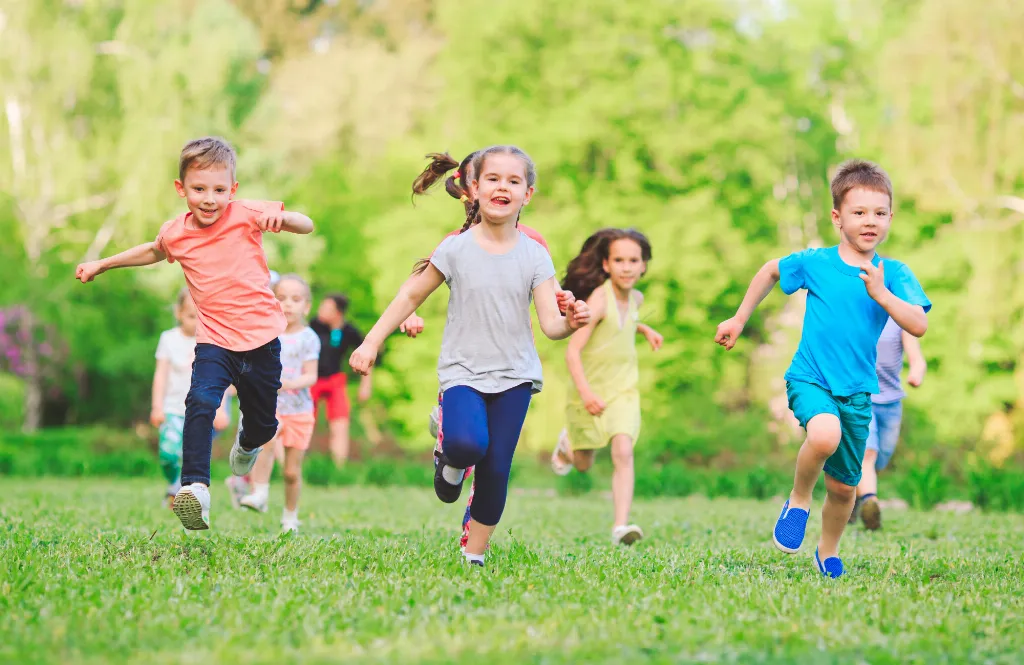
 Animal races are a playful, low-prep way to add short movement breaks to your day. These short #grossmotor #movement games with #animals are great for #preschoolers in your #classroom.
They combine pretend play, strength-building, and listening practice. In this article you’ll get easy race ideas, a safety checklist, ways to include every child, and quick tips that fit busy schedules. You’ll also find links to ready resources you can use or adapt.
For research-based classroom ideas and how movement helps learning, see Gross Motor Games for Preschool and Kindergarten on ChildCareEd. For playful animal-specific moves, see the list of animal walks at And Next Comes L which gives 12 fun animal walks you can use indoors.
How do I run a safe, organized animal race in my program?
Run races that are fun and safe by planning 1–2 minutes ahead. Use this checklist:
- 🔸 Clear the area: move chairs and small toys.
- 🐾 Mark boundaries with tape or cones so children know the play zone.
- 🔔 Teach one stop signal (clap, bell, or the word “Freeze!”) and practice it once.
- 📋 Demo each animal move so children can copy you first.
- ♿ Offer a seated or modified option so every child can join.
State rules and ratios matter for group activities—state requirements vary - check your state licensing agency. For classroom-ready safety tips and inclusive adaptations, check the ChildCareEd safety and adaptation guides like Gross Motor Activities for Preschoolers.
What simple animal race ideas and how-to steps can I use tomorrow?
Here are ready-to-use races you can try with little or no materials. Use numbered rounds to keep things tidy.
- 🐸 Frog Hop Race: Children squat and jump forward like frogs to a cone and back. Repeat 2 times.
- 🐧 Penguin Waddle Relay: Kids hold a beanbag between knees and waddle to a partner. See the penguin relay idea in ChildCareEd.
- 🦀 Crab Walk Dash: Children walk on hands and feet, belly up, across a short lane.
- 🐸 Animal Obstacle Course: 1) Snake slither under a rope, 2) bear walk around a cone, 3) elephant stomp to the finish. Use painter’s tape and cushions to build stations (low prep).
- 🐢 Slow-and-Steady Balance: Have kids balance on one foot like a flamingo to cross a tape “log.”
Want printable prompts? Use farm or animal movement cards like those at Growing Hands-On Kids or free movement cubes ideas like Choices for Children. For classroom game collections and themes, ChildCareEd’s lists with step-by-step games are very handy: 10 Gross Motor Games.
How do I adapt animal races for different ages, abilities, and learning goals?
Adaptation keeps the activity fun and fair. Use these strategies:
- Offer two movement levels: e.g., hop OR march.
- Use props to help: beanbags, soft balls, scooter boards, or scarves.
- Provide visual cards showing the animal moves so non-readers can follow (see printable cards at Lets Play.Learn.Grow).
- Pair kids: a buddy can model or offer physical support if needed.
- Change space: do seated or tabletop versions for children with mobility limits.
Common mistakes and how to avoid them:
- ❌ Too much waiting time—use small groups or stations.
- ❌ Too-hard moves—demo and give an easier option.
- ❌ No clear ending—use a finish cone or a quick countdown to end rounds.
Summary
Animal races are quick, joyful ways to add purposeful #movement and #play to your day. They are low-prep, support gross motor growth, and help with self-regulation and listening. Try 1–2 races during transitions or as brain breaks. Use clear boundaries, a stop signal, and simple adaptations so everyone can take part. For ready lesson ideas and printable resources, check ChildCareEd guides like The Gross (Motor) Truth and the classroom game list Gross Motor Games for Preschool and Kindergarten.
FAQ (quick answers)
- Q: How long should a race last? A: 1–3 minutes per child or team is enough. Short bursts work best.
- Q: What if space is small? A: Use tape lines, stations, or seated animal moves.
- Q: How often should we do movement breaks? A: Several short breaks a day help attention and behavior.
- Q: Where can I get visuals and cards? A: See printable movement cards at Growing Hands-On Kids and Lets Play.Learn.Grow, and many ideas on ChildCareEd.
- CDA Preschool Credential
- Playful Learning: Infant & Toddler Activities
- CDA Preschool Credential with Portfolio Review
- CDA Family Child Care Credential
- CDA Infant/Toddler Credential
- Birth to Five CDA Credential with Portfolio Review
- CDA Family Child Care Credential with Portfolio Review
- CDA Infant/Toddler Credential with Portfolio Review
- Sensitive Periods in Montessori: Guiding Natural Learning
- Wellness in Action: Teaching Healthy Habits to Children
- DIY Snow Globes: The Fine Motor Craft That’ll Keep Kids (and Adults) Busy for Hours
- ¿Cómo hacer actividades navideñas inclusivas para todas las familias?
- ¿Cuáles son las mejores actividades del Día de la Tierra para niños en casa o en el aula?
- ¿Cómo puedo usar escenarios de juego de roles de primeros auxilios en mi aula?
- ¿Cómo puedo enseñar habilidades de primeros auxilios con escenarios de juego de roles?
- Actividades de Motricidad Gruesa que Desarrollan el Equilibrio, la Coordinación y la Fuerza
- Actividades de Fiesta para Niños de Preescolar y Primaria
- Consejos de Supervisión Activa para Salones de Preescolar y el Juego al Aire Libre
- Las Mejores Ideas de Excursiones para Guarderías en Texas
- Las Mejores Ideas de Excursiones para Guarderías en Georgia
- Animal Races for Kids: Fun Movement Activities
- Calabazas, hojas y manzanas: actividades de otoño para preescolares
- Canciones, juegos y preguntas de círculo para niños
- School-Age Daycare Activities That Keep Kids Engaged
- The Role of the Environment in Children’s Physical Activity
- How can we plan fun, safe outdoor activities for school-age daycare programs?
- How can school-age daycare use outdoor activities to teach, play, and stay safe?
- Can Screen-Free Board and Movement Games Help Young Children Learn and Stay Calm?
- What are safe, engaging non-candy Halloween ideas for daycares?
- How Can Transition Routines Keep Toddlers Engaged Between Activities?
