A choking episode, serious fall, or allergic reaction can unfold before a teacher has time to find a manual. If you want practical pediatric skills that remain accessible under pressure, explore ChildCareEd’s Pediatric Blended First Aid & CPR/AED course Buy Now $85.00$80.00; its online learning and hands-on skills verification can help strengthen required training, confidence, and classroom readiness. Directors may also consider the Pediatric In-Person First Aid & CPR/AED course Buy Now $95.00 when a team benefits from instructor-led practice.
Most teachers remember the emotional weight of an emergency more vividly than the technical sequence. That is understandable: early childhood professionals are educators, nurturers, observers, and protectors, not emergency physicians. Yet the first minutes matter, and pediatric first aid depends on recognizing danger, activating help, using age-appropriate techniques, and continuing care until emergency responders arrive. Understanding why knowing CPR can be lifesaving can also help teachers appreciate the importance of maintaining these skills.
The American Academy of Pediatrics describes pediatric first aid as the initial care provided when a child is injured or suddenly ill. Children’s smaller bodies, developing airways, communication abilities, and dependence on adults make child-specific preparation essential. Meanwhile, the Child Care and Development Fund requirements and Head Start standards emphasize current pediatric first aid and CPR training for staff with regular child contact. Training is not a one-time box to check; it is a professional skill that needs maintenance.
Why does pediatric first aid freshness matter in a classroom?
Fresh skills reduce hesitation. In an emergency, teachers must rapidly distinguish a scrape from uncontrolled bleeding, a cough from a blocked airway, or mild hives from anaphylaxis. Familiarity supports sound prioritization: protect the scene, assess responsiveness and breathing, call emergency services when indicated, provide care within training, and assign another adult to supervise the remaining children.
Freshness also matters because classroom conditions are complex. One teacher may be managing an infant, a group of preschoolers, a child’s emergency medication, and family communication simultaneously. A written plan cannot replace practiced judgment, but it can reduce cognitive load when paired with rehearsed roles.
- Current certification documents support program compliance; state requirements vary - check your state licensing agency.
- Age-specific practice helps teachers avoid applying adult techniques to infants or children.
- Team rehearsal clarifies who calls 911, retrieves the first aid kit, supervises peers, and meets responders.
- Debriefing turns incidents and drills into opportunities for #preparedness rather than blame.
Most importantly, preparedness protects relationships. Children often look first to an adult’s voice and body language. A calm, organized response can provide both immediate care and emotional safety.
How can you tell whether your emergency skills are becoming rusty?
Certification status is the clearest starting point, but it is not the only measure of readiness. A valid card does not guarantee that a teacher can perform the sequence confidently after months without practice. Use a brief self-audit with honest curiosity rather than self-criticism.
- Could you explain what to do if an infant is unresponsive and not breathing normally?
- Could you identify when a choking child needs immediate intervention rather than encouragement to cough?
- Do you know where the first aid kit, emergency contacts, medications, gloves, and CPR barrier are located?
- Could you describe your role during a medical emergency while another teacher maintains supervision?
- Do you know how your program documents incidents and communicates with families?
Other warning signs include avoiding scenario practice, feeling unable to distinguish seizure care from restraint, uncertainty about epinephrine procedures, or discovering expired supplies. A recent close call is also valuable feedback. Even when the outcome is positive, hesitation or confusion identifies a skill gap worth addressing.
Directors can normalize this process by using short, supportive scenario checks during staff meetings. Asking, “What would help you feel more ready?” is more productive than asking, “Why did you forget?” Teachers deserve opportunities to refresh without embarrassment, particularly when turnover, substitutes, or changing classroom assignments affect team readiness.
Which pediatric emergencies should teachers rehearse most often?
Training should reflect the children, routines, and hazards present in the program. Teachers do not need to memorize every possible diagnosis, but they should repeatedly practice the high-consequence situations most likely to require immediate action. For a concise review of foundational care, teachers can also revisit these essential first aid tips for parents and caregivers.
- Choking: Recognize ineffective coughing, inability to speak or breathe, and deterioration. Use the infant or child technique taught by your certified instructor; call emergency services according to your protocol.
- Unresponsiveness or abnormal breathing: Assess safety and responsiveness, activate emergency help, and begin CPR/AED procedures within current training. For a practical overview of how to use an AED in an emergency, including in public places, review the steps before a crisis occurs.
- Anaphylaxis: Know each child’s allergy action plan, where prescribed epinephrine is stored, who is authorized to administer it, and when emergency services must be called.
- Breathing emergencies: Follow the child’s asthma or respiratory plan, observe for worsening distress, and seek urgent help when symptoms are severe.
- Seizures: Protect the child from injury, track time, avoid restraining or placing objects in the mouth, and follow the individualized medical plan.
- Head injuries, bleeding, burns, and fractures: Provide basic care, monitor for red flags, and obtain medical evaluation when indicated.
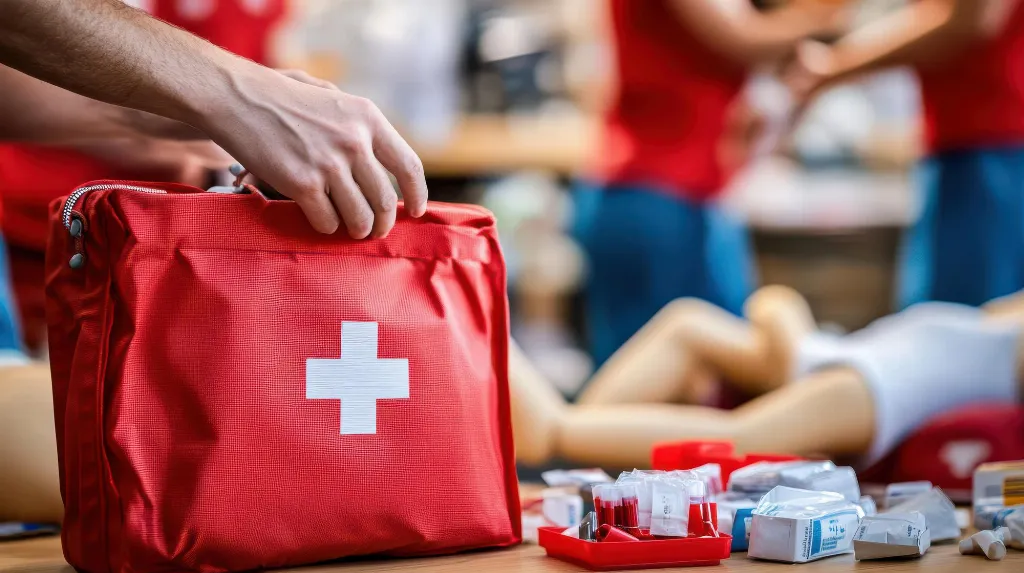
Practice should include realistic variables: a noisy room, a missing staff member, an off-site playground, or a child who does not speak. Role-play helps teams connect technical steps to supervision, communication, and documentation. 🩹 Reminder: first aid is supportive care, not a substitute for professional medical evaluation.
 How can teachers refresh skills without creating fear for children?
Effective practice is brief, predictable, developmentally appropriate, and emotionally attuned. Adults can rehearse detailed responses away from children, then introduce only simple safety routines to the class. For example, children can learn to stop, listen, walk with an adult, and stay together during evacuation practice without hearing frightening descriptions of injury.
For staff, use a rotating micro-drill format. Spend five minutes on one scenario during a team meeting, then ask each participant to identify the first three actions and their assigned role. Follow with hands-on practice when required by the certification provider. Review actual equipment rather than relying solely on slides.
- Post emergency numbers and role assignments where staff can see them, while protecting sensitive security information.
- Keep attendance records, emergency forms, medical permissions, and action plans current and accessible.
- Include infants, children with disabilities, chronic conditions, communication differences, and mobility needs in planning.
- Invite local responders to review access points, classroom locations, and reunification procedures when feasible.
After every drill, conduct a short debrief: What worked? Where did people hesitate? What supply, document, or role needs revision? The goal is not flawless performance on the first attempt; it is steady improvement. A psychologically safe team is more likely to report uncertainty before a crisis occurs.
How should directors build an ongoing refresher system?
Directors can make freshness part of program operations rather than an individual teacher’s private responsibility. Begin with a training matrix listing every employee, role, child age group, certification type, expiration date, and required renewal interval. The Child Care Technical Assistance Network recommends current documentation of pediatric first aid and CPR for caregivers and teachers who provide direct care.
Pair formal renewal with frequent low-stakes practice. A practical annual cycle might include:
- At onboarding: Review the emergency plan, classroom supplies, health records, communication procedures, and staff assignments.
- Monthly: Check first aid kits, emergency contacts, medications, and attendance procedures.
- Quarterly: Run a focused scenario or tabletop exercise and document lessons learned.
- Before expiration: Enroll staff early in an appropriate pediatric first aid and CPR course, verifying delivery format and acceptance requirements.
- After an incident: Debrief compassionately, update the plan, replace used supplies, and offer targeted retraining.
Choose training based on program needs. A blended course can combine flexible online study with skills verification; an in-person course may be preferable for staff who need coached practice. A pediatric first aid-only course may supplement CPR, but it does not replace CPR/AED certification when both are required. Directors should also confirm whether online, blended, or remote skills formats are accepted locally.
Useful documentation includes certificates, drill logs, incident reports, corrective actions, and equipment checks. Good records show follow-through while helping new staff understand the program’s safety culture.
What common mistakes can weaken emergency readiness?
Many readiness failures are ordinary operational problems rather than lack of caring. The most common is assuming that a certificate equals competence. Certification matters, but skills decay when they are not retrieved and practiced.
- Outdated contact information: Request updates at enrollment and on a regular schedule; keep printed and secure digital copies.
- Unclear role assignments: Name primary and backup staff for calling 911, bringing supplies, supervising children, documenting, and receiving responders.
- Inaccessible supplies: Store kits where adults can reach them quickly while preventing unsafe child access; inspect contents routinely.
- Overly complicated plans: Use plain language, concise checklists, and scenario-specific instructions.
- Ignoring emotional care: Comfort children, maintain familiar routines when possible, and follow post-emergency support guidance.
- Skipping debriefs: A drill without reflection misses the chance to correct small problems before they become dangerous.
Another pitfall is practicing only ideal conditions. Include substitutes, assistants, field trips, mixed-age groups, language access needs, and children who require medication or adaptive equipment. Review the plan whenever staffing, room layout, enrollment, or health information changes.
Conclusion: Are your pediatric first aid skills ready when an emergency happens?
Readiness is more than remembering a certification date. It means recognizing urgent signs, knowing the first actions, using child-specific procedures, communicating clearly, and working as a coordinated team. Teachers can strengthen these abilities through honest self-assessment, brief scenario practice, current supplies, and respectful debriefing.
Directors support readiness by scheduling renewals early, documenting training, assigning backup roles, and making practice routine. Pediatric first aid and CPR courses provide the structured learning and skills evaluation that informal review cannot replace; verify local requirements before enrolling. With consistent preparation, teachers are better positioned to become the calm, capable adult children need when seconds matter. These skills can also support safety beyond the classroom; learn how CPR and first aid skills can strengthen community safety.
References:
- American Academy of Pediatrics: Pediatric First Aid and Safety Training
- Child Care Technical Assistance Network: First Aid and CPR Training for Staff
- ChildCareEd: Signs It’s Time for a CPR & First Aid Refresher Course
- ChildCareEd: Pediatric First Aid and CPR Training for Teachers
- ChildCareEd: Choking in Children
- ChildCareEd: Common Childhood Emergencies
- American Heart Association: CPR and Emergency Cardiovascular Care
- Health & Safety Institute: CPR, AED, and First Aid Training
- CDC: Children in Disasters—Teachers and Early Care Programs
- ChildCareEd: Mastering Emergency Preparedness
- ChildCareEd: First Aid and Emergency Procedures
- ChildCareEd: CPR and First Aid Training for Child Care Providers
- ChildCareEd: Pediatric Blended First Aid & CPR/AED Buy Now
$85.00$80.00 - ChildCareEd: Pediatric In-Person First Aid & CPR/AED Buy Now $95.00
- ChildCareEd: Stay Alert! Steps for Emergency Prep Buy Now $25.00
- ChildCareEd: Prevention of and Response to Allergic Reactions
 Buy Now $8.00
 - ChildCareEd: Illness, Medication, and Allergies in Child Care Buy Now $32.00
- ChildCareEd: Creating an Emergency and Disaster Preparedness Plan Buy Now $16.00
- American Red Cross: Child and Baby First Aid
- ChildCareEd: What to Expect from First Aid and CPR Training
- 45 Hour Child Growth and Development
- CDA Home Visitor Subject Area 2 Part 3 Birth to 5
- Adult Only CPR AED and Adult First Aid Blended
- Birth to Five CDA Credential with Portfolio Review
- Pediatric Blended First Aid & CPR/AED Adult, Child, Infant
- Pediatric RSV First Aid & CPR/AED
- Pediatric In-Person First Aid & CPR/AED Adult, Child, Infant
- Adult First Aid Only - Blended
- First Aid and CPR
- First Aid and CPR
- CPR for childcare providers: what to know
- Don't Let Emergencies Make You Scream!!
- A Lifeline for Little Ones: Why First Aid and CPR Training is Essential for Teachers and Parents
- Pediatric First Aid and CPR Training with ChildCareEd - Empower Yourself!!
- ¿Cuáles son las mejores actividades de primeros auxilios para adultos?
- ¿Cómo pueden los equipos de cuidado infantil practicar habilidades rápidas de primeros auxilios en situaciones reales?
- Lista para Abrir una Guardería en Casa en Dakota del Norte: Cómo Empezar
- How Should North Dakota Childcare Programs Handle Medical Emergencies?
- Babysitting Training Online: How to Build Skills, Safety, and Confidence
- Pediatric First Aid for Teachers: Are Your Skills Still Fresh When an Emergency Happens?
- Want to Become a Daycare Assistant? Start With These Essential Training Skills
- Pediatric First Aid for Teachers: Blended or In-Person—Which Should You Choose?
- Which First Aid Course Do Child Care Providers Need for Licensing?
