Latest Blog & News

How Can Child Care Programs Plan Appreciation Activities When Families Use Different Names for Caregivers?
10/05/2026Appreciation activities can help children notice the care, patience, and support they receive—but a card labeled only “Mom” or “Dad” may not fit every child’s life. When planning an activity such as Tie-rific Father’s Day, invite children to choose whom they... How Can Child Care Programs Plan Appreciation Activities When Families Use Different Names for Caregivers?

How Can You Help a Beginning Reader Say More Than the Sentence on the Page?
10/05/2026A beginning reader may read the words accurately and still need support explaining their ideas or connecting the text to their own experiences. Try sharing Emergent Readers – I Like, then invite children to explain a preference with a prompt such as “Tell me what you like about it.&rdquo... How Can You Help a Beginning Reader Say More Than the Sentence on the Page?
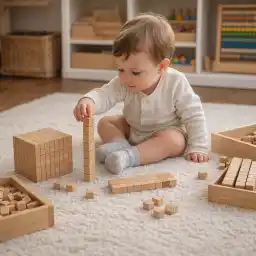
What Does a Toddler Block Area Need for Real Experimentation?
10/05/2026A toddler block area can be much more than a place to stack and topple—it can be an inviting setting where children test ideas about balance, space, and cause and effect. Start with the Classroom Supply Inventory Resource Guide to review the materials you have, then consider whether their vari... What Does a Toddler Block Area Need for Real Experimentation?

How Can the Walk Between Activities Become a Learning Moment?
10/05/2026Those few steps from the play area to the sink or from the classroom to the playground can build language, curiosity, movement, and connection. During arrival, use the Morning Arrival Routine Cards to help children identify their next destination and talk about what comes next as you move together. ... How Can the Walk Between Activities Become a Learning Moment?

When a Preschool Rule Expects More Self-Control Than Children Can Manage, What Should Educators Do?
10/05/2026A rule can seem reasonable to adults and still ask more of a preschooler’s developing attention, memory, language, or impulse control than they can manage in the moment. Treating the expectation as a skill to teach helps educators adjust routines and provide the support children need. Use the ... When a Preschool Rule Expects More Self-Control Than Children Can Manage, What Should Educators Do?

Does a Child Understand Where Reading Starts on the Page?
10/05/2026A child may love story time and still be unsure where the words begin—or which way to follow them. Try sharing Emergent Readers – Shapes and inviting children to show where you should start reading, then model following the words as you read together. These small exchanges can help you n... Does a Child Understand Where Reading Starts on the Page?

Oportunidad de beca CDA de Alabama
05/04/2023T.E.A.C.H. Early Childhood® Alabama es un programa de becas diseñado para ayudar a los profesionales del aprendizaje temprano a continuar su educación, fortalecer sus habilidades profesionales y avanzar en sus carreras. El programa puede ayudar a reducir los costos relacionados con... Oportunidad de beca CDA de Alabama

How Can Daily Infant Reports Become a Two-Way Conversation?
10/05/2026When an infant cannot yet tell you about the day, a thoughtful report helps families feel connected—and gives educators valuable insight in return. Use the Infant Daily Report: Feeding, Diaper & Nap Tracker to share daily care updates, then invite families to describe changes at home, ask ... How Can Daily Infant Reports Become a Two-Way Conversation?

What Should You Say When a Child Calls Another Child’s Feelings Silly?
10/05/2026When a child calls a peer’s feelings “silly,” a calm response such as “You might feel differently, but their feelings matter too” can acknowledge the hurt and model respect. Later, use the Emotion Sorting Activity: Hard Feelings vs. Happy Feelings to discuss how emotion... What Should You Say When a Child Calls Another Child’s Feelings Silly?

How Can You Make a Calm Corner Accessible to Children Who Communicate Differently?
10/05/2026A calm corner becomes more accessible when children can understand their options and communicate a choice in ways that work for them. Introduce the Calm Down Choice Board during a relaxed moment, model how to select an option, and welcome gestures, pointing, speech, or the child’s usual commun... How Can You Make a Calm Corner Accessible to Children Who Communicate Differently?
