Latest Blog & News
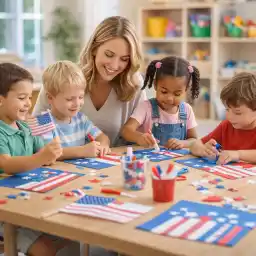
How Can You Plan Patriotic Crafts Without Limiting Children’s Creativity?
09/23/2026Patriotic celebrations can invite meaningful exploration without turning every child’s artwork into an identical red, white, and blue product. Pair a flexible resource such as the 4th of July Crown Craft with open-ended choices, and consider Art from the Heart for Preschoolers: Open Ended Art ... How Can You Plan Patriotic Crafts Without Limiting Children’s Creativity?

How Can Low-Prep Christmas Activities Build Preschoolers’ Visual Planning?
09/24/2026December can be full of joyful energy—and a little extra classroom busyness. A simple maze can turn a few quiet minutes into meaningful practice with visual planning, pencil control, and flexible thinking. For educators in New York City, this guide to managing the holiday season in childcare a... How Can Low-Prep Christmas Activities Build Preschoolers’ Visual Planning?

Party Hats and Emotional Regulation: Helping Little Ones Navigate Big New Year Feelings
01/01/2025The transition into a new year is not just a time for celebration; it can evoke feelings of anxiety, confusion, and even sadness as children grapple with the changes and expectations surrounding them. Child care professionals seeking related learning may consider Early Emotional Wellness and CDA Sub... Party Hats and Emotional Regulation: Helping Little Ones Navigate Big New Year Feelings

How Can Teachers Support Children With Big Emotions?
09/11/2026Big emotions are not evidence that a child is “bad”—they are opportunities to teach safety, communication, and recovery. This practical guide helps child care providers respond with confidence, while From Tantrums to Triumphs: Equipping Preschoolers with Self-Regulation Skills offe... How Can Teachers Support Children With Big Emotions?

How Can Child Care Providers Teach Preschoolers to Manage Big Emotions?
09/19/2026Big emotions are a normal part of preschool development, but children need patient adults and repeated practice to learn what to do with them. The From Tantrums to Triumphs: Equipping Preschoolers with Self-Regulation Skills course offers deeper strategies for building calming, communication, and pr... How Can Child Care Providers Teach Preschoolers to Manage Big Emotions?

Why Are Coping Skills Important for Preschoolers?
09/02/2026When preschoolers can cope with frustration, disappointment, transitions, and worry, everyday challenges become opportunities for learning rather than crises. Providers who want practical guidance can explore From Tantrums to Triumphs: Equipping Preschoolers with Self-Regulation Skills and Self-Regu... Why Are Coping Skills Important for Preschoolers?

How Can Teachers Build Emotional Regulation Into Daily Routines?
09/14/2026Children build emotional regulation through repeated, supportive experiences—not isolated lessons. By embedding brief coaching moments into arrival, play, meals, transitions, and rest, teachers can make regulation practical and predictable; Self-Regulation & Change: Helping Children Cope o... How Can Teachers Build Emotional Regulation Into Daily Routines?

How can child care providers teach children to name and manage emotions?
07/16/2026Young children bring big feelings into the #classroom every day, but they are still developing the vocabulary and self-regulation skills needed to understand and manage those emotions. Child care providers can support this growth by naming feelings without judgment, modeling calm responses, using bo... How can child care providers teach children to name and manage emotions?

How Can Staying Calm Help Children Calm Down? Co-Regulation Strategies for Child Care Teams
07/16/2026Working with young children means responding to big feelings every day. Because children often rely on adults to help organize emotions they cannot yet manage independently, a caregiver’s calm voice, steady body language, and predictable response can reduce distress and restore a sense of safe... How Can Staying Calm Help Children Calm Down? Co-Regulation Strategies for Child Care Teams

Can Your Home Become a Daycare? What to Check Before You Apply for a License
08/28/2026Could your home become a safe, compliant, and sustainable child care setting? Before accepting enrollment or investing in renovations, complete a feasibility review of licensing, zoning, household safety, training, and business requirements. The Health and Safety Orientation can help you strengthen ... Can Your Home Become a Daycare? What to Check Before You Apply for a License
