Latest Blog & News
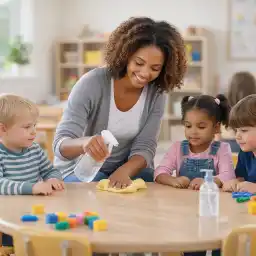
How Can Child Care Providers Prevent the Spread of Illness in the Classroom?
10/04/2026When germs move quickly through a classroom, children miss learning time and families and staff face added stress. A few consistent, well-planned routines can reduce transmission while keeping care warm and developmentally appropriate; ChildCareEd’s Prevention and Control of Infectious Disease... How Can Child Care Providers Prevent the Spread of Illness in the Classroom?

What Should Be Included in a Daycare Staff Orientation Checklist?
10/04/2026A strong orientation checklist helps new staff move from first-day uncertainty to confident, safe practice—and gives directors a consistent way to track essential steps. Start with ChildCareEd’s Child Care Orientation for structured learning about supervision, professional conduct, and i... What Should Be Included in a Daycare Staff Orientation Checklist?

How Can You Support a Grieving Child Who Seems Fine During Play?
10/05/2026A child who laughs, builds, or races across the playroom after a death may still be grieving, with feelings that change throughout the day. Offer the Feelings Faces Chart: 16 Simple Emotions as an optional way to point to or name a feeling, allowing the child to s... How Can You Support a Grieving Child Who Seems Fine During Play?
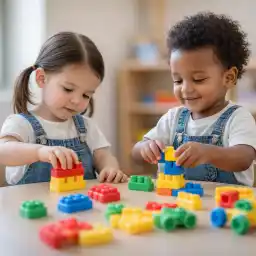
What Are Open-Ended Activities, and Why Are They Important for Young Children?
10/04/2026When children can decide what materials mean and how an activity unfolds, ordinary blocks, paint, and cardboard become powerful tools for learning. Explore practical ways to create these invitations in your program, and consider The Best Promotion is Play for focused professional learning on play&rs... What Are Open-Ended Activities, and Why Are They Important for Young Children?
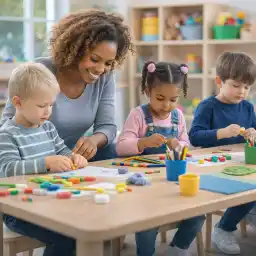
How Do You Set Up a Developmentally Appropriate Preschool Classroom?
10/04/2026A preschool room can either invite children to explore and connect—or make everyday routines harder than they need to be. The ChildCareEd course Classroom Setup for Child Care offers practical learning on arranging welcoming, inclusive spaces, while DAP for Preschool helps educators connect ro... How Do You Set Up a Developmentally Appropriate Preschool Classroom?

How Do You Keep Preschoolers Engaged During Group Activities?
10/04/2026When a group activity turns into a chorus of wiggles, it may be a cue to adjust the experience—not a sign that preschoolers are unwilling to learn. Explore practical ways to make group time purposeful, active, and welcoming, and consider ChildCareEd’s Creating Engaging and Meaningful Lea... How Do You Keep Preschoolers Engaged During Group Activities?

What Are the Best Transition Activities for Preschool Classrooms?
10/04/2026When children know what comes next, the shift from play to cleanup—or from the classroom to the playground—can feel less like a disruption and more like part of the learning day. Explore practical, flexible ideas below, and consider ChildCareEd’s Moving About the Classroom: Effecti... What Are the Best Transition Activities for Preschool Classrooms?
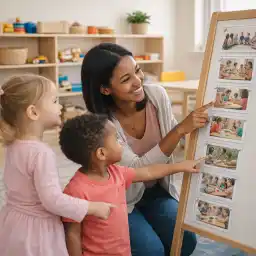
What Should a Daily Preschool Schedule Include?
10/04/2026A well-planned preschool day gives children dependable rhythms without squeezing out curiosity, movement, or rest. Explore a practical framework below, and consider Every Moment Matters: Schedules and Transitions for a deeper look at planning routines, supporting different temperaments, and making t... What Should a Daily Preschool Schedule Include?

How Long Should Circle Time Be for Preschoolers?
10/04/2026When circle time stretches beyond children’s attention and energy, even a thoughtful lesson can become a daily struggle. A practical starting point is to keep preschool gatherings brief, purposeful, and responsive—and to build your confidence with Setting the Stage: Story Time, which off... How Long Should Circle Time Be for Preschoolers?

When Is a Child’s Behavior a Developmental Concern?
10/04/2026Children’s behavior can be confusing: a tantrum, quiet withdrawal, or difficulty joining play may reflect ordinary development—or signal a need for added support. If you want to strengthen your ability to notice patterns without labeling children, Developmental Screening in Early Childho... When Is a Child’s Behavior a Developmental Concern?
