Latest Blog & News in English
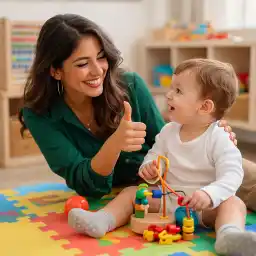
How Can Recognition and Encouragement Build Children’s Confidence?
10/23/2026When a child risks trying something new, the way an adult responds can help that child feel capable—or make them depend on approval. Build everyday practices that recognize effort, progress, and contribution, and explore ChildCareEd’s Mental Health in Early Childhood course to deepen you... How Can Recognition and Encouragement Build Children’s Confidence?

How Can You Create an Organized and Safer Infant Classroom?
10/23/2026A well-organized infant room helps caregivers spend less time searching and more time responding to babies, but organization must also protect supervision and safe routines. Start with simple, consistent labels and a room layout designed around care tasks; for deeper, practical learning, explore Int... How Can You Create an Organized and Safer Infant Classroom?
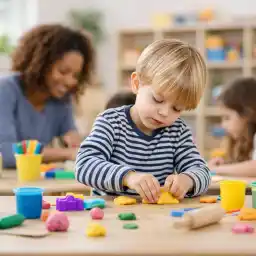
How Can Creative Art Support Early Fine Motor Development?
10/23/2026Every brushstroke, dab, and colorful trail gives young children a reason to reach, grasp, coordinate, and try again. With intentional, age-appropriate art invitations, child care providers can nurture fine motor development while honoring each child’s pace and imagination; the Meaningful Lesso... How Can Creative Art Support Early Fine Motor Development?

How Can Child Care Providers Teach Children to Seek Help and Communicate Their Needs?
10/23/2026When children cannot explain what they need, frustration may show up as tears, withdrawal, or behavior that feels challenging. You can teach help-seeking as an everyday skill—using responsive relationships, simple language, and accessible practice—and build your understanding with Myster... How Can Child Care Providers Teach Children to Seek Help and Communicate Their Needs?
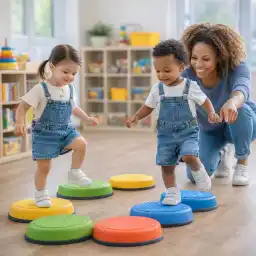
How Can Movement and Positional Words Make Classroom Transitions Fun?
10/23/2026A move from centers to circle time can be more than a moment to manage: it can become a playful chance to practice listening, language, and spatial awareness. For practical strategies to make everyday changes smoother, explore ChildCareEd’s Moving About the Classroom: Effective Transitions for... How Can Movement and Positional Words Make Classroom Transitions Fun?
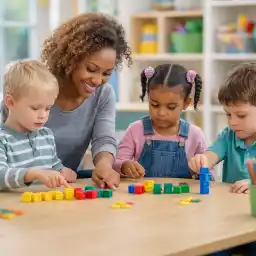
How Can Hands-On Fall Math Teach Children More, Fewer, and Equal?
10/23/2026Leaves scattered across a table can become a lively math investigation when children count, match, and compare them. Use the ideas below to build preschoolers’ number sense and math language, and explore No Such Thing as Boring Math for a deeper look at planning playful, developmentally inform... How Can Hands-On Fall Math Teach Children More, Fewer, and Equal?

How Can Predictable Routines Support Children With Developmental Differences?
10/23/2026When the next step in the day is clear, children have more room to feel secure, participate, and build independence. Explore Neurodevelopmental Disorders in Child Care to strengthen your understanding of developmental differences and inclusive responses; its three-hour online training can deepen the... How Can Predictable Routines Support Children With Developmental Differences?
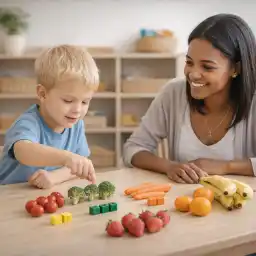
How Can Counting Activities Start Meaningful Conversations About Food and Nutrition?
10/23/2026Counting a pretend picnic can do more than strengthen number skills—it can give children a relaxed way to notice, name, and talk about food. Try Picnic Food Count and Color as a playful classroom invitation, and build your nutrition knowledge with On My Plate: Children’s Nutrition, a cou... How Can Counting Activities Start Meaningful Conversations About Food and Nutrition?
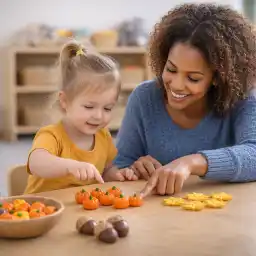
How Can Hands-On Fall Math Teach More, Fewer, and Equal?
10/23/2026When preschoolers can touch, move, and compare real objects, “more,” “fewer,” and “equal” become ideas they can see and explain—not just words to repeat. Use fall leaves to build children’s number sense, mathematical language, and confidence through pl... How Can Hands-On Fall Math Teach More, Fewer, and Equal?

How Can Strong Relationships Help Reduce Biting and Hitting?
10/23/2026When a child bites or hits, the immediate priority is safety—but what happens next can shape how that child learns to communicate and connect. Strengthening warm, dependable relationships helps providers respond without shame while teaching safer ways to express needs; Ouch! Biting & Hitti... How Can Strong Relationships Help Reduce Biting and Hitting?
