Latest Blog & News

What Low-Cost Preschool Materials Still Meet Your Learning Goals?
10/15/2026Strong preschool learning does not depend on expensive kits; it depends on choosing materials with purpose. Explore CDA: Curriculum Alignment & Materials to strengthen your skills in selecting age-appropriate materials for different children and classroom centers, and use the ideas below to make... What Low-Cost Preschool Materials Still Meet Your Learning Goals?
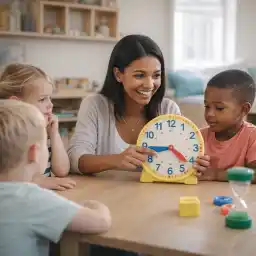
How Can Real After-School Plans Help Children Learn to Tell Time?
10/15/2026When children ask, “How long until pickup?” or “Do we have time to play before snack?”, everyday after-school moments offer a natural way to teach time. Use real routines to build clock-reading, sequencing, and elapsed-time skills—and explore Watch Me Grow: School Age D... How Can Real After-School Plans Help Children Learn to Tell Time?

How Can You Send Home Reading Activities Parents Enjoy Without Teaching Phonics?
10/15/2026Families do not need phonics lessons or special materials to nurture a child’s early literacy; they need welcoming moments to share words, stories, and attention. Use these easy, pressure-free ideas to help parents build reading enjoyment and conversation at home, and explore Supporting Famili... How Can You Send Home Reading Activities Parents Enjoy Without Teaching Phonics?

How Can You Set Up a Reading Corner Preschoolers Can Use Independently?
10/15/2026A thoughtfully arranged reading corner can turn a quick book browse into a child-led literacy habit. Explore Environments That Inspire Independence and Exploration for practical strategies to design welcoming spaces that support children’s choices and curiosity, and use the Emergent Readers - ... How Can You Set Up a Reading Corner Preschoolers Can Use Independently?
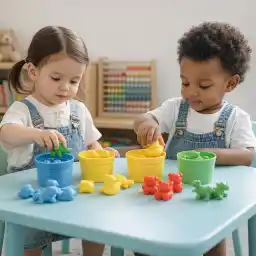
Beyond Color Matching: Letting Children Choose the Sorting Rule
10/15/2026When children decide how a collection belongs together, a simple sorting center becomes a rich exercise in reasoning, choice, and discovery. For a practical foundation in child-directed Montessori experiences, explore ChildCareEd’s Implementing the Montessori Curriculum; the course can help yo... Beyond Color Matching: Letting Children Choose the Sorting Rule

How Can You Explain Your Child Care Program’s AI Policy to Parents?
10/15/2026Parents deserve to know how technology affects their child’s care, privacy, and daily experience. A clear AI policy can build confidence while keeping professional judgment at the center; ChildCareEd’s Legal & Ethical Essentials in Child Care offers practical learning on confidential... How Can You Explain Your Child Care Program’s AI Policy to Parents?
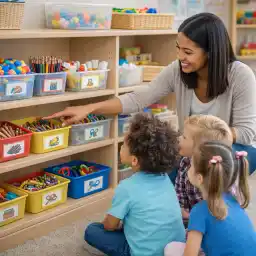
How Can You Help Children Recognize and Find Classroom Supplies?
10/15/2026When children can identify, locate, and return classroom supplies, everyday routines become opportunities to build confidence, participation, and independence. ChildCareEd’s A Great Place for Education Includes All ONLINE offers relevant learning on inclusion and classroom supports; explore th... How Can You Help Children Recognize and Find Classroom Supplies?

How Can Educators Teach Children to Comfort a Friend Without Requiring Hugs?
10/15/2026A crying friend may need company, a quiet moment, or practical help—not a hug. Educators can teach empathy while honoring each child’s right to choose how their body is approached. For strategies to build caring classroom relationships and children’s problem-solving skills, explore... How Can Educators Teach Children to Comfort a Friend Without Requiring Hugs?

Fire Prevention Week 2026: How Can Child Care Programs Charge Devices Safely?
10/15/2026One overlooked tablet or damaged charger can turn an ordinary classroom routine into a serious fire hazard. This Fire Prevention Week, October 4–10, 2026, use NFPA’s safe-charging guidance to strengthen your program’s everyday practices—and consider Building and Physical Prem... Fire Prevention Week 2026: How Can Child Care Programs Charge Devices Safely?

How Can Teachers Turn Daily Weather Observations into a Preschool Investigation?
10/15/2026Every morning, the sky offers a fresh science question: What has changed, and what might happen next? A simple routine of noticing, comparing, and recording helps preschoolers build scientific language and reasoning from experiences they already know. To strengthen outdoor learning design, explore C... How Can Teachers Turn Daily Weather Observations into a Preschool Investigation?
