Latest Blog & News in English

Creating Your Own Galaxies
06/30/2023Use this hands-on project to connect measurement and fractions, vocabulary development, and creative expression. To help teachers translate the craft into intentional learning, see ChildCareEd courses such as Math Foundations in Early Childhood and Children at the Wheel: Emergent Curriculum, which c... Creating Your Own Galaxies

Helping children develop Fine Motor Skills
06/15/2023Fine motor development is the progressive refinement of small muscle control and hand-eye coordination that supports tasks from self-care to emergent writing. In this practical guide for early childhood educators, you will find a classroom-ready rubber band activity plus guidance on adaptations, ass... Helping children develop Fine Motor Skills

Today Is Earth Day!
09/23/2022Today Is Earth Day! Intro — Earth Day is an annual opportunity for child care programs to model community stewardship, deepen environmental literacy, and connect outdoor learning to curriculum goals. If you are looking for on-the-ground activities and practical classroom ties, start with two ... Today Is Earth Day!
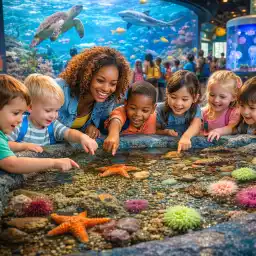
How can Washington aquariums and marine field trips spark curiosity for young children?
05/04/2026Field trips to an aquarium or marine center can spark a child’s curiosity. These trips help young learners see real animals, touch safe sea creatures, and ask big questions. As you plan, remember: state requirements vary - check your state licensing agency. This guide helps child care provider... How can Washington aquariums and marine field trips spark curiosity for young children?

International Day of Families
05/16/2023International Day of Families highlights the role families play in children's development. Quality family time supports emotional regulation, social skills, and mental health across the lifespan. Early relationships lay the foundation for later learning, peer relationships, and adaptive coping; care... International Day of Families

Learn to Use Open Ended Questions to Find Out About Your Child's Day
07/14/2008It is very easy to ask questions that invite a one-word answer, but professionals and parents who want richer information about a child’s feelings and learning must choose prompts that invite description and reflection. This seminar-style session pairs discussion with role-modeling and include... Learn to Use Open Ended Questions to Find Out About Your Child's Day

Kite Activiites for Spring
04/28/2023Spring offers reliable wind, open space, and an opportunity to design an outdoor learning experience that blends physical play, emergent science, and family engagement. Below are tested approaches child care professionals can use to plan kite activities that support gross motor development, cooperat... Kite Activiites for Spring
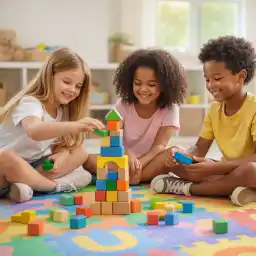
How can we create screen-free activities that truly engage older children?
07/16/2026Creating engaging screen-free experiences for older children means offering the independence, challenge, choice, and social connection they increasingly need. This article gives child care directors and providers practical, low-preparation strategies for planning hands-on projects, movement challeng... How can we create screen-free activities that truly engage older children?

❄️ What Outdoor Activities Work Well for Illinois Kids in Every Season? 🌷🍂
11/26/2025Outdoor #play is a vital component of #early-childhood #development, promoting #gross-motor-skills, #sensory integration, and cognitive #growth. For children in Illinois, embracing #outdoor activities year-round is essential, despite the state's extreme #weather shifts—from hot, humid #summers... ❄️ What Outdoor Activities Work Well for Illinois Kids in Every Season? 🌷🍂
Science in Classroom
04/17/2023Teach your little ones about the power of soap with this easy science activity. This simple demonstration supports early scientific thinking — prediction, observation, and cause-and-effect — and gives children concrete evidence that invisible forces (surface tension, hydrophobic ... Science in Classroom
