A winter storm can turn a routine pickup into a power outage, delayed reunification, or a cold-weather emergency—often with little notice. Prepare your team with Creating an Emergency and Disaster Preparedness Plan  Buy Now $16.00, a focused course that can help you organize roles, response steps, and family communication before conditions deteriorate. For broader staff preparation, explore Stay Alert! Steps for Emergency Prep Buy Now $25.00 as you build a winter plan that fits your center and the children in your care.
Why does winter readiness matter for a childcare center?
Winter hazards are interconnected. Heavy snow or ice can close roads, delay family pickup, damage utility lines, interrupt heat and communications, and make a normal evacuation route unsafe. A center may need to shelter children longer than expected or relocate if the building becomes too cold. Planning ahead gives staff a shared framework rather than requiring them to improvise while supervising children.
Young children are especially vulnerable to cold exposure and depend on adults for warmth, medication, food, communication, and safe transportation. Infants and toddlers may not be able to explain that they feel cold or notice early symptoms themselves. Children with disabilities or health needs may also require specific equipment, medication, accessible routes, or additional support during a disruption.
How should leaders build a winter-specific emergency plan?
Start with the hazards most likely to affect your location: snow, freezing rain, extreme cold, power or water loss, blocked entrances, and unsafe roads. Consult local emergency management, weather alerts, utility providers, and the center’s facility records. Then write concise procedures for operating changes, sheltering, evacuation, relocation, family reunification, and recovery.
- Set decision authority: name who can delay opening, close early, suspend care, or relocate—and identify a backup decision-maker.
- Define triggers and actions: specify how staff monitor alerts and what steps follow a warning, loss of heat, or unsafe facility conditions.
- Assign staff roles: identify who checks attendance, gathers medications and records, supervises each group, contacts families, and coordinates with responders.
- Plan for individual needs: include infant feeding and diapering, medication and health action plans, mobility or communication supports, and accessible transport.
- Choose an alternate location and confirm how children will get there safely if remaining in the center is no longer appropriate.
Keep the full plan in a secure, known location and maintain brief classroom action sheets that can be used under stress. Update family contacts and authorized pickup information routinely.
What supplies and facility checks should be completed before snow arrives?
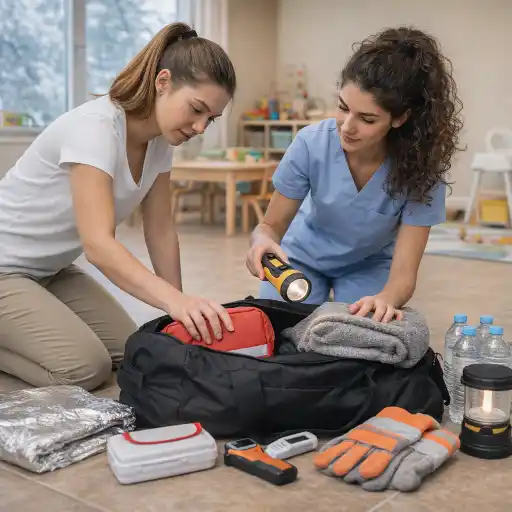
Prepare for both a quick evacuation and a longer period of sheltering. A classroom go-bag should be portable and immediately accessible; a central supply kit can support the whole program. Keep paper records in a waterproof container and do not rely on a phone, internet connection, or electronic attendance system as the only source of essential information.
- Communication and records: current roster, emergency contacts, authorized pickup information, attendance sheets, paper plan, maps, charged power banks, and a battery- or hand-crank weather radio.
- Child needs: water and food appropriate to program policy, diapers, wipes, formula or feeding supplies, spare dry clothes, blankets, and child-specific medications managed according to policy and care plans.
- Safety basics: first-aid supplies, gloves, flashlights, extra batteries, sanitation materials, and age-appropriate comfort items such as books or small toys.
- Facility readiness: check heating equipment, smoke alarms, carbon monoxide alarms, exits, drains, roof and tree hazards, and snow-clearing arrangements. Ensure vehicles are serviced and fueled when appropriate.
Inventory supplies before the season and set a recurring review date to replace expired, damaged, or depleted items. Coordinate with families about backup clothing, food, diapers, and medication without assuming every household has the same resources. For children with special health care needs, coordinate individual supplies and power requirements with families and relevant care providers; the CDC emergency medical kit checklist offers useful planning prompts. Never use generators, grills, or fuel-burning equipment indoors or near openings.
How can staff protect children from cold and power-loss risks?
Use reliable weather information and decide ahead of time when outdoor play, arrival, transportation, or normal operations need to change. Children lose body heat more quickly than adults, and wet clothing increases the risk. If outdoor time is appropriate under local rules and center policy, check that children have dry, layered clothing, with attention to the head, hands, and feet. Keep spare mittens, socks, and hats available, and shorten exposure when conditions warrant.
Staff should know the warning signs of frostbite and hypothermia. Frostbite may involve numbness and skin that appears pale, white, grayish-yellow, firm, or waxy. Hypothermia can include shivering, exhaustion, confusion, slurred speech, or drowsiness. If a child may have either condition, bring the child into a warm room, call 911, remove wet clothing, wrap the child in blankets, and notify the family or emergency contact. Do not rub a suspected frostbitten area. Follow emergency medical guidance and center procedures.
If power or heat fails, use the written plan: gather children in the designated warm area, close unused rooms if appropriate, monitor conditions, and contact families with clear pickup instructions. If the space becomes unsafe or too cold, follow the relocation plan rather than waiting until conditions become critical. Review the CDC guidance for staying safe during and after winter storms.
How should centers communicate with families and manage closures?
Families should not have to guess whether the center is open, when pickup is expected, or where children will be if the facility must relocate. Decide who sends updates, which channels will be used, and how often families can expect to hear from the program. Use more than one method—such as text, email, an app, and a phone tree—because power, internet, or cell service may be interrupted. Keep printed contact lists available.
Prepare short message templates for delayed opening, early closure, sheltering, relocation, and reunification. Every update should say what has happened, what the center is doing, what families should do, where children are if the location has changed, and when the next update will come. Keep messages factual and calm; avoid speculation and protect children’s private information.
- Decide who has authority to make closure or relocation decisions and when families will be notified.
- Explain pickup and authorized-adult verification procedures in advance; document each child’s release.
- Include a plan for families or staff who cannot receive electronic messages.
- Tell families what extra supplies to provide when the center expects to remain open during severe weather, while keeping the program’s own emergency supplies ready.
Communication is part of care: steady, repeated updates can reduce uncertainty for adults and help protect familiar routines for children. Maintain consistent supervision while designated staff handle messages, and arrange an alternate communication lead if the primary person is unavailable.
What common winter-preparedness mistakes can centers avoid?
Most weak points are not a lack of concern; they are practical gaps that appear during a busy season. A plan may exist but be outdated, supplies may be stored where no one can reach them quickly, or staff may be unsure who can call for an early closure. Brief checks and practice can surface these issues while there is still time to fix them.
- Relying on one alert source: use trusted local alerts and a backup weather radio, and designate someone to monitor conditions.
- Assuming families can arrive promptly: plan for delayed pickup, keep children supervised and warm, and identify a relocation threshold.
- Keeping a kit without maintaining it: assign an owner and schedule checks for contact lists, food, batteries, medications, and clothing.
- Leaving roles implicit: name primary and backup staff for attendance, supplies, family messages, and child supervision.
- Overlooking children’s individual requirements: review care plans, feeding needs, accessibility, and essential equipment with families before the season.
- Practicing in a frightening way: explain drills simply, keep them developmentally appropriate, and reassure children that adults are practicing how to keep everyone safe.
After a drill or weather disruption, debrief with staff: what worked, what was unclear, and what should change? Document actions and update the written plan. To deepen your team’s practice, consider Emergency and Disaster Preparedness- Online Buy Now $55.00, Responding to Emergencies Buy Now $16.00, and Engaging Indoor Activities for Inclement Weather Buy Now $24.00. Check that any training fits your staff’s needs and verify applicable state requirements.
Conclusion: What should every childcare center have ready before the first snowstorm?
Before snow arrives, every center needs a written winter plan that names decision-makers, staff roles, family communication methods, and procedures for sheltering, closure, power loss, evacuation, and relocation. The center should also have current records, accessible and maintained emergency kits, facility and heating checks, child-specific supplies, and a practiced response to cold-related symptoms.
Make the plan usable: review it with staff, communicate key procedures to families, rehearse age-appropriate steps, and revise it after drills or changing circumstances. A reliable system helps adults make calmer decisions and keeps children’s safety, warmth, and emotional security at the center. The practical goal is straightforward: be ready to protect and care for every child even when a snowstorm disrupts the normal day.
- Stay Alert! Steps for Emergency Prep
- 45 Hour Child Growth and Development
- Emergency Preparedness and Response Planning Resulting from a Natural or Man-Made Event
- Emergency and Disaster Preparedness
- Adult Only CPR AED and Adult First Aid Blended
- Pediatric RSV First Aid & CPR/AED
- Adult First Aid Only - Blended
- Texas Director Credential
- Winter indoor gross motor games
- Pediatric First Aid and CPR Training with ChildCareEd - Empower Yourself!!
- Winter Wonders: Incorporating Seasonal Science in Preschool Curriculum
- Qué capacitación se requiere para ser director de cuidado infantil en Texas?
- ☃️ Frosty Fun in the Classroom: Winter Activities That Teach
- Winter Classroom Activities for Child Care Providers
- ¿Cómo pueden los equipos de cuidado infantil practicar habilidades rápidas de primeros auxilios en situaciones reales?
- Capacitación en Salud y Seguridad Preventiva en Línea para Proveedores de Cuidado Infantil
- Regulaciones de Licenciamiento de Cuidado Infantil en California para Centros y Hogares de Cuidado Infantil Familiar
- Normas de Licenciamiento de Cuidado Infantil en Virginia para Centros Diurnos Infantiles y Hogares Diurnos Familiares
- Lista para Abrir una Guardería en Casa en Virginia: Cómo Empezar
- How can childcare centers create effective emergency preparedness plans?
- How can superhero-themed winter science activities energize your classroom?
- Emergency and Disaster Preparedness Training Online: What Will You Learn?
- What Certifications Do I Need to Open a Child Care Center? Owner vs. Director Requirements Explained
- How Can Child Care Programs Build Effective Emergency Preparedness?
- Winter Emergency Preparedness: What Does Every Childcare Center Need Before the First Snowstorm?
- How Can Child Care Centers Create a Practical Winter Wellness Plan?
