Positive guidance is not a collection of compliments; it is the steady work of helping children feel secure, understand expectations, and learn what to do when feelings run high. Explore the Viewing Guidance in a Positive Light  Buy Now $24.00 course for focused professional learning on developmentally appropriate strategies and consistent classroom plans, while discovering how small daily interactions make guidance meaningful.
Why is praise only one part of positive guidance?
Specific encouragement can help children notice actions worth repeating: “You waited for a turn and then asked with words.” But guidance cannot begin and end with praise. Children need a dependable relationship, understandable expectations, opportunities to practice social skills, and calm limits that protect everyone. A child who is overwhelmed or unsure may not be able to respond to praise alone; the adult must also consider what support, skill, or environmental change would make success possible.
Positive guidance is an ongoing teaching approach, not a reaction reserved for challenging moments. NAEYC’s planning for positive guidance describes how predictable routines, clear expectations, attentive interactions, and respectful modeling help create a supportive classroom climate. Those everyday conditions tell children that adults are on their team.
This distinction matters for directors and educators because praise without connection or instruction can become a quick compliance tool. Guidance, by contrast, helps children build skills they can use beyond the moment.
- Notice effort and specific actions, rather than judging a child’s character.
- Model expectations and give children repeated chances to practice them.
- Set clear boundaries while preserving children’s dignity.
How do responsive relationships make guidance effective?
Children are more receptive to adult direction when they experience the adult as attentive, trustworthy, and interested in who they are. Relationship-building does not require elaborate activities. It can happen while greeting a child by name, joining their play, listening to a story, or offering comfort during a difficult transition. These brief moments communicate belonging before a teacher needs to correct or redirect behavior.
CSEFEL’s resource on building positive relationships with young children emphasizes getting to know each child’s interests, preferences, background, and culture. That knowledge helps providers interpret behavior with curiosity instead of assuming intent. For instance, a child who leaves circle may be seeking movement, responding to a long wait, or showing interest in materials—not simply rejecting the teacher.
Responsive interactions also include noticing cues and adjusting support. Move close without crowding, use a calm tone, allow time for a response, and reflect what you observe: “You look disappointed that playtime is ending.” Validate feelings while maintaining limits: “You are upset. I won’t let you push. I can help you ask for more time.”
- Build connection throughout the day, not only after a problem.
- Learn each child’s communication style and family context.
- Balance warmth with clear, consistent safety boundaries.
How can routines make guidance part of the whole day?
Predictable routines reduce uncertainty and make expectations easier to understand. Children benefit when they can anticipate what comes next, where materials belong, and how a transition will happen. A brief reflection tool can help educators notice whether guidance is part of the entire day. ChildCareEd’s Positive Guidance & Social-Emotional Learning Activity Buy Now $1.50 offers a reusable checklist for routines, supervision, respectful modeling, empathetic listening, and reflection on interactions.
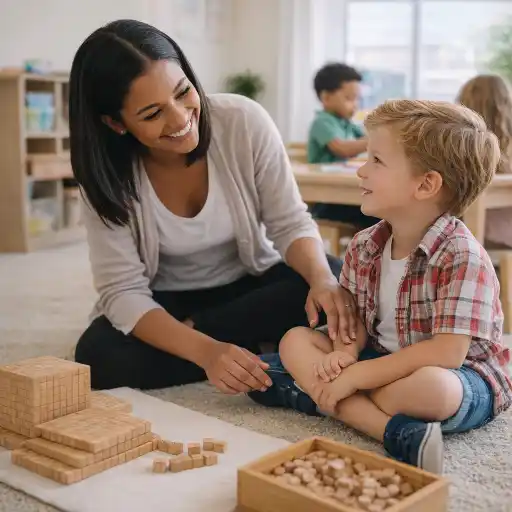
Embed guidance into familiar moments rather than adding a separate lesson for every social skill. At arrival, greet each child and preview the day. Before cleanup, give a brief warning and use a familiar song. During play, model how to ask for a turn. At meals, encourage children to request help or pass items respectfully. Each routine becomes an opportunity to demonstrate, practice, and reinforce the skills children are learning.
When a routine repeatedly becomes difficult, review the environment and timing before deciding the child is the problem. Is the wait too long? Are materials crowded? Is the direction clear and manageable? Make one adjustment, observe how children respond, and refine the plan with your team.
- Use picture cues or a simple schedule at children’s eye level.
- Give transition warnings and concrete directions.
- Use songs, puppets, helper roles, or playful call-and-response to keep transitions engaging.
- Plan team roles so children receive consistent messages and supervision.
How can educators teach social-emotional skills beyond praise?
Social-emotional learning develops through explicit teaching, modeling, and repetition. Children need support to name feelings, notice body cues, ask for help, wait, negotiate, and recover from disappointment. Praise may reinforce a developing skill, but children also need adults to show the skill, describe it in accessible language, and create low-pressure opportunities to practice.
Use play, stories, and ordinary classroom situations to make learning concrete. A puppet can feel frustrated while waiting for a toy; invite children to suggest words or choices. During a conflict, help children identify the problem and rehearse a solution when they are calm.
When emotions intensify, prioritize safety and connection over instruction. Use a short sequence: connect, name the feeling, state the limit, and coach one next step. For example: “I’m here. You’re angry because the truck is being used. I won’t let you hit. You can ask for a turn or ask me for help.” Later, revisit the event briefly and practice the alternative response.
- 🧩 Practice one useful phrase at a time, such as “Help, please” or “My turn next.”
- Offer different ways to communicate: words, gestures, visuals, or home-language expressions.
- Keep emotional tools supportive and voluntary, never punitive or shaming.
How can teams make positive guidance consistent and reflective?
Consistency is a shared program practice, not a demand that every educator use identical words. Staff should understand the core expectations, safety boundaries, and replacement skills the team is teaching. Directors can make this easier by planning together, clarifying roles during routines, and creating brief opportunities to discuss what is working. NAEYC’s guidance article highlights how coordinated adult messages and frequent team check-ins can support a calmer classroom climate.
Use objective observation when a behavior occurs repeatedly. Note what happened before, what the child did, and what followed, without labels such as “bad” or “manipulative.” Patterns can suggest practical adjustments: a visual warning before transitions, a less crowded play area, or explicit practice asking for help. Involve families as partners; ask what the child enjoys, what communication works at home, and what strategies they have found helpful.
- Choose a few shared phrases and rehearse them as a team.
- Share strengths and specific observations with families privately and respectfully.
- Review routines, environment, and adult responses before escalating to more complex strategies.
Conclusion: What does positive guidance ask educators to do?
Positive guidance requires more than praising good behavior because children need relationships, predictable routines, clear boundaries, and direct opportunities to learn social-emotional skills. Praise is most useful when it is specific, genuine, and connected to a skill children are practicing. Responsive attention and thoughtful prevention make that learning possible across the whole day.
Start with one practical step: choose a routine that often feels challenging, teach the expectation in advance, and agree with colleagues on a calm response and replacement skill. Then notice what changes and adjust with families and staff. This steady, strengths-based approach helps children feel supported while building the skills they need. State requirements vary - check your state licensing agency.
Related ChildCareEd courses
- Social Foundations and Responsive Classrooms Buy Now $24.00
- CDA Subject Area 3 Buy Now $80.00
- Positive Attention: Interactions & Supervision of Infants & Toddlers Buy Now $24.00
- Every Moment Matters: Schedules and Transitions Buy Now $55.00
- Connections That Count: Building Relationships in Child Care Buy Now $55.00
- CDA Home Visitor Subject Area 3 Part 3 Birth to 5
- Viewing Guidance in a Positive Light
- Social Foundations and Responsive Classrooms
- Bienvenido! Welcoming All Families
- Power of Art: Bldg Self-Esteem & Positive Behavior for ALL Abilities
- CDA Bridge Bundle: Family Child Care without Portfolio Review
- CDA Bridge Bundle: Infant/Toddler without Portfolio Review
- CDA Bridge Bundle: Preschool without Portfolio Review
- Texas Director Credential
- Every Moment Matters: Schedules and Transitions
- ¿Cuál es la Diferencia Entre la Crianza Respetuosa y la Crianza Permisiva?
- Ejemplos de Crianza Respetuosa vs. Crianza Permisiva
- How can we encourage good behavior in the classroom?
- How Can We Encourage Good Behavior in the Classroom?
- How do positive interactions improve outcomes in child care?
- How can New York child care providers set effective limits for young children?
- Why Do Classroom Management Strategies Fail With 3-Year-Olds—and What Works Instead?
- How Can Child Care Providers Build Young Children’s Problem-Solving Skills?
- Which Positive Guidance Strategies Actually Work in Child Care?
- How Can Child Care Providers Teach Children to Share and Take Turns Without Forcing Them?
- How Can Positive Guidance Transform Early Childhood Classrooms?
- How Can Child Care Providers Build Self-Regulation in Young Children?
- When Praise Stops Working, How Can Child Care Providers Offer Feedback That Builds Motivation?
- How Can Child Care Providers Help Children Recover After They Make a Mistake?
- How Can Child Care Providers Support Children Who Always Want to Be First?
- What Should Child Care Providers Do When a Child Refuses to Share?
- How Can Child Care Providers Build Positive Relationships With Difficult-to-Reach Children?
- How Can Child Care Providers Handle Bossy Behavior in Preschool?
- How Can Children Recognize and Appreciate the Supportive Adults in Their Lives?
- Why Does Positive Guidance Require More Than Praising Good Behavior?
