Positive interactions are simple moments that change a child’s day. When adults notice, respond, and connect with children, they help kids learn, feel safe, and try new things. In your #classroom those moments add up. This article gives clear steps you and your team can use. You will find ideas for infants, toddlers, and preschoolers, ways to prevent challenging behavior, and tips to bring families along.
Why this matters:
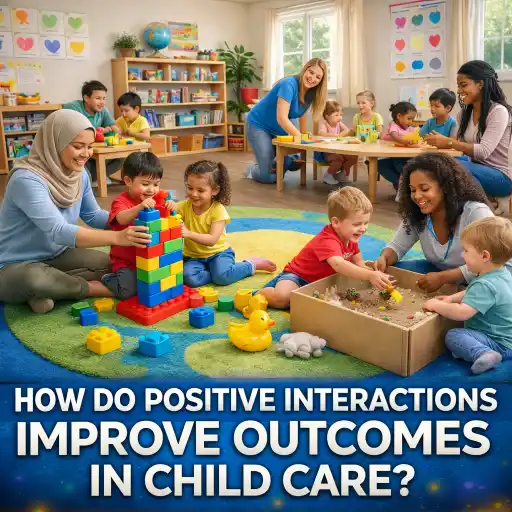 1) Positive, warm interactions build trust and help children feel secure. See practical examples in positive teacher interactions.
2) These interactions also teach language, self-control, and how to get along with others — skills children need for school and life (see CSEFEL).
What exactly are positive interactions and what do they look like?
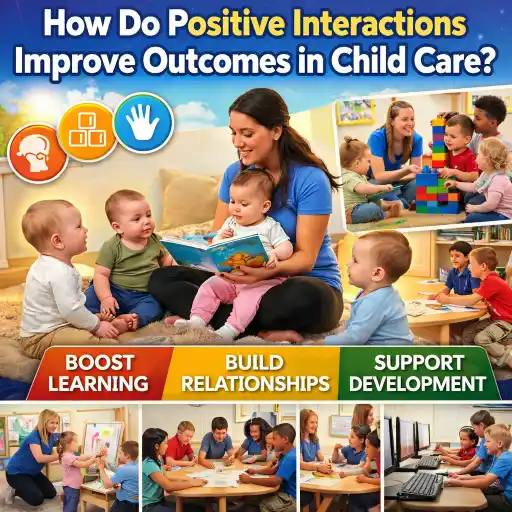 Positive interactions are short, caring moments that teach and connect. Examples include a smile, making eye contact, naming a child’s feelings, or following a child’s lead in play. For preschoolers, using books and guided conversations helps children label and regulate emotions—see Reading and Talking About Feelings With Preschoolers for practical book-based activities and phrasing. Try a few simple steps:
- 😊 Get down to the child’s level and make eye contact. This helps infants and toddlers feel safe, as explained in ChildCareEd’s guide.
- 👍 Use a calm voice and describe what the child is doing (“You are stacking red blocks!”).
- 🧭 Follow the child’s lead: join their play and expand language and ideas.
- 🌟 Give specific praise: say exactly what you liked so children know what to repeat.
For infants and toddlers, quick, warm responses like cuddles, smiles, and naming feelings matter a lot. For preschoolers, teach social steps such as how to get a friend’s attention and how to share — ideas you can adapt from CSEFEL peer interaction briefs.
Why do positive interactions help #children and #teachers?
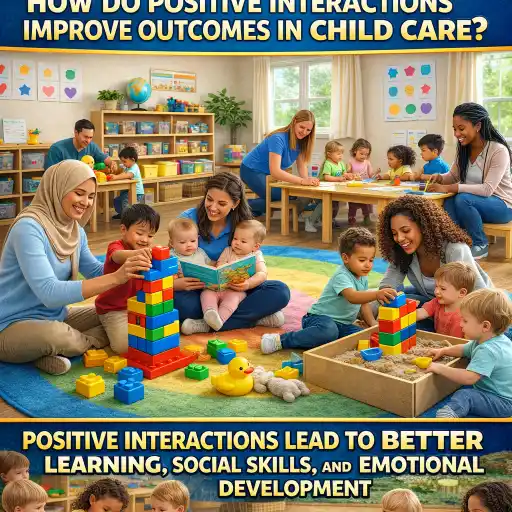 Positive interactions matter because they shape brain growth and relationships. Here are key benefits supported by research and practice:
- 😊 Emotional safety: Warm, responsive adults help children feel secure. Secure children explore more and learn faster (CSEFEL).
- 📚 Language and learning: Talking about what children do boosts words and thinking. The CDC shows simple talking and reading help infant development (CDC).
- 🔁 Fewer behavior problems: When teachers praise good behavior and teach skills, challenging actions drop. See strategies in Managing Behaviors.
- 🤝 Better peer skills: Teaching social steps leads to friendships and cooperation (read more at RWJF and CSEFEL).
Why it matters for staff: strong adult-child interactions improve classroom tone and reduce stress for caregivers. Tools like the CLASS help teams see strengths and growth areas.
How can positive interactions prevent and manage challenging #behavior?
Positive interactions are also prevention. When children know what to do, and adults notice good efforts, behavior problems fall. Use these steps:
- 🔎 Prevent: arrange the room and routine so children can succeed. Use small, repeated jobs (pass out napkins, be a helper) to build practice and peer play (CSEFEL routines).
- 🗣️ Teach skills: show children how to ask for turns, calm down, or use words instead of hitting. Role-play during circle time and praise attempts.
- 🌈 Reinforce: notice and name the right behavior right away. Praise specific actions ("Thank you for using your words") — this is evidence-based and explained in CSEFEL.
- 🛠️ Use supports when needed: for children with persistent needs, consider Positive Behavior Support (PBS) or the Pyramid Model. These use teams, plans, and teaching to replace problem behavior (PBS overview, Pyramid Model).
Also use ChildCareEd resources like How to Support Children with Challenging Behaviors for practical plans. State requirements vary - check your state licensing agency.
How do we involve #families and support staff so positive interactions last?
Connections between your team and families make good interactions become strong habits. Try these steps:
- 📬 Share simple wins: send quick notes or photos that show a child using a new skill. Families feel valued and can repeat the same praise at home. See tips at ChildCareEd.
- 🤝 Make plans together: for children with big needs, build a team with parents and any specialists. Use shared goals and consistent responses.
- 🧑🏫 Train staff: use short team meetings, role-play, and observation tools like CLASS or ChildCareEd trainings to stay consistent.
- 💙 Support caregivers: self-care and professional support reduce burnout and keep interactions warm. See self-care resources Buy Now $0.00.
Keep communication short, kind, and solution-focused. Involving families helps children practice skills across home and school.
Conclusion
Use these quick takeaways each day:
- 😊 Notice and name 3 good actions for each child every day.
- 🧠 Teach small social steps and practice them in routines.
- 🤝 Work with families and teammates on simple, consistent plans.
- 💪 Care for staff well — calm adults make calm classrooms.
Common mistakes and how to avoid them:
- 🚫 Mistake: Praising too generally ("Good job!"). Fix: Be specific ("Great sharing with Sara!").
- 🚫 Mistake: Inconsistency between staff or between home and center. Fix: Make a short written plan and share it with families and every staff member.
- 🚫 Mistake: Ignoring staff stress. Fix: Use brief check-ins, swap duties, and access training (see free resources).
FAQ (short answers):
- Q: How long to see change? A: Some shifts appear in days; habits grow over weeks with steady practice.
- Q: What if a child keeps hitting? A: Teach alternatives, prevent triggers, and use a team plan like PBS (PBS).
- Q: Do I need special training? A: Useful but not required. Start with simple steps above and use ChildCareEd courses to deepen skills.
- Q: Where to find more tools? A: ChildCareEd articles and CSEFEL briefs linked above are a good start.
For deeper learning, consider ChildCareEd trainings and tools like the Pyramid Model and CLASS to guide program-level improvements. Your daily positive moments make a big difference for every child.
- 45 Hour Child Growth and Development
- Teacher-Child Interactions for Stronger CLASS® Outcomes
- Bienvenido! Welcoming All Families
- 45 Hour Infant and Toddler Methods and Materials
- Pediatric RSV First Aid & CPR/AED
- Working Together: Teachers & Preschoolers
- CDA Bridge Bundle: Family Child Care without Portfolio Review
- Texas Director Credential
- Every Moment Matters: Schedules and Transitions
- Building Quality Early Childhood Education Programs
- Exploring the Cognitive Benefits of Movement in Early Childhood Classrooms
- ¿Qué Calificaciones Necesitas para Trabajar en Cuidado Infantil?
- Lista para Guardería en Casa en Texas: Cómo Iniciar una Guardería en el Hogar
- How can we build strong teacher-child relationships?
- How can learning environments support children's development?
- How do positive interactions improve outcomes in child care?
- How Teachers Support Children’s Growth and Development
- How Can Child Care Providers Understand Temperament in Infants and Toddlers?
- How do relationships shape early brain development?
- Why does investing in early educators matter?
- What Does the Science of Peekaboo Reveal About Infant Learning?
- How Do Infants Learn Through Everyday Caregiving Routines?
- What Will the Future of Early Childhood Education and Care Look Like?
- How Can Early Childhood Programs Improve Family Retention?
- How can I support quality improvement without overwhelming staff?
- How Should We Measure the Quality of an Early Childhood Program?
- Proporciones para guarderías en casa bajo el Título 22: Cómo la mezcla de edades cambia su capacidad en California
- How Can Child Care Providers Respond When a Child Publicly Names a Favorite Teacher?
