The best children’s movies connect with adults because they combine engaging stories for young viewers with deeper emotional themes, humor, relationships, and life lessons that resonate across generations. In early childhood settings, carefully selected #movies and #media can become meaningful teaching tools when educators use them intentionally rather than relying on passive viewing. Quality stories can enrich vocabulary, encourage children to discuss emotions and relationships, introduce different perspectives, reinforce classroom values, and create shared experiences that connect #children, #families, and staff. This article helps child care providers and directors evaluate age-appropriate media, connect viewing experiences to curriculum goals, and extend stories through conversation, dramatic play, art, movement, and hands-on activities.
To strengthen the social-emotional conversations inspired by meaningful stories, explore ChildCareEd’s self-paced online course Brighter Futures: Social Emotional Development  Buy Now $16.00. This training helps educators support children’s emotional understanding, positive interactions, and relationship skills—making it especially useful when guiding discussions about the feelings, choices, conflicts, and values portrayed in children’s films. Thoughtful media can extend learning when it is brief, purposeful, interactive, and followed by real-world play and discussion; however, passive or excessive viewing can replace the conversations, movement, and hands-on exploration young children need. State requirements vary, so always check with your state licensing agency.
1) What makes a kids' movie truly "quality" for both children and adults?
- Strong, layered storytelling — a clear plot for children with emotional subtext for adults (e.g., films that adults recognize as having thematic depth). See how storytelling supports learning in ChildCareEd's early literacy guidance.
- Character growth and moral questions — plots that let children practice empathy and let adults prompt conversation.
- High production values — coherent pacing, good sound design, and artful visuals help attention and reduce overstimulation (compare guidance on limiting fast-paced, passive media in ChildCareEd's screen time article).
- Multilevel humor and references — jokes or historical/cultural references adults notice, keeping co-viewers engaged (articles about why films like "Frozen" and "Moana" hold attention show this layered appeal: APS, New York Times).
- Opportunities for follow-up — teachable moments, songs, and movement that translate to classroom activities (see playful ideas at ChildCareEd: Fun Activities).
Practical note: choose films that support your learning goals and preview them. Use selection frameworks like THINK (Topic, Has value, Intentional, Not overstimulating, Keep time short) and consult resources such as Media STEPs for family-facing guidance.
2) How do good children’s films support development and classroom goals?
- 📚 Language and literacy boosts: Repeated songs and rich vocabulary in films can be springboards for new words, shared reading, and storytelling practice (see techniques in ChildCareEd's literacy post).
- 🧠 Social-emotional learning: Movies provide scenarios for discussing feelings, perspective-taking, and problem-solving — valuable SEL practice aligned with classroom lessons (ChildCareEd on SEL).
- 🎵 Memory and problem-solving songs or repeated sequences support memory and transition routines; use them as cues for movement breaks.
- 🏷️ Cultural literacy and values: Thoughtful films can open conversations about identity, resilience, and community — adults can scaffold these talks for deeper learning (see curated lists and character-building guidance like A Fine Parent).
Be intentional: set a short purpose (10–20 minutes max for preschool groups), co-view, and always follow film time with hands-on or language-rich activities to transfer learning off-screen — consistent with best-practice screen limits and Nemours/KidsHealth recommendations (Nemours).
3) What elements keep adults engaged while children learn?
- 🧩 Thematic resonance — films that show parents or teachers facing real choices let adults see useful models.
- 🔍 Subtext and craft — subtle allusions, clever soundtracks, and character arcs give adults material for coaching conversations after the film.
- 🎭 Emotional honesty — films that balance humor and vulnerability create safe openings to discuss feelings with children (reinforcing SEL work from programs described in ChildCareEd).
- 🎶 Rewatch value — songs and repeated scenes (e.g., musicals or strong character motifs) make repetition pleasurable rather than passive — remember dopamine-driven engagement can be strong, so plan limits and transitions (ChildCareEd: Dopamine Drama).
Practical tip for staff: preview, mark 1–2 moments to stop and ask a question, and plan immediate follow-up (art, role play, story retell) so adults have a role during and after viewing.
4) How can programs choose, schedule, and use films intentionally without common pitfalls?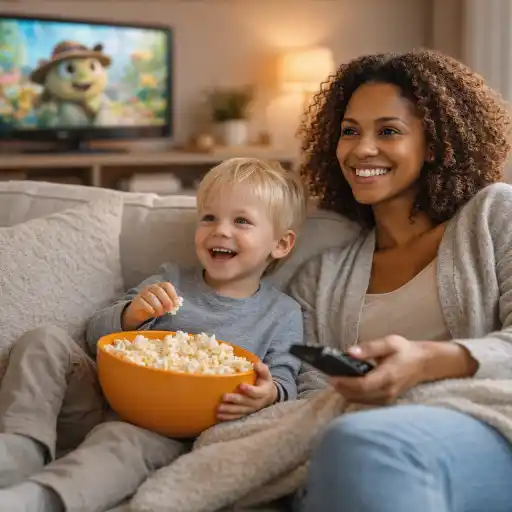
Choose and use films with clear rules and routines to avoid mistakes:
- 📋 Selection steps:
- Preview every title and note learning links. Prioritize short, high-quality options (see curated lists at ChildCareEd and public lists like Vulture).
- Match films to goals: language, movement, SEL, or cultural studies.
- Confirm licensing, advertising, and classroom suitability.
- 🚫 Common mistakes & fixes:
- 📺 Mistake: background TV reduces interaction. ✅ Fix: No screens during meals or free play (Nemours and CDC advise similar limits: Nemours, CDC).
- ⏳ Mistake: overly long or unplanned viewing. ✅ Fix: schedule short, purposeful segments (10–20 minutes) tied to an activity.
- 👥 Mistake: leaving children alone with devices. ✅ Fix: co-view and guide questions, model media habits.
- 📣 Policy & partnership:
- Write a clear center media plan and share it with families; include why you choose titles and how you extend learning.
- Offer simple home ideas: co-view, talk about one idea, and follow chosen movement or book activity — consistent with Media STEPs. You can also share short, relatable anecdotes from the Family Day Care Chronicles to model at-home extensions and prompt family conversation.
Remember: state requirements vary - check your state licensing agency for any rules about media in licensed care.
5) How should staff and families talk about films to deepen learning?
Conversations are where films become curriculum. See ChildCareEd's practical guidance on teacher–student conversations for strategies to structure those interactions and deepen children's social-emotional learning. Use brief, scaffolded questions and activities that fit the child's age.
- Before viewing:
- 🔎 Preview & prime: name 1 thing to watch for — a feeling, a problem, or a repeated word.
- During viewing (co-view):
- 🙂 Ask one quick check-in: “What do you think will happen next?” Keep interruptions minimal for younger children.
- After viewing (transfer):
- 🎨 Follow-up activities: art, dramatization, or a short book that echoes the theme — a proven way to move learning off-screen (see early literacy and read-aloud strategies at ChildCareEd). For concrete, emotion-focused extension activities to use after a film, see Exploring Emotions: Fun and Educational Preschool Activities.
- 💬 Family prompts: send a one-line note: “Tonight we watched X — ask your child who was brave and why.”
FAQ (quick):
- Q: Can we use a tablet for learning? A: Yes — keep it short, adult-led, and follow with hands-on work (see ChildCareEd).
- Q: How often? A: Rarely and deliberately for under-fives; reserve film time for a clear instructional goal.
Conclusion
When selected with care and used as part of an interactive plan, the best children's #movies become multiplatform teaching tools: they build vocabulary, model emotion work, and create shared experiences for staff, children, and #families. Use short, planned viewings, co-view and ask 1–2 scaffolded questions, and always follow with active, hands-on learning. For classroom tools and printable activities that pair well with film-based lessons, see ChildCareEd resources such as early literacy, talk/read/sing, and screen time limits. Your intentional choices turn movie night into learning that feels like play.
- 45 Hour Child Growth and Development
- Teach with Respect!
- 45 Hour Infant and Toddler Methods and Materials
- CDA Bridge Bundle: Family Child Care without Portfolio Review
- CDA Bridge Bundle: Infant/Toddler without Portfolio Review
- CDA Bridge Bundle: Preschool without Portfolio Review
- Emergent Learning & Development
- CDA Home Visitor Credential Birth to 5
- Texas Director Credential
- Spicing Up the Classroom: Learning Centers
- How to Build a Classroom Garden
- Party Hats and Emotional Regulation: Helping Little Ones Navigate Big New Year Feelings
- CDA Certification en Español: Recursos y Consejos para Educadores Bilingües
- 🥦✨ ¿Cómo apoyar a los niños selectivos a probar nuevos alimentos sin presión?
- 👧 ¿Cómo iniciar y abrir una guardería en Texas? Lo que necesitas saber
- Qué capacitación se requiere para ser director de cuidado infantil en Texas?
- Recursos en Español sobre el Sueño Seguro del Bebé
- ¿Cómo puedo usar escenarios de juego de roles de primeros auxilios en mi aula?
- ¿Cómo afecta la dopamina a los niños: señales, efectos e influencias diarias?
- Capacitación en Salud y Seguridad Preventiva en Línea para Proveedores de Cuidado Infantil
- Lista para Abrir una Guardería en Casa en Carolina del Norte: Cómo Empezar
- Lista para Guardería en Casa en Illinois: Cómo Iniciar una Guardería en el Hogar
- Ejemplos de Crianza Respetuosa vs. Crianza Permisiva
- Cómo Ser Maestra de Preescolar en Dakota del Norte
- Capacitación Previa al Servicio para Proveedores de Cuidado Infantil en Dakota del Norte
- Capacitación Previa al Servicio para Proveedores de Cuidado Infantil en Nevada
- Celebrando la amistad en el cuidado infantil durante el Día de los Mejores Amigos
- Canciones, juegos y preguntas de círculo para niños
- Cómo simplificar la capacitación para sus empleados de daycare
- Why Do the Best Kids' Movies Work for Grown-Ups Too?
