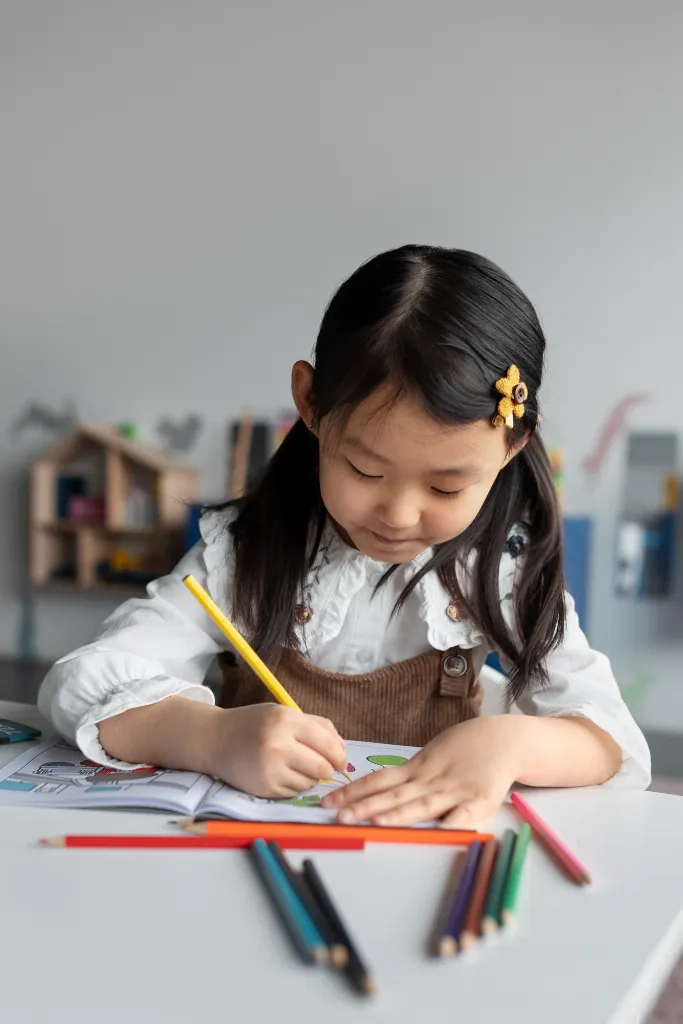
 Coloring seems simple, but it matters a lot in our classrooms. Young children pick up crayons, choose colors, and make marks because coloring helps them explore, learn, and feel proud. This short article explains the reasons behind that love of coloring and gives practical ideas you can use in your program.
You will see how coloring supports #coloring play, #crayons choices, #finemotor practice, #learning goals, and #creativity — and where to find more resources.
Why do children love coloring so much?
1. Children feel safe and in control. A blank page is a place they can decide what happens next. 2. Color choices are a quick way to show feelings and ideas. For more on what colors tell us about kids, see The Secret Life of Crayons. 3. Coloring is a low-pressure way to try new skills. It lets children practice holding a tool, moving their hand, and making decisions without the stress of perfect results.
Short list of what children get from coloring:
- 😊 Joy and calm — it can be a calming activity after outdoor play.
- 🎨 Voice — kids use #crayons and colors to tell stories without words.
- ✍️ Practice — the quiet repetition builds coordination and focus.
Why this matters in your program: coloring gives children a hands-on way to try ideas, share feelings, and feel successful. For easy coloring resources and themed pages, preview the ChildCareEd MLK Day coloring page Buy Now $0.00 and other free materials on the Play, Learn, Grow resources. Consider also offering the National Coloring Book Day bilingual coloring book, which teaches colors and numbers and supports early language and numeracy goals in inclusive classrooms.
How does coloring build fine motor skills and early learning?
Coloring supports small muscles and thinking skills. When children color they: 1) hold the crayon, 2) control pressure, 3) guide motion into shapes. These actions strengthen fingers and wrists and prepare children for writing. The connection between coloring and motor development is explained in activity lists like 25 easy fine motor activities. You can also find step-by-step, play-based exercises to build hand strength and coordination in our guide Helping children develop Fine Motor Skills.
Numbered benefits:
- 🖍️ Precision practice — moving inside shapes helps control the pincer grasp.
- 🧠 Cognitive planning — choosing colors and staying inside lines teaches planning and spatial ideas (see Scholastic on milestones: 6 Milestones of Coloring).
- 🔁 Repetition — daily short sessions (10–20 minutes) build lasting skills.
Quick classroom ideas to add fine motor value to coloring (enumerated for easy planning):
- Provide thick and thin crayons so children can choose challenges.
- Offer matching tasks: color a card, then find a crayon to match.
- Use coloring as a warm-up for scissor or writing work described in ChildCareEd fine motor resources.
How can coloring support social-emotional learning and #creativity?
Coloring is a quiet way for children to express feelings, try ideas, and build confidence. The Crayola study found creativity boosts confidence and pride; children who create feel capable and excited to try new things (Crayola study).
How to use coloring for emotions and creativity (numbered steps):
- 🔹 Invite sharing: after coloring, ask 1 child to describe one choice they made—no pressure to perform.
- 🎯 Create prompts: use story starters like "Color a place that makes you happy" to spark conversation and language.
- 🧩 Turn it into problem-solving: challenge small groups to make a shared mural with rules (take turns, agree on colors).
Why it matters: coloring helps children practice self-regulation (calming, focus), social skills (turn-taking, compliments), and confidence when adults celebrate effort not perfection. Research shows creativity can vary by age and child — some kids have spikes or slumps in creativity — so keep activities open and encouraging (Stanford study).
How do I set up safe, useful coloring experiences and avoid common mistakes?
Follow these numbered steps to make coloring a strong part of your routine:
- ✅ Provide choices: 1–2 crayon sizes, paper types, and simple coloring sheets; rotate materials weekly.
- 🧰 Organize tubs: label boxes with pictures so children can pick independently.
- 🔒 Safety check: remove small parts from mixed-age rooms and choose nontoxic, ASTM-labeled materials (see safety tips at Nemours KidsHealth).
- 📋 Document & adapt: note who needs thicker crayons or hand-over-hand help; adapt per child.
Common mistakes and how to avoid them:
- ❗ Expecting perfect results — focus on effort and choice instead.
- ❗ Overusing worksheets — balance free drawing with structured coloring.
- ❗ Not checking materials — always use nontoxic crayons and check condition of tools.
State rules reminder: state requirements vary - check your state licensing agency for material and supervision rules.
FAQ (quick answers for staff):
- Q: How long should a coloring station run? A: 10–20 minutes or as a calming choice during transitions.
- Q: How do I support a child who dislikes coloring? A: Offer alternative tools (markers, stamps) and pair with a trusted adult to reduce pressure.
- Q: Can coloring be measured for progress? A: Track skills like grip, line control, and color choices in short notes.
- Q: What if a child eats crayons? A: Remove that material immediately and consult health guidance; choose safe, washable supplies and supervise younger children closely.
Conclusion
Coloring is more than quiet time. It is a chance to build #finemotor strength, #learning readiness, emotional expression, and #creativity. Use simple routines, safe materials, and small goals—rotate tubs, offer choices, and celebrate effort. For classroom-ready ideas, printable pages, and activity lists, see ChildCareEd resources such as the fine motor activity collections and coloring materials on Play, Learn, Grow. You’re giving children practice they will use across the day — keep it playful and purposeful.
- Creating the Natural Outdoor Classroom
- Many Colors, One Canvas: MD ECE Conference
- Hidden in Plain Sight: Depression in Young Children
- CDA Infants/Toddlers: Health and Safety
- CDA Infants/Toddlers: Abuse and Neglect Reporting Requisites
- Potty Training Made Simple
- CDA Infants/Toddlers: Brain Development and Gene Expression
- CDA Infants/Toddlers: Stages of Development
- CDA: Communication: Keep It Simple
- Supporting Families and Caregivers in Language and Literacy
- Cultivating Literacy, Language, and Cultural Awareness: The Hanukkah Minibook in Early Childhood Education
- Crayons, Chaos, and Coffee: A Day in the Life of a Childcare Educator (As Told by a Five-Year-Old)
- 🌙 ¿Cómo afecta el tiempo frente a las pantallas el sueño y el comportamiento infantil? 😴
- 👶😴¿Es Normal que los Niños Griten o Lloren al Despertarse?
- ¿Cómo puedo usar escenarios de juego de roles de primeros auxilios en mi aula?
- ¿Cómo afecta la dopamina a los niños: señales, efectos e influencias diarias?
- Capacitación en Salud y Seguridad Preventiva en Línea para Proveedores de Cuidado Infantil
- Actividades de Otoño Fáciles para Preescolares esta Temporada
- Lista para Guardería en Casa en Texas: Cómo Iniciar una Guardería en el Hogar
- Capacitación Previa al Servicio para Proveedores de Cuidado Infantil en Dakota del Norte
- Why Do Kids Like Coloring? Crayons, Creativity, and Learning
- Crayon Activities for Preschoolers: Color, Creativity, and Fine Motor Skills
- Cómo simplificar la capacitación para sus empleados de daycare
- Crayola Grants, Teacher Supplies, and Free Classroom Resources
- Who Qualifies for a Crayola Donation Request? A Guide for Child Care Programs
- How Can a Simple Watermelon Craft Build Fine-Motor and Language Skills?
- How Can Coloring Pages Spark Meaningful Historical Conversations About Juneteenth?
- How Can Child Care Providers Introduce Reptiles Through Art, Observation, and Conversation?
- How Can Dinosaur Coloring Become a Science and Language Experience?
- How Can Ocean Art Build Marine Vocabulary and Curiosity in Young Children?
