Early writing is a developmental process, not a worksheet exercise. This article gives child care providers and directors practical, evidence-informed strategies for building preschoolers’ prewriting skills through movement, sensory exploration, meaningful play, and everyday classroom routines. Children can strengthen the shoulder stability, hand muscles, coordination, and pencil control needed for future handwriting by using playdough, drawing on vertical surfaces, painting, building with small materials, tracing shapes in sand, and making marks for real purposes. The article also explains how to scaffold activities without pressure, document progress, partner with families, and recognize when screening or additional support may be appropriate. To strengthen staff practice, explore ChildCareEd’s self-paced online course Classroom Tools for Emergent Literacy  Buy Now $16.00, which offers strategies for supporting the early reading and writing foundations children develop before formal instruction. For ready-to-use staff activities and seasonal, craft-based ideas that connect developmental milestones to hands-on classroom lessons, see Candy Canes & Certifications: Building Skills in Early Childhood Education. Programs can also use ChildCareEd’s Fine Motor Skills in Kids: From Finger Painting to Chopstick Mastery for playful activities that develop the strength and dexterity needed for writing. (childcareed.com) Remember that state requirements vary, so always check with your state licensing agency.
Why does building prewriting without worksheets matter?
1) Children develop emergent writing through the body first: shoulder and core stability, wrist extension, and hand strength support precise tool use. See practical strategies that link motor foundations to writing in Fine Motor Skills in Kids and research summarized at Growing Hands‑On Kids.
2) Multisensory, playful approaches increase engagement and retention: tracing in sand, painting on vertical surfaces, and playdough letter formation give repeated, meaningful practice without the frustration of paper worksheets (examples in Fantastic Fun & Learning and No Time For Flashcards).
Why it matters: 1) Kids who build motor and sensory foundations are less likely to fatigue or avoid writing tasks. 2) Play‑based work supports attention, self‑regulation, and family buy‑in (see kindergarten readiness guidance at ChildCareEd).
How can I design classroom activities that build prewriting skills without worksheets?
- 🟢 Start with gross motor + posture: schedule climbing, crawling tunnels, and wall activities to build core and shoulder strength that supports pencil use (vertical surface research).
- 🟠 Use vertical planes: tape large paper or use easels for drawing and letter formation; vertical work promotes wrist extension and nicer grasps (Growing Hands‑On Kids).
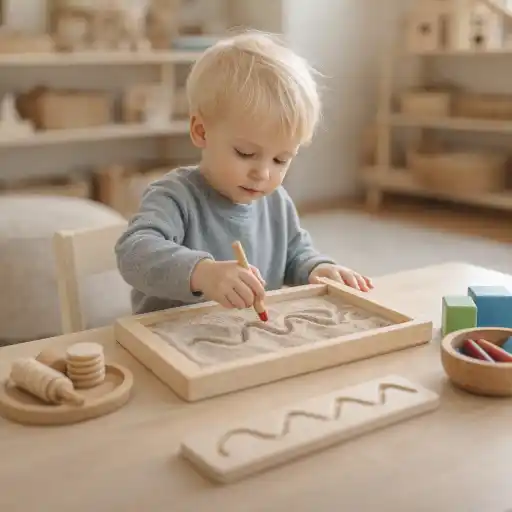
- 🔵 Offer sensory writing trays: salt, sand, fake snow, shaving‑cream trays, or rice; let children trace and erase repeatedly — see the salt/foam idea in Fake Snow Writing Tray. You can also make moon sand for sensory trays to support digging, tracing, and fine‑motor exploration; see a simple DIY recipe at make your own Moon Sand.
- 🟣 Hands‑on material builds strokes: playdough snakes for lines and circles, pipe cleaners for diagonals, pom‑pom pick‑up with tweezers to strengthen pincer grasp (letter formation ideas).
- ⚪ Integrate functional tasks: peeling stickers, opening containers, cutting, and clothespin stations develop pinch and grip (examples in No Time For Flash Cards).
Practical setup tips:
- 🔸 Rotate 3‑minute micro‑stations (easel, sensory tray, fine‑motor table) so children get varied practice without boredom.
- 🔸 Use visual and verbal formation cues (rhymes, chants) when introducing strokes — these verbal prompts help motor planning (see formation rhymes).
- 🔸 Protect materials: washable markers, non‑staining food coloring, and clearly labelled cleaning routines.
How do I scaffold activities for different learners, and when should I refer?
- 🟩 Model and do it together (hand-over-hand for brief moments with older toddlers).
- 🟨 Provide adaptive tools (short crayons, triangular grips, tweezers, weighted writing utensils) and change level of challenge.
- 🟥 Offer alternate ways to show mastery (dictation, building letters with blocks, or digital tracing on tablets).
2) Screening and referral cues: watch for persistent red flags such as very low hand strength, inability to isolate finger movement for age, or loss of previously acquired skills. Document observations, share with families, and suggest pediatrician screening or occupational therapy evaluation. Child care programs can use the practical checklist and family partnership guidance in ChildCareEd’s readiness guidance. State requirements vary - check your state licensing agency.
3) Evidence and teams: if you suspect motor or sensory differences, an OT can help identify targeted activities (see clinical tips at Together by St. Jude).
What common mistakes do programs make and how do we avoid pitfalls?
Common mistakes (and fixes):
- ❌ Mistake: Overemphasizing paper drills. ✅ Fix: Replace some worksheet time with sensory, vertical, and gross‑motor activities that build the same strokes in context (see alternatives at Fantastic Fun & Learning).
- ❌ Mistake: Expecting uniform progress. ✅ Fix: Use individualized targets; pick 1–2 goals per child and document small steps weekly (advice from ChildCareEd).
- ❌ Mistake: Ignoring posture and core strength. ✅ Fix: Add daily large‑motor work and vertical surface practice (research summary at Growing Hands‑On Kids).
- ❌ Mistake: One‑size‑fits‑all tools. ✅ Fix: Offer varied sizes and grips; shorter crayons and broken crayons encourage tripod grasp in small hands (No Time For Flash Cards).
How to measure progress simply:
- 1) Choose 2 functional goals per child (e.g., hold crayon, trace circle).
- 2) Take a photo or brief note weekly and share with families.
- 3) If no progress after 4 weeks of targeted practice, consider screening or referral.
What questions do staff and families ask most often (FAQ)?
- Q: "When should we introduce pencil work?"
A: Introduce mark‑making and strokes when children show interest; focus on large‑scale movements and hands‑on manipulatives before sustained paper tasks (see developmental roadmap in Pencil Grasp Development). - Q: "Are worksheets ever okay?"
A: Yes—sparingly. Use worksheets after children have repeated multisensory practice and gained confidence. Worksheets can be a check, not the only instruction (see teaching without tracing sheets). - Q: "How do we talk with families about progress?"
A: Share one‑page checklists, quick videos of the child doing an activity, and a 1‑sentence weekly note. ChildCareEd has family‑facing templates and guidance you can adapt (family checklist). - Q: "When should we get OT involved?"
A: If a child consistently avoids hand use, can’t manipulate simple classroom objects by expected ages, or loses skills—collaborate with families and refer for screening. Clinical resources like Together by St. Jude outline typical milestones. - Q: "How do we keep activities low‑prep?"
A: Use reusable sensory trays, a small bin of playdough, an easel, stickers, and tongs. Rotate items weekly and train staff on 3 quick setups that can be run in 10 minutes.
Conclusion
Shift the question from "How many worksheets did we complete?" to "How many meaningful motor and sensory experiences did each child get today?" By structuring short, hands‑on stations, using vertical surfaces, and partnering with families through clear checklists, you’ll help children build durable #prewriting foundations and confidence. For classroom handouts and staff training, adapt the simple family materials in ChildCareEd’s readiness resources. Small, consistent, playful steps produce measurable gains—and fewer frustrated learners—than hours of repetitive worksheets.
- 45 Hour Preschool Methods and Materials
- From Play to Planning: Building Culturally Competent, Child-Centered Curriculum
- CDA Bridge Bundle: Family Child Care without Portfolio Review
- CDA Bridge Bundle: Infant/Toddler without Portfolio Review
- CDA Bridge Bundle: Preschool without Portfolio Review
- Texas Director Credential
- Supporting Families and Caregivers in Language and Literacy
- CDA Certification en Español: Recursos y Consejos para Educadores Bilingües
- 🔍 ¿Qué ves cuando observas a un niño aprender?
- 👶 ¿Cuáles son las proporciones y grupos requeridos en Dakota del Norte? 🏫
- Recursos en Español sobre el Sueño Seguro del Bebé
- Curso de Comunicación de 9 Horas de Maryland
- 10 Ejemplos de Cómo la Cultura Influye en el Desarrollo Infantil
- Normas de Licenciamiento de Cuidado Infantil en Virginia para Centros Diurnos Infantiles y Hogares Diurnos Familiares
- Proporciones de Cuidado Infantil y Tamaños de Grupo por Edad en Maryland (Guía Rápida para Centros y Hogares)
- Proporciones de Cuidado Infantil y Tamaños de Grupo por Edad en Nueva Jersey (Guía Rápida para Centros y Hogares)
- Proporciones de Cuidado Infantil y Tamaños de Grupo por Edad en Virginia (Guía Rápida para Centros y Hogares)
- ¿Cuál es la Diferencia Entre la Crianza Respetuosa y la Crianza Permisiva?
- Celebrando la amistad en el cuidado infantil durante el Día de los Mejores Amigos
- Canciones, juegos y preguntas de círculo para niños
- Cómo simplificar la capacitación para sus empleados de daycare
- How can child care programs build prewriting skills without worksheets?
- Why Do Pre-Writing Skills Still Matter in Early Childhood?
- How Can Child Care Programs Build Meaningful School Readiness?
- How Can Clip Cards Prepare Little Hands for Writing?
- How Can Child Care Providers Support Early Writing Without Using Worksheets?
- How Can Tracing and Painting Build Multisensory Prewriting Skills?
