A picture of a cup may seem unmistakable to an adult, yet a child may see a different object, remember a different experience, or not realize that the image represents something real. Strengthen your ability to notice and respond to these differences with A Guide to Effective Communication  Buy Now $16.00, which develops listening and speaking skills for clearer conversations with children, colleagues, and families. For practical strategies to support children’s language growth and verbal and nonverbal communication, explore Language Development in Early Childhood Buy Now $16.00 as a helpful next step.
In an early learning classroom, pictures are more than decoration: they can guide routines, choices, communication, and independence. But visuals work only when children understand what an image is intended to represent. A thoughtful check of each child’s interpretation can help providers choose more accessible supports and make everyday interactions more responsive.
Why can the same classroom picture mean different things?
Adults often assume that a picture’s meaning is obvious because they recognize the object or activity it depicts. Young children, however, are still learning that a two-dimensional image can stand for a three-dimensional object, an action, or an idea. Their interpretation can be shaped by developmental experience, prior knowledge, culture, language, and familiarity with the image.
Research reviews describe symbol understanding as more than recognizing a resemblance: children also need to grasp that someone created the symbol to communicate something and understand how it relates to its referent. A photo of a classroom sink may be meaningful to a child who has used it, while a simplified icon of a sink may look unfamiliar. A picture of a bed might suggest “rest,” “home,” or a particular memory rather than the classroom’s intended meaning.
Symbolic thinking develops over time. Head Start notes that it typically emerges between 16 and 24 months, but individual experiences and development vary. This is why age alone cannot tell us whether a particular child understands a visual. Ask what the child sees and observe how they use the image instead of assuming that a missed cue reflects inattention or noncompliance.
- Images may be unclear, abstract, culturally unfamiliar, or visually crowded.
- A child may understand a picture’s subject without understanding its classroom purpose.
- Language, experience, and developmental differences can shape interpretation.
How can educators check what a child thinks a picture represents?
Use a low-pressure observation rather than a quiz. Show the image during a calm moment and invite the child to respond in a way that feels comfortable. Ask, “What do you notice?” or “Show me what this picture means to you.” A child might answer with words, point, act out the pictured routine, select an object, use a home language, or communicate with a device. Each response can offer useful information.
Compare the picture with the real object or action. If the visual shows a paintbrush, place it beside an actual brush and watch whether the child connects the two. If it is a routine card, use it as the routine begins and see whether the child anticipates or participates in the intended action. These real-world links matter because children may recognize an image without understanding that it stands for something elsewhere.
Keep notes factual and specific. Write “looked at the card, then selected the book” rather than “did not understand.” Record the image used, the context, the child’s response, and any adult prompt. This gives the team a clearer basis for deciding whether to keep, teach, or adapt the visual.
- Offer a short prompt, then allow processing time.
- Accept speech, gestures, signs, actions, home-language responses, and AAC.
- Notice what happens in the actual routine, not only during a desk-side check.
How should visuals match a child’s developmental and communication needs?
Choose the representation the child understands most readily. Depending on the child and purpose, that may be a real object, a photograph, a simple drawing, a familiar symbol, or a word paired with an image. A progression from concrete objects to photographs and then more abstract icons can be useful, but it is not a rigid sequence or a measure of a child’s worth. Some children may continue to benefit from photographs; others may readily understand icons.
Head Start’s guidance on visual supports emphasizes that visuals can make information more accessible when verbal directions are difficult to process. For infants and toddlers, the guidance on visual supports for infants and toddlers highlights the importance of matching the format to developmental understanding. Use visuals intentionally and pair them with real experiences, spoken language, gestures, and opportunities to practice.
Consider communication access and belonging. A child who is learning English may benefit from a familiar photograph and labels in both English and the home language. A child who communicates without speech may need symbols that are available throughout the day, not only during a planned activity. Ask families what images, words, or objects are familiar, and consult specialists when a child already has an individualized communication plan.
- Use clear images with minimal distracting detail.
- Pair new images with the real object, action, and consistent language.
- Offer choices and accessible ways for the child to respond.
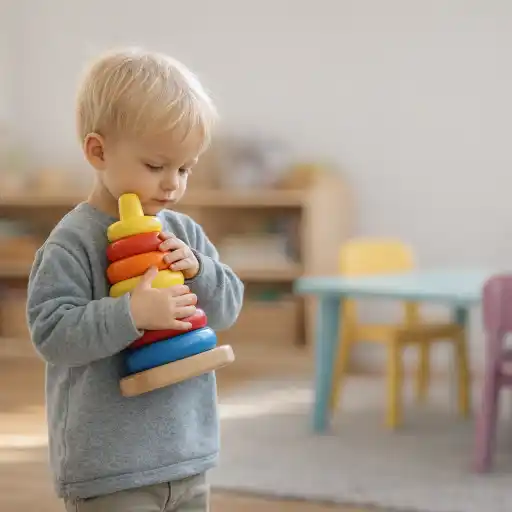
How can teams use a symbol-understanding check in daily practice?
A simple check can be part of classroom planning rather than a separate test. Select a few visuals that matter in everyday life—such as cleanup, snack, bathroom, or a choice board—and observe whether children connect each image to its intended object or action. Check one at a time, in the context where it is used, and record what the child does without prompting and with a brief cue.
For a small team review, use a brief, consistent process:
- Identify the visual and the specific meaning adults intend it to convey.
- Invite the child to show or tell what they think it means.
- Connect it to a real object, location, or experience.
- Notice whether the child uses it during the routine.
- Adapt the image or teach its meaning if the connection is not clear.
🌟 Try a “picture detective” moment: invite children to match classroom photos to objects and explain or show how they know. Keep it playful, brief, and optional. The activity can reveal misunderstandings while also inviting children to contribute their knowledge and perspectives.
The ChildCareEd discussion of picture labels and preschool conversations offers ideas for turning a child’s attention to an image into a genuine exchange. Ask one open question, listen carefully, and extend the child’s idea without treating the interaction as an assessment of compliance.
What common mistakes can make a visual support less useful?
A visual can be well-intentioned and still fail to communicate. One common mistake is assuming that a child understands because they can name the image. Naming “car” does not necessarily mean the child understands that the card means “go to the car area,” “put cars away,” or “car time comes next.” Teach the purpose directly and observe how the child applies it.
Other pitfalls include choosing generic clip art that does not look like classroom materials, placing a visual where children cannot see or reach it, and using several different pictures for the same activity. An overfilled board can also make it difficult to find the relevant cue. Keep supports simple, accessible, and consistent, while remaining willing to change an image if children interpret it differently.
- Do not interpret an incorrect match as defiance or lack of interest.
- Do not rely on a visual alone when a child needs modeling, language, or hands-on support.
- Do not treat one successful response as proof that the child understands the image in every setting.
- Do not require spoken answers; accept meaningful nonverbal communication.
Review visuals when routines, materials, or children’s needs change. If a child continues to have difficulty understanding classroom cues, share objective observations with the family and collaborate with relevant specialists. State requirements vary - check your state licensing agency for applicable program guidance.
How can providers turn what they learn into more responsive support?
When a child interprets a picture differently, that response is valuable information—not a problem to correct. It tells educators how the child is connecting images with experience and where instruction or adaptation may help. Use that insight to select a clearer photograph, add a familiar object, pair the symbol with a gesture, or teach the connection during play.
Directors can support this work by encouraging staff to share brief examples during team meetings: which visual was used, what the child appeared to understand, and what adaptation helped. Keep the focus on the environment and the child’s strengths rather than labeling the child. Families can contribute valuable information about familiar words, images, and routines, making classroom supports more culturally and personally meaningful.
For providers who want additional professional learning, The Subtle Teacher: Nonverbal Communication in the Classroom Buy Now $25.00 explores how to recognize and respond to children’s unspoken messages. Recognize, Respond, Respect: Supporting Diverse Learners Buy Now $55.00 addresses observation and inclusive communication. These courses complement reflective practice; choose training according to your learning goals and verify any state-specific requirements independently.
Conclusion: What should you remember when a picture means something different?
When a classroom picture means something different to a child, pause and get curious. Children’s interpretations reflect their development, experiences, language, and the clarity of the visual—not simply whether they are paying attention. Invite the child to show what the picture means, connect the image to real objects and routines, and observe how the child uses it in context.
Effective visual support is not just posted; it is taught, tested through everyday interaction, and adapted when needed. Choose familiar, accessible images, accept varied communication, and collaborate with families and specialists. A small adjustment can make a routine easier to understand and help a child participate with greater confidence and independence.
- 45 Hour Child Growth and Development
- Adult Only CPR AED and Adult First Aid Blended
- Birth to Five CDA Credential with Portfolio Review
- CDA Bridge Bundle: Preschool
- 45 Hour School Age Methods and Materials
- CDA Bridge Bundle: Family Child Care
- CDA Bridge Bundle: Infant/Toddler
- Play, Learn, Grow
- Every Moment Matters: Schedules and Transitions
- Cómo Abrir Una Quardería En Casa Sin Dinero?
- Recursos en Español sobre el Sueño Seguro del Bebé
- 10 Ejemplos de Cómo la Cultura Influye en el Desarrollo Infantil
- Normas de Licenciamiento de Cuidado Infantil en Virginia para Centros Diurnos Infantiles y Hogares Diurnos Familiares
- Retraso del Habla en la Guardería: Cómo Pueden Ayudar los Proveedores
- How Can Providers Create an Inclusive Classroom for Every Child?
- How Can Sink-or-Float Water Play Become a Meaningful Science Investigation for Preschoolers?
- How Can Child Care Providers Help Children Set Simple Goals and Share Their Interests?
- How Can Visual Feedback Support Multiplication Fluency?
- How Can a Picture Label Become a Real Conversation with a Preschooler?
- How Can Child Care Providers Make Transitions Easier for Children With Different Needs?
- Can Every Toddler Reach and Recognize Their Own Storage Space?
- How Can Educators Help Children Negotiate When Pretend-Play Rules Change Midgame?
- When Families and Teachers Mean Different Things by “A Good Day,” How Can They Find Common Ground?
- What Are the Best Transition Activities for Preschool Classrooms?
- When Does Exclusion in an After-School Group Become a Pattern?
- What Questions Keep a Preschool Science Conversation Going?
- How Can You Show Families Their Child’s Progress in Classroom Participation?
- When Does a Classroom Picture Mean Something Different to a Child?
