When preschoolers stop checking the visual schedule, it can feel as though a carefully planned support has become classroom wallpaper. Before abandoning it, strengthen how the schedule is taught, personalized, and connected to real transitions. For deeper guidance on predictable routines, consider Every Moment Matters: Schedules and Transitions  Buy Now $55.00, which can help providers improve daily schedules, transitions, and classroom climate while building practical professional knowledge.
Why does it matter if children stop looking?
A visual schedule is not successful merely because it is posted. Its purpose is to help children understand what is happening now, what comes next, and how they can participate with less adult prompting. Head Start explains that some children have difficulty understanding verbal directions or anticipating upcoming events; visual supports make expectations more accessible and can increase participation across routines and settings.
Children may stop looking for several reasonable reasons: the images are unclear, the schedule is too long, the location is inconvenient, or adults rarely refer to it. Sometimes the routine has become familiar, which may indicate that children no longer need to inspect every card. The goal is not constant eye contact with the chart; the goal is greater #independence during activities and #transitions.
- Observe whether children can identify “now” and “next.”
- Notice whether they transition successfully without checking.
- Ask whether the schedule reflects the actual pace of the day.
- Consider language, sensory, attention, and cultural needs.
Research on picture activity schedules suggests that children can learn to use them effectively, but skills may not automatically generalize to new settings. Therefore, stopping at the classroom chart may not be a failure; it may be a signal to reteach, adapt, or extend the support.
How can you determine whether the schedule is still useful?
Begin with observation rather than correction. For several days, record what happens before, during, and after major transitions. Note whether children ask what comes next, wait for repeated directions, wander, resist cleanup, or move successfully without consulting the schedule. This simple information helps distinguish between genuine independence and disengagement.
Check the schedule’s design. Preschoolers often benefit from a limited number of clear pictures rather than a crowded full-day display. ChildCareEd recommends keeping visuals simple, using consistent symbols, and placing them where children can reach and see them. The visual schedule implementation guide also emphasizes introducing each image, referring to the schedule regularly, and inviting children to move or check off completed activities.
- Are photographs recognizable to this particular group?
- Are cards positioned at children’s eye level?
- Does “finished” have a clear location?
- Do adults use the same words and gestures?
- Does the displayed sequence match the real day?
Invite children to demonstrate the system. Ask, “What are we doing now?” and “What happens after snack?” Avoid turning the interaction into a test. Their responses provide useful evidence about whether they understand the symbols, the sequence, and the meaning of completion.
 How can you make the schedule active again?
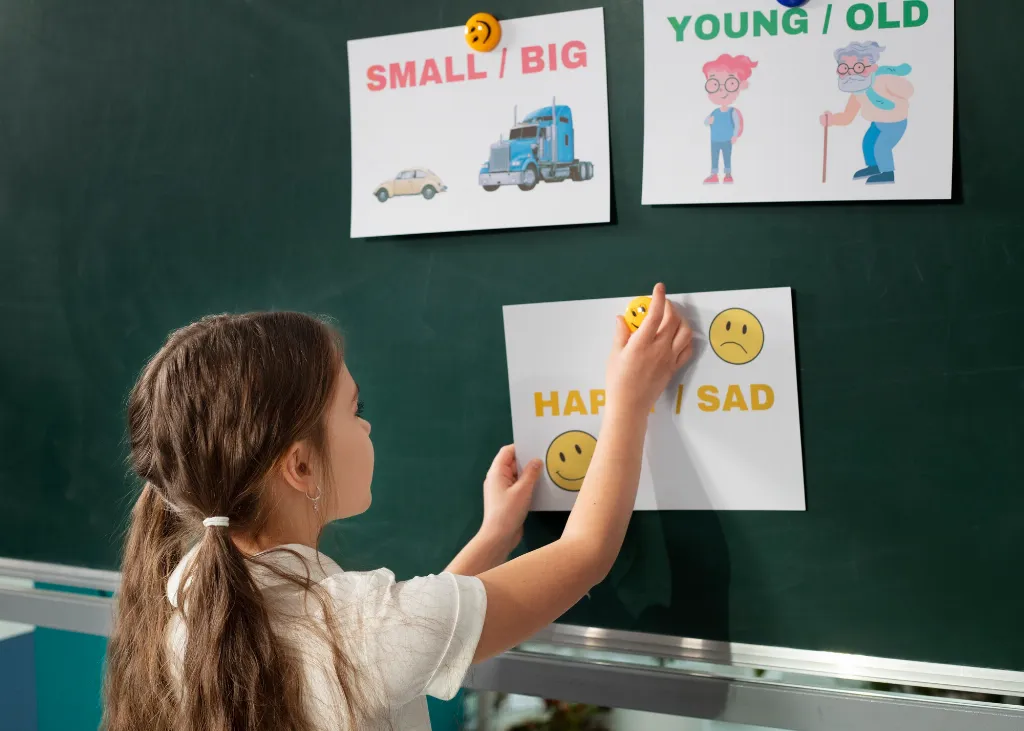
Transform the schedule from a poster into a brief classroom routine. At arrival, review only the first few events. Before each transition, walk with a child to the chart, point to the current card, name the next activity, and let the child move the card to a finished pocket or turn it over. This concrete action helps children connect the image with their lived experience.
Use consistent language: “First blocks, then cleanup.” Pair the visual with a song, gesture, timer, or object cue. Indiana’s transition guidance notes that visual timers and countdowns can make abstract time easier to understand, especially when children need additional preparation before stopping a preferred activity.
- 🌟 Assign a rotating schedule helper to move the “now” marker.
- Use a two-minute and thirty-second warning before difficult transitions.
- Celebrate specific actions: “You checked the picture and went to the rug.”
- Place a small version of the schedule near the relevant center.
- Practice during calm moments instead of introducing it only during conflict.
Keep prompts brief and gradually fade them. If an adult always says, “Go check your schedule,” the child may depend on the adult’s verbal cue. Instead, point silently, pause, and allow processing time. Independence develops when children have repeated opportunities to use the support successfully.
What adaptations help children who avoid the whole-class chart?
A whole-class display is not the right format for every child. Some preschoolers need a portable strip, flip book, first-then board, or individualized sequence. Children who become overwhelmed by many pictures may need only two cards: the current task and the next preferred activity. Others may understand photographs better than clip art, or objects better than photographs.
Use a progression based on the child’s understanding: object, photo, icon, then written word. The Head Start visual supports resource describes how visuals can support children who have difficulty processing verbal instructions, while the CSEFEL brief on routines and classroom schedules emphasizes individualized schedules, choices, and preparation for changes.
- Offer a personal schedule at the child’s cubby or on a clipboard.
- Use photos of the child participating in familiar routines.
- Provide a “change” or “surprise” card for unexpected events.
- Pair a nonpreferred activity with a predictable preferred activity.
- Include home-language labels when helpful.
Adaptation should not imply a diagnosis. Visual supports benefit children with language differences, anxiety, attention differences, developmental delays, autism, or simply a preference for concrete information. Collaborate with families and specialists when a child needs sustained individualized support, and protect the child’s dignity by making the tool ordinary and strengths-based.
How can teachers avoid common mistakes when troubleshooting?
The most common mistake is treating the schedule as decoration. If adults do not update it, refer to it, or explain changes, children learn that it has little functional value. Another mistake is adding more pictures whenever children struggle. More information can increase cognitive load and make the schedule harder to interpret.
- Too many cards: show the essential parts of the day or a short routine.
- Inconsistent symbols: use one image for the same activity whenever possible.
- Different adult cues: agree on shared words, gestures, and completion signals.
- Unrealistic timing: include cleanup, handwashing, waiting, and movement time.
- Using the schedule as punishment: keep it neutral, supportive, and available.
- Ignoring changes: review schedule changes before they occur.
Directors can support consistency through a short staff checklist: schedule visible, cards accurate, current marker available, transition cue agreed upon, and individualized supports prepared. State requirements vary - check your state licensing agency before relying on a training or documentation practice for compliance.
When a child continues to disengage, examine the function of the behavior. Is the schedule associated with a difficult transition? Is the next activity confusing or unpleasant? Adjust the environment and teach the missing skill rather than assuming defiance.
How can you build a sustainable schedule system?
A sustainable system is simple enough for every adult—including substitutes—to use. Choose one format, store backup cards in a labeled envelope, and schedule a weekly review. Replace damaged images, remove outdated events, and ensure the sequence reflects the children’s actual experiences.
Use data sparingly but purposefully. Track one or two outcomes, such as the number of adult prompts or minutes needed to transition. Review the information with staff after one or two weeks. If children are transitioning more calmly, looking less often may be a positive sign. If challenging behavior increases, reteach the schedule and inspect the transition itself.
- Teach the system explicitly at the beginning of the year.
- Review it briefly each morning and before major changes.
- Invite children to handle cards and make appropriate choices.
- Share a photograph or matching routine with families.
- Celebrate progress without requiring perfect compliance.
For providers seeking more focused professional learning, Moving About the Classroom: Effective Transitions for Everyday Buy Now $35.00 addresses transition activities and ways to make movement between activities more purposeful. You can also explore Coaching for Success: Inclusive Strategies to Support Children with Autism Buy Now $55.00 for classroom-focused strategies involving individualized routines and inclusive scaffolding.
Conclusion
When preschoolers stop looking at a visual schedule, the answer is not automatically to remove it. First determine whether they have developed independence, then refine the schedule’s clarity, timing, location, and relevance. Make it interactive, pair it with consistent transition cues, and individualize the format when a whole-class chart is not enough.
The central question—what should you do when children stop looking?—is answered through observation and responsive teaching: check whether the tool still communicates, reteach its purpose, adapt it to the learner, and fade adult prompts thoughtfully. A visual schedule works best as a living classroom practice that supports #predictability, communication, regulation, and participation.
Frequently asked questions
Should children look at the schedule before every activity?
Not necessarily. If children transition successfully without checking, they may be demonstrating growing independence.
What if a child refuses to approach the schedule?
Try a portable or first-then version, use meaningful photographs, and practice during a calm, preferred activity.
How many pictures should a preschool schedule include?
Begin with the major events or three to five steps in a short routine. Add detail only when children can use the existing format comfortably.
Should the schedule include exact times?
Usually not for young preschoolers. Visual sequence and transition warnings are often more meaningful than clock times.
Can visual schedules support inclusion?
Yes. They can supplement verbal directions and help children with varied communication, attention, sensory, and developmental needs participate in shared routines.
What if the schedule works in one setting but not another?
Teach generalization explicitly. Practice using the same routine across centers, outdoor play, meals, and home-school transitions.
- Behind the Scenes: Baby Routines ONLINE
- 45 Hour Child Growth and Development
- 45 Hour Preschool Methods and Materials
- Birth to Five CDA Credential with Portfolio Review
- Balancing Act: Schedules and Routines
- Pediatric RSV First Aid & CPR/AED
- 45 Hour School Age Methods and Materials
- CDA Bridge Bundle: Preschool without Portfolio Review
- Texas Director Credential
- Every Moment Matters: Schedules and Transitions
- CDA Certification en Español: Recursos y Consejos para Educadores Bilingües
- ⏰ Cómo puedo facilitar las transiciones y las rutinas diarias en mi aula?
- Recursos en Español sobre el Sueño Seguro del Bebé
- ¿Cuánto tiempo se tarda en obtener una certificación CDA?
- ¿Cómo empiezo mi certificación CDA en Florida en línea?
- Capacitación en Salud y Seguridad Preventiva en Línea para Proveedores de Cuidado Infantil
- Lista para Guardería en Casa en Texas: Cómo Iniciar una Guardería en el Hogar
- Retraso del Habla en la Guardería: Cómo Pueden Ayudar los Proveedores
- Cómo Ser Maestra de Preescolar en Dakota del Norte
- Capacitación Previa al Servicio para Proveedores de Cuidado Infantil en Dakota del Norte
- What Do Child Care Providers Need to Teach Families About New York’s Stop Online Predators Act and Kids’ Tech Use?
- Can a World Cup theme on the DC circle time rug teach teamwork, turn-taking, and big feelings?
- Child Keeps Hitting Other Kids? Look for These 7 Patterns Before Reacting
- Preschool Visual Schedule: What to Do When Kids Stop Looking at It
- Attention Signals: Which Ones Work Best for Toddlers, Preschoolers, and School-Age Kids?
- Why Is My Preschool Classroom So Chaotic? 7 Classroom Management Fixes to Try
- How Can Preschool Routines Create Calmer, More Independent Classrooms?
- How Can Child Care Providers Calm an Overstimulated Child in a Busy Classroom?
- How Can Providers Teach Children to Notice When a Friend Needs Space?
- How Can Preschool Providers Handle Unexpected Routine Changes with Confidence?
