When big feelings interrupt play and learning, a thoughtfully prepared calm-down area can help children regain control without shame or isolation. For deeper guidance on creating supportive emotional environments, explore From Tantrums to Triumphs: Equipping Preschoolers with Self-Regulation Skills Buy Now $25.00, which offers practical strategies for teaching preschoolers self-regulation and responding to challenging behavior. A second helpful option is Self-Regulation & Change: Helping Children Cope  Buy Now $16.00, focused on routines, transitions, and responsive care.
Why does a preschool calm-down area matter?
A calm-down area is a supervised, low-stimulation space where children can pause, identify feelings, practice a familiar strategy, and return to the group. It is not a time-out chair or a place where children are sent away for having emotions. Consistent practice helps #preschoolers develop #regulation, emotional vocabulary, independence, and safer ways to communicate needs.
This approach reflects developmentally appropriate practice: children learn through relationships, play, repetition, and responsive adult support. A calm-down area is most effective when it is part of a broader #classroom plan that includes predictable routines, transition warnings, movement opportunities, and warm teacher-child interactions. The ChildCareEd guide creating a calm-down corner similarly emphasizes choice, brief visits, visuals, and active supervision.
For providers, the goal is not to eliminate anger, sadness, excitement, or frustration. The goal is to help children remain safe, experience co-regulation, and gradually choose tools that support participation.
Where should the calm-down area be located?
Select a quieter part of the room that remains clearly visible to staff. Avoid doorways, crowded walkways, and locations next to loud or highly stimulating centers. A small rug, cushion, low shelf, or child-safe boundary can define the area without making it feel hidden or isolating.
- Keep the space accessible to children with mobility, communication, and sensory differences.
- Use washable materials, adequate lighting, and good ventilation.
- Design it for one child at a time unless shared use is deliberately taught.
- Keep wall displays limited and purposeful to reduce visual overload.
- Maintain active supervision; privacy must never mean unsupervised isolation.
The surrounding environment matters as much as the corner itself. Separate noisy and quiet centers, use visual schedules, offer transition warnings, and reduce unnecessary clutter. State requirements vary - check your state licensing agency before changing room arrangements, supervision practices, or materials.
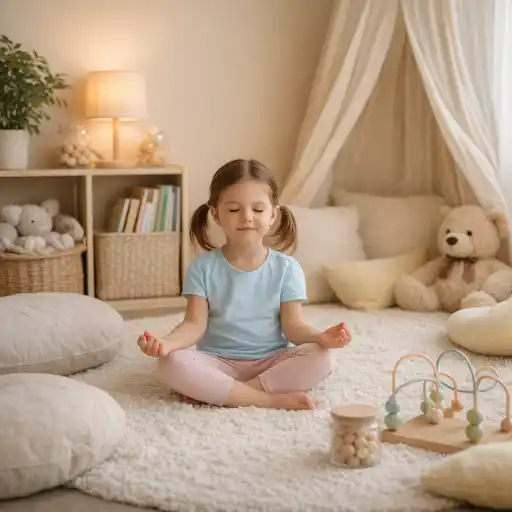
Which seating and comfort items should be included?
Begin with a comfortable, clearly defined place to sit. Soft seating communicates safety and gives children a physical boundary while they practice calming. Choose durable materials that can be cleaned frequently.
- 🧸 A washable rug, floor cushion, small chair, or pillow.
- A soft stuffed animal or “breathing buddy” for comfort and modeling breaths.
- A small washable blanket or lap cushion, when appropriate for the child and program.
- A low basket or shelf so children can see and return materials independently.
Comfort objects should support connection rather than become rewards or distractions. Observe individual preferences: one child may seek a quiet cushion, while another may need proximity to a trusted adult or a brief movement option. Avoid heavy or restrictive items unless their use is specifically supported by qualified professionals and consistent with program policy.
Keep the area inviting but simple. Too many pillows, blankets, toys, or decorations can turn a regulation space into another busy center. Inspect materials regularly, remove damaged items, and follow sanitation procedures. The most important resource remains the adult’s calm, respectful presence.
What visual and emotional supports help children communicate?
Preschoolers may not have the language to explain what they feel during stress. Visual supports allow children to point, match, or choose before they can speak in complete sentences. Include a small feelings chart with recognizable facial expressions and culturally responsive images.
- A feelings chart or two- to six-choice emotion cards.
- A visual rule card such as: “I choose a tool. I keep materials safe. I return when ready.”
- A breathing card showing simple steps, such as smell the flower and blow the candle.
- A first-then card: “First calm my body, then return to play.”
- A short feelings book, social story, or picture-based coping sequence.
Use clear images and very few words so non-readers, multilingual children, and children who use augmentative communication can participate. Invite families to share familiar feeling words, comfort routines, and home-language expressions. NAEYC’s developmentally appropriate practice framework emphasizes that environments should be culturally, linguistically, ability, and individually responsive.
Teach the visuals during calm moments. Point to a feeling, model a strategy, and allow children to practice without pressure. Visuals are not decorations; they are communication tools that make the routine predictable.
Which calming tools are useful without overstimulating children?
Start with two to four purposeful tools rather than filling the area with choices. Introduce each item when children are calm, demonstrate safe use, and observe whether it helps, has no effect, or increases activation.
- A sensory bottle or liquid timer without small, detachable parts.
- A pinwheel, bubbles, or breathing visual for slow exhalation practice.
- One age-appropriate squeeze ball or textured object.
- Drawing paper and crayons for children who process through mark-making.
- A short mindfulness, stretching, or heavy-work card when movement is appropriate.
Tools are not universally calming. Flashing lights, loud music, strong scents, complicated fidgets, and clutter may increase stimulation. Some children benefit from quiet visual focus; others need carefully supervised movement such as wall pushes, animal walks, or carrying a light classroom item. The ChildCareEd resource on sensory breaks reinforces the importance of matching the strategy to the child rather than assuming one tool works for everyone.
Use a simple Connect → Calm → Coach sequence: “I’m here” (connect), “Would you like breaths or the squeeze ball?” (calm), and “What helped?” after the child is organized (coach). Keep visits brief, often two to five minutes, while remaining flexible and supervised.
How can teams teach children to use the area safely?
Introduce the calm-down area during circle time or a peaceful individual moment. Explain that everyone sometimes needs a break, model a short visit, and practice entering, choosing a tool, and returning. Puppets and role-play are especially helpful: “The puppet’s tower fell. What might its body need?”
During escalation, use short language and avoid demanding eye contact, lengthy explanations, apologies, or emotional disclosure. State the feeling and boundary: “You are angry. I will not let you hit. You may squeeze the ball or stomp on the mat.” After calm, briefly revisit the event and rehearse a replacement skill.
- Teach the routine when children are calm.
- Offer the space as a choice, never as humiliation or forced isolation.
- Keep staff within sight and follow active-supervision policies.
- Use the same script across classrooms, substitutes, and leadership staff.
- Document triggers, strategies used, duration, and re-entry success.
Review notes every two to four weeks. If several children struggle during cleanup, adjust warnings or visual cues. If one child repeatedly needs the space during a particular task, investigate communication, sensory load, fatigue, or task difficulty instead of simply increasing time in the corner.
What common mistakes should providers avoid?
The most damaging mistake is turning the calm-down area into punishment. Sending a child there angrily, requiring them to stay until they look calm, or removing access as a consequence changes its meaning from support to exclusion. Teach it proactively while maintaining clear safety limits.
- Too many materials: limit choices and rotate items intentionally.
- Long lectures: use one validating statement and one clear choice.
- Teaching only during crises: practice daily during calm transitions.
- Using it to escape every demand: plan a predictable return step and examine difficult tasks.
- Ignoring differences: observe whether quiet, movement, visuals, or adult proximity helps.
- Inconsistent responses: create a shared script and coach new staff.
Seek additional support when a child frequently hurts themselves or others, experiences repeated prolonged episodes, or shows little improvement after several weeks of consistent teaching. Partner with families, your director, a mental health consultant, early-intervention provider, or another appropriate specialist. A calm-down area is a classroom support, not a substitute for assessment or individualized care.
Conclusion: What should be included in a preschool calm-down area?
An effective preschool calm-down area includes comfortable seating, clear feelings and breathing visuals, two to four safe low-stimulation tools, a short feelings resource, and consistent adult support. Its success depends less on expensive materials than on intentional teaching, voluntary access, supervision, inclusive design, and repeated practice.
- Choose a visible, quiet location.
- Provide simple comfort, communication, and calming tools.
- Teach Connect → Calm → Coach when children are regulated.
- Track patterns and adjust the environment, not just the child.
- Collaborate with families and seek help when safety or progress remains a concern.
When adults treat the space as a place for learning and dignity, children can build lasting #emotions vocabulary and #calmdown skills while returning more successfully to play and learning.
Additional ChildCareEd learning options: Early Emotional Wellness Buy Now $16.00, A Thoughtful Approach to Children’s Mental Health Buy Now $24.00, and CDA Subject Area 3: Supporting Children’s Social and Emotional Development Buy Now $80.00.
- CDA Preschool Credential
- CDA Home Visitor Subject Area 3 Part 3 Birth to 5
- From Tantrums to Triumphs: Equipping Preschoolers with Self-Regulation Skills
- Bienvenido! Welcoming All Families
- Pediatric RSV First Aid & CPR/AED
- CDA Bridge Bundle: Preschool without Portfolio Review
- Creating Environments that Nurture Growth and Community
- Responding to Emergencies
- Emergency and Disaster Preparedness- Online
- Shoo, Germs! Don't Bother Me!
- CDA Certification en Español: Recursos y Consejos para Educadores Bilingües
- Mindfulness for Little Learners: Realistic Practices for Busy Classrooms
- 😫🧸 ¿Qué hacer cuando un bebé no quiere dormir la siesta en el aula?
- Recursos en Español sobre el Sueño Seguro del Bebé
- Which preschool “soft skills” best predict later success?
- How can prevention plans help stop tantrums in the classroom?
- Lista para Guardería en Casa en California: Cómo Iniciar una Guardería en el Hogar
- Lista para Guardería en Casa en Texas: Cómo Iniciar una Guardería en el Hogar
- Cómo Ser Maestra de Preescolar en Wisconsin
- How can Nevada preschool programs help children with special needs feel heard, included, and understood?
- Celebrando la amistad en el cuidado infantil durante el Día de los Mejores Amigos
- How can my New York program help sensory-sensitive children cope with fireworks noise?
- Classroom Climate: How Teachers Can Build a Positive Environment
- What Should a CDA Portfolio PDF Look Like Before You Upload It?
- How Can You Build a Preschool Literacy Center Without Spending Hours Planning?
- How Can You Support an Autistic Child in a Preschool Classroom?
- How Can You Create a Calm-Down Corner in a Preschool Classroom That Children Actually Use?
- What Should Be Included in a Preschool Calm-Down Area?
- How Often Should Preschool Teachers Change Classroom Activities?
