A fallen leaf is not simply finished—it is beginning a slow transformation that children can investigate right outside your door. A repeatable leaf study helps children build observation, language, and early science skills; Creating the Natural Outdoor Classroom  Buy Now $16.00 offers practical guidance for making outdoor spaces purposeful places to learn. For additional support in scaffolding children’s questions and investigations, explore Building Early Science Foundations Buy Now $16.00 as you plan your next nature-based experience.
Why is a fallen-leaf investigation meaningful for young children?
Decomposition is a gradual natural process, which makes it an ideal opportunity to help children practice returning to a question over time. They can see a leaf fall, but may wonder what happens after it lands. By observing the same leaf repeatedly, children notice that it may become damp, darker, softer, curled, torn, or fragmented. These visible clues give a concrete starting point for considering a process that also involves microscopic life.
The learning reaches beyond science vocabulary. Children make predictions, compare evidence, listen to classmates’ ideas, and communicate their own through words, gestures, drawings, or photographs. This kind of inquiry supports persistence and reasoning because the answer is not immediately available. The early science approach described in Leaf Walk: Observing and Investigating Leaves likewise emphasizes observation, recording, questions, and sharing findings.
Keep the central goal modest and meaningful: help children notice change and use evidence to explain what they think may be happening. A leaf investigation can also nurture care for nature by showing that fallen plant material has a role in a living ecosystem. Children are not expected to master the chemistry of soil; they are learning that nature changes in ways they can observe and investigate.
- Invite children to wonder what might happen to a leaf after it falls.
- Value careful noticing over quick or “correct” answers.
- Use the investigation to connect children with seasonal change and environmental cycles.
How can educators set up a simple, repeatable leaf study?
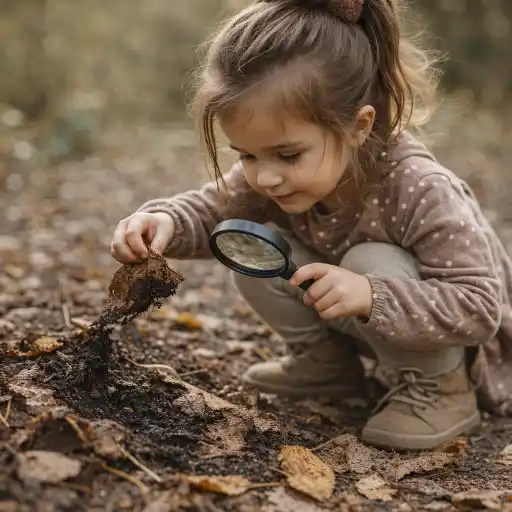
Choose a familiar, bounded outdoor area and a few fallen leaves that can be revisited. Check that the collection spot is clean and that the leaves can be identified or handled safely. Begin with a question such as, “What do you think will happen to this leaf?” Record children’s predictions in their own words, without treating them as a quiz.
Keep the process manageable. Place one leaf in a protected outdoor location and, if useful, compare it with a second leaf kept in a dry indoor spot. Explain that this is a comparison, not necessarily a controlled experiment: many conditions may differ. Return on a predictable schedule—every few days or once a week—and look from a similar angle each time. Consistency makes small changes easier to notice.
A hand lens, clipboard, pencil, and camera are enough for most groups. Children may draw, point, dictate an observation, or select a photo. The My Nature Discovery fall object observation activity Buy Now $1.50 also offers a short, educator-guided way to observe a safe seasonal object and communicate what children notice.
- Record a starting point: color, shape, texture, and condition.
- Use dated drawings or photos taken from a similar viewpoint.
- Ask, “What changed?” and “What stayed the same?” at each visit.
- Be prepared for weather disruptions with indoor photos or a backup observation routine.
What should children observe and document as leaves change?
Documentation should capture children’s thinking, not evaluate their drawing ability or command of scientific terms. Invite them to describe what they can see: a curled edge, a new hole, a softer surface, a change in color, or pieces separating from the leaf. After rain, they may notice dampness; after a dry spell, they may observe brittleness. Encourage comparison with an earlier drawing or photograph so children can use evidence rather than relying only on memory.
A simple record can include the date, one objective description, and a child’s exact words. For example: “October 8: The edge is torn. Sam said, ‘It feels softer now.’” Photos can make gradual change easier to compare; placing a familiar object nearby may help show relative size, but measurement is optional. Keep records brief enough that they support observation rather than interrupt it.
Use prompts that invite children to look again and think aloud:
- “What do you notice first?”
- “How is today’s leaf different from the one we saw before?”
- “What might have caused that change? What clues do we have?”
- “What would you like to check next time?”
Children can arrange photos from earlier to later, dictate captions, or make a class sequence of the leaf’s changes. These representations support early #science, #language, and #math learning as children describe, compare, order, and discuss their observations. Keep the record inclusive: speech, pointing, gesture, home language, drawing, and photography are all valid ways to contribute.
How can educators explain decomposition accurately and accessibly?
Begin with what children can observe and introduce a clear, accurate explanation: fallen leaves change over time, and living things and environmental conditions help break them into smaller pieces. Fungi and bacteria are important decomposers, though they are generally too small to see without special tools. Insects and other small animals may also feed on or fragment decaying material. Moisture, temperature, oxygen, and the kind of leaf can influence the pace.
Connect explanations to evidence. If a leaf is darker and softer, an educator might say, “This leaf is changing. Tiny living things help break dead plants into smaller pieces, and those materials can become part of the soil.” The Cornell overview of microorganisms in compost explains the roles of bacteria and fungi in breaking down organic matter; providers can simplify this information for young children without suggesting that they can see microbes directly.
Avoid promising that every leaf will disappear quickly or that one particular creature caused a change unless there is evidence. Leaf breakdown has no universal timetable: conditions and leaf characteristics matter. If a child asks a question you cannot answer, “We don’t know yet—let’s look for clues” models scientific humility. The broader ecological role is also worth naming: as leaf material breaks down, some of its nutrients and organic matter contribute to soil and ecosystem cycles.
How can providers keep the investigation safe, inclusive, and engaging?
Plan for supervision and hygiene before going outside. Inspect the observation area and avoid leaves from roadsides or places that may be contaminated. Identify plants when possible, consider family allergy information, and do not allow children to taste leaves, soil, fungi, or small organisms. Wash hands after exploration and follow your program’s health and safety practices. State requirements vary - check your state licensing agency.
Inclusion means offering different ways to participate, not requiring every child to touch or handle a leaf. Children can observe from a path, use a magnifier, take a photo, dictate a description, draw indoors, or serve as the group’s recorder. Offer adapted tools and a quiet observation option when helpful. The goal is shared inquiry, with access shaped around children’s abilities, interests, and sensory preferences.
Keep the routine realistic for staff: short, repeated visits are often more sustainable than an elaborate setup. A common pitfall is expecting dramatic change each time. No obvious difference is still useful information; it can prompt children to wonder whether the location or weather matters.
- 🍂 Establish clear outdoor boundaries and actively supervise the group.
- Use photographs or educator-handled samples when a material’s safety is uncertain.
- Offer an indoor backup, such as comparing dated photos or drawings.
- Share a child quote or image with families to make the investigation visible.
Conclusion: What happens to a fallen leaf?
A fallen leaf gradually changes as moisture, weather, and decomposers help break it into smaller pieces. The process may take different amounts of time depending on the leaf and its surroundings. Over time, leaf material contributes to soil and the wider movement of nutrients through an ecosystem. Children can begin to understand this cycle by observing real leaves, documenting evidence, comparing changes, and sharing questions.
Start with a safe leaf, invite a prediction, and return to it regularly. Use accurate, child-friendly language, welcome different ways to participate, and treat both visible changes and “not yet” as meaningful observations. A leaf tracker turns a brief outdoor moment into an ongoing inquiry in which children’s ideas matter.
For a ready-to-use extension, explore the Fall Tree Change Observation Checklist Buy Now $2.00 and adapt its repeat-observation approach to a single leaf. To deepen your own planning for a purposeful nature-rich setting, consider CDA: Creating the Outdoor Classroom Buy Now $16.00, which addresses intentional outdoor environment design, or Basic Science in Early Childhood Buy Now $25.00, which focuses on meaningful investigations that support children’s scientific reasoning.
- CDA Home Visitor Subject Area 2 Part 3 Birth to 5
- CDA Bridge Bundle: Preschool
- CDA Bridge Bundle: Family Child Care
- CDA Bridge Bundle: Family Child Care without Portfolio Review
- Art from the Heart for Preschoolers: Open Ended Art Projects that Build Self-Esteem
- CDA Bridge Bundle: Infant/Toddler without Portfolio Review
- CDA Bridge Bundle: Preschool without Portfolio Review
- CDA Bridge Bundle: Infant/Toddler
- CDA Infants/Toddlers: Benefits to Observing
- Building Early Science Foundations
- CDA Certification en Español: Recursos y Consejos para Educadores Bilingües
- 🔍 ¿Qué ves cuando observas a un niño aprender?
- 10 Ejemplos de Cómo la Cultura Influye en el Desarrollo Infantil
- Capacitación en Salud y Seguridad Preventiva en Línea para Proveedores de Cuidado Infantil
- Regulaciones de Licenciamiento de Cuidado Infantil en California para Centros y Hogares de Cuidado Infantil Familiar
- Proporciones de Cuidado Infantil y Tamaños de Grupo por Edad en Maryland (Guía Rápida para Centros y Hogares)
- Proporciones de Cuidado Infantil y Tamaños de Grupo por Edad en Virginia (Guía Rápida para Centros y Hogares)
- Actividades de Otoño Fáciles para Preescolares esta Temporada
- Consejos de Supervisión Activa para Salones de Preescolar y el Juego al Aire Libre
- Celebrando la amistad en el cuidado infantil durante el Día de los Mejores Amigos
- Cómo simplificar la capacitación para sus empleados de daycare
- Go on a Fall Hunt! Outdoor Learning Challenges for Preschoolers
- What Can Children Investigate in a Garden Bed That Has Not Been Planted?
- What Common Mistakes Do Teachers Make When Observing Children During Fall Activities?
- What Happens to Fallen Leaves? Exploring Decomposition With Young Children
- How Can One Leaf Collection Become a Week of Child-Led Learning?
- What Happens to a Fallen Leaf? How Can Preschoolers Investigate Decomposition?
- What Can Preschoolers Learn by Watching Trees Change Throughout the Fall?
- What Happens to Fallen Leaves? How Can Outdoor Observation Introduce Decomposition?
- How Can Preschoolers Tell Evergreen Trees from Trees That Change Color?
