Fall activities invite children to investigate changing leaves, weather, seeds, and outdoor textures—but busy, engaging moments can also make careful observation difficult. Strengthen your ability to notice children’s learning without interrupting play by exploring Observing & Assessing in Child Care  Buy Now $16.00, which offers practical guidance on documenting development and using observations to plan responsive experiences.
Why does careful observation matter during fall activities?
Seasonal experiences are full of open-ended learning: a child may compare leaves, test a theory about a pinecone, negotiate how to collect acorns, or simply watch the wind. These moments can reveal children’s interests, language, problem-solving strategies, movement, and relationships. NAEYC describes observation as watching and listening with intention, documenting what is learned, and using that evidence to adjust teaching and plan experiences.
When observation is rushed or shaped by assumptions, educators can miss children’s strengths or draw conclusions from a single moment. For example, a child who watches a leaf hunt from the edge may be studying what peers do, choosing a sensory distance that feels comfortable, or waiting for a way to join. The observation itself does not tell us which explanation is correct. Looking across activities and over time gives a more complete picture of the child and their context.
Careful observation also helps providers keep the activity child-centered. Rather than rushing toward a planned outcome, teachers can follow children’s questions and use what they notice to decide what materials, prompts, or supports might be useful next. A strengths-based #observation practice treats children as capable learners and fall play as meaningful evidence—not a performance to score.
What happens when teachers interrupt play or direct the answer?
A common mistake is stepping in too quickly to solve a problem, identify an object, or correct a child’s idea. During a fall building challenge, for example, a teacher might immediately explain which sticks make the best base. The explanation may be accurate, but it can also end the opportunity to observe how children test ideas, respond to a structure that falls, and collaborate on another attempt.
Observation is most informative when educators allow children time and space to act. Stay close enough to supervise and support safety, but avoid taking control of the investigation. Try a pause, followed by an open prompt such as, “What do you notice?” or “What might you try next?” Then listen to the words, gestures, choices, and peer exchanges that follow. Outdoor learning can move in unexpected directions; NAEYC’s account of a nature exploration illustrates how children’s interests can transform an adult’s original plan into an extended investigation.
- Observe first, then decide whether support is needed.
- Use open-ended prompts rather than questions that steer children toward one expected answer.
- Allow children to handle safe, accessible materials and test their own ideas.
- Keep active supervision in place; stepping back from directing play never means stepping away from children’s safety.
Providers can deepen their understanding of nature-rich environments through Creating the Natural Outdoor Classroom Buy Now $16.00, which explores outdoor spaces and the discoveries they can support.
How can assumptions and bias distort fall observations?
Another frequent pitfall is recording an interpretation as if it were an observable fact. Notes such as “Ava was bored,” “Noah is afraid of bugs,” or “Lena is not interested in leaves” describe an adult’s conclusion, not necessarily what a teacher saw or heard. Instead, record specific actions and words: “Ava turned away from the leaf-sorting tray and watched two peers,” or “Noah stepped back when a beetle moved and said, ‘I want to look from here.’” These descriptions preserve useful evidence without assigning a motive or fixed trait.
Bias can also influence which children teachers watch, how they interpret behavior, and whose skills receive attention. A lively outdoor activity may make it easier to notice confident speakers or children who move quickly, while overlooking a child who communicates through gestures, home-language speech, careful watching, or slow, sustained investigation. NAEYC’s guidance on developmentally appropriate assessment emphasizes that assessment should respond to children’s development, cultures, and languages and that educators should reflect on possible bias.
- Use the “camera test”: could another person see or hear the words in your note?
- Describe what happened in sequence and include a child’s exact words when possible.
- Notice your reactions and ask whether they are shaping your interpretation.
- Observe children across different contexts and recognize multiple ways to participate.
Write factual evidence first; reflect on possible meaning separately and treat it as a question to revisit. This practice helps keep #documentation fair, specific, and useful for planning.
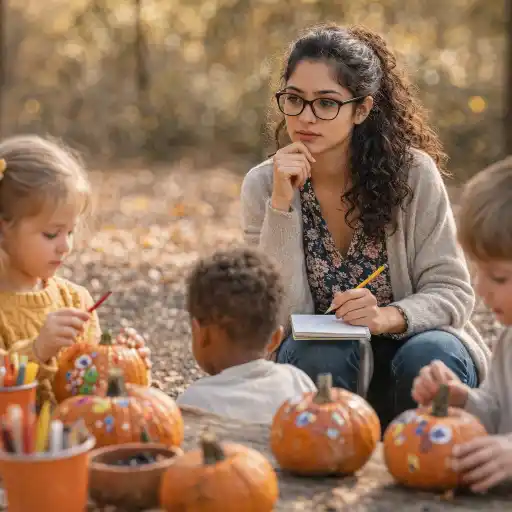
Why is relying on one child, one moment, or one method a mistake?
A single snapshot cannot represent a child’s full learning or ability. A child may be quiet during a large-group leaf walk but talk extensively while sorting leaves with a familiar peer. Another child may not touch natural materials yet show close attention by pointing, drawing, or asking questions. Context matters: the weather, group size, available tools, language demands, sensory qualities, and familiarity of the activity can all influence what a child demonstrates.
Use more than one observation over time and, where appropriate, more than one method. A brief jotting may capture a revealing quote; an anecdotal note can describe a specific interaction; a work sample or photograph with a factual caption can show a process; and a checklist may help track a defined skill. Head Start distinguishes quick jottings, event-focused anecdotal notes, and more detailed running records, while noting that extensive records require time and appropriate staffing. Choose a tool that fits the purpose and classroom conditions rather than collecting documentation for its own sake.
Balance focus across children and developmental domains. Consider language, thinking, movement, social problem-solving, persistence, and interests—not only whether a child completed the planned task. A useful team routine is to select a small focus group, make concise notes during ordinary play, and compare evidence during planning time. This approach helps providers identify patterns without asking one observation to carry more weight than it can support.
How can teachers turn observations into responsive planning?
Observation becomes valuable when it informs what happens next. After gathering factual notes, reflect: What did the child try? What materials or ideas drew attention? What support appeared helpful? What remains uncertain? Then plan a modest extension and observe again. NAEYC recommends using observations to adjust teaching strategies and design learning experiences, rather than treating documentation as an end in itself.
For instance, if several children compare the length and color of fallen leaves, teachers might add sorting bowls, child-safe magnifiers, drawing materials, and picture books. If children wonder why some leaves are damp and others dry, offer opportunities to compare them over time. Preserve children’s agency: the goal is to extend their inquiry, not to require every child to produce the same answer or project.
- Record the date, setting, activity, observable actions, and direct quotes.
- Separate evidence from interpretation and note questions to explore further.
- Plan a flexible next step based on children’s interests and individual ways of participating.
- Share concrete examples with families and invite their knowledge of the child’s interests and experiences.
- Review notes with colleagues so planning reflects more than one adult’s perspective.
Protect children’s privacy when using photographs or sharing records, and follow program procedures. If an observation raises a developmental concern, use multiple sources of information and follow appropriate program processes; an informal observation is not a diagnosis. State requirements vary - check your state licensing agency.
Conclusion: How can providers avoid common observation mistakes?
Fall activities offer rich opportunities to see how children notice, question, communicate, move, and work with others. The most useful observations are intentional but unobtrusive: allow children to explore, describe what you actually see and hear, reflect on bias, and gather information across children, contexts, and time. Avoid rushing to direct the activity, labeling a child from one moment, or collecting notes without using them.
Return to the central question—what common mistakes do teachers make when observing children during fall activities? They interrupt too quickly, confuse assumptions with evidence, overlook variation, or fail to connect observations to planning. A simple cycle of observing, documenting, reflecting, planning, and revisiting can help providers turn seasonal play into responsive learning while honoring each child’s strengths and curiosity.
For additional professional learning, consider these English-language ChildCareEd courses:
- Tracking Progress, Shaping Futures: Observation & Assessment Skills Buy Now $55.00 — objective observation, assessment methods, and goal setting.
- Preschool Assessments & Observations Buy Now $24.00 — observation practices and developmentally appropriate assessment for preschool settings.
- Building Early Science Foundations Buy Now $16.00 — supporting young children’s curiosity, exploration, and discovery.
- CDA Home Visitor Subject Area 3 Part 3 Birth to 5
- CDA Home Visitor Subject Area 2 Part 3 Birth to 5
- CDA: A Closer Look at Assessments
- Engaging Indoor Activities for Inclement Weather
- Math Foundations in Early Childhood
- CDA: Special Needs: Understanding the Whole Child
- Montessori Cultural Activities: Exploring the World Through Play and Learning
- Family Child Care: Building, Premises, and Outdoor Safety
- IEPs and IFSPs in Family Child Care
- Professional Integrity in Child Care
- Nature’s Classroom: Why Fall Is the Best Season for Sensory Learning Outdoors
- Recursos en Español sobre el Sueño Seguro del Bebé
- Actividades de Motricidad Gruesa que Desarrollan el Equilibrio, la Coordinación y la Fuerza
- Capacitación en Salud y Seguridad Preventiva en Línea para Proveedores de Cuidado Infantil
- Cómo Celebrar el Día Nacional del Kindergarten
- Lista para Guardería en Casa en Illinois: Cómo Iniciar una Guardería en el Hogar
- Consejos de Supervisión Activa para Salones de Preescolar y el Juego al Aire Libre
- Capacitación Previa al Servicio para Proveedores de Cuidado Infantil en Dakota del Norte
- Calabazas, hojas y manzanas: actividades de otoño para preescolares
- First Week of Pre-K Lesson Plans: What Can You Learn About Your New Class?
- Rainy Fall Day? 12 Indoor Activities Preschoolers Won’t Want to Stop
- How Can Preschool Teachers Use Fall Activities to Strengthen Family Engagement?
- How Can Fall Classroom Activities Teach Positive Behavior?
- How Can Child Care Providers Manage Classroom Transitions and Routines During Fall Celebrations?
- What Common Mistakes Do Teachers Make When Observing Children During Fall Activities?
- How Can Fall Classroom Activities Demonstrate CDA Competencies?
- How Can Teachers Use Fall Classroom Experiences to Document Children’s Development?
- How Can Responsive Teaching Make Fall Classroom Activities More Effective?
- How Can Child Care Providers Involve Families in Observing Children’s Growth During Fall?
- How Can Child Care Providers Celebrate Fall Without Assuming Every Family Shares the Same Traditions?
