Introduction
Picky eating is common in young children. This short guide helps child care providers and directors know what to try, what to avoid, and when to get help. It uses clear steps you can use in your #classroom tomorrow.
Why it matters: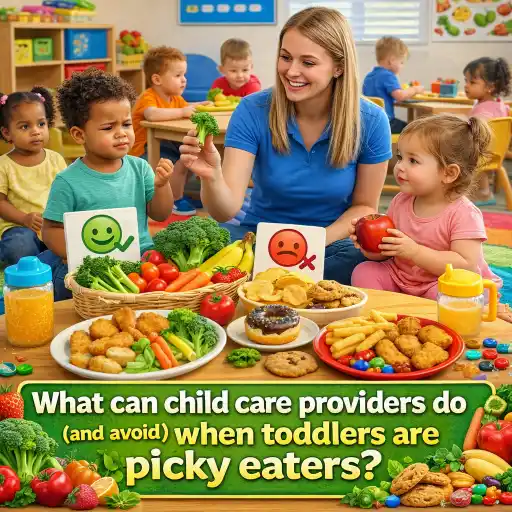
1) Good early eating habits support growth, learning, and a strong brain. See our classroom tips at Is picky eating normal — and what should we try? and public health tips at the CDC on picky eaters.
2) Calm, consistent mealtimes reduce stress for staff and children and help children try new foods over time. Remember: state requirements vary - check your state licensing agency.
1) What is normal picky eating and when should we worry?
Most toddlers go through picky phases. They may like only a few foods, want the same plate each day, or dislike foods touching. These behaviors are often normal and usually improve by about age five. ChildCareEd explains what counts as normal and what needs attention in Is picky eating normal.
Signs that need extra attention:
- 🍎 Poor weight gain or weight loss. Track growth and report concerns—see growth guidance from AAFP and failure-to-thrive info at KidsHealth.
- 🍽️ Very limited diet (only a handful of foods) or refusal of whole food groups.
- 😰 Strong fear of choking, gagging, or vomiting with foods.
- 🚫 Mealtime behaviors that stop care (long meltdowns or refusal to sit).
If you see these, document patterns and talk with the child’s family and health provider. For possible feeding disorders like ARFID, refer to medical and therapy teams. Also see ChildCareEd’s guidance on making referral decisions: Is picky eating normal.
2) What practical strategies can staff use right away?
Use gentle, low-pressure steps that fit group care. Try these numbered actions in your daily routine. They support calm #mealtime habits and help children feel safe.
- 😊 Serve family-style when safe. Let children scoop small portions from bowls. ChildCareEd outlines how in How do family-style meals help.
- 🍎 Repeat, don’t force. Offer a tiny taste many times across days. The CDC notes children often need many tries to accept a new food.
- 🥕 Make food playful and sensory-friendly: smelling, touching, and sorting foods first helps. See cooking and classroom ideas at How Can I Help Picky Eaters?.
- 👩🍳 Involve children in simple cooking or prep tasks. ChildCareEd’s Healthy Cooking for Picky Kids has lesson ideas.
- 🧑🏫 Model without pressuring: eat with them, describe foods simply, and keep tone neutral.
Common mistakes to avoid:
- ❌ Forcing bites, bargaining with dessert, or shaming a child. These add stress and backfire (see Nemours).
- ❌ Offering too many new foods at once or giant portions. Small steps work better.
- ❌ Stopping exposure too soon. Children often need many low-pressure tries.
Watch for small wins: touching, smelling, or taking one bite. Track growth and mood to know if your plan is working.
3) How do we support sensory needs and know when to refer for feeding therapy?
Some children avoid foods because of how foods feel, smell, or look. These are sensory feeding needs and are common. Treat them with patience and options.
Steps you can take in the program:
- 🧠 Provide texture choices: offer mashed, soft, or crunchy versions so a child can pick what feels safe.
- 🎲 Use sensory play before mealtime (touching safe food textures, play dough, or sorting). These ideas are described at ChildCareEd and sensory sites like Sensory-Processing-Disorder.
- 👂 Gradual desensitization: let the child first tolerate the food on the table, then touch it, then lick, then taste—one step at a time. Speech and OT feeding therapists use these steps (see The Speech Practice).
- 📝 Keep clear notes on what works and share with families and medical teams.
When to refer for therapy:
- 🚩 The child has poor growth, very few foods (fewer than ~20 types), severe gagging or refusal, or long-term reliance on purees.
- 🚩 Mealtime behavior or feeding skill delays that affect learning or health.
Feeding therapy teams often include a pediatrician, dietitian, occupational therapist, and speech-language pathologist. Early referral helps. For more on therapy and sensory feeding, see How Feeding Therapy Helps.
4) How can programs partner with families and set helpful policies?
Working with families makes change faster and easier. Use short messages, simple tools, and consistent policies to keep care steady between home and the #classroom.
- 📣 Share brief daily notes: what the child ate, any small wins, and one tip families can try at home. ChildCareEd suggests quick family handouts and menus at How should child care providers handle food.
- 🤝 Ask about home routines and favorite foods. Mirror those safe foods while gently offering variety at care.
- 📋 Use written feeding plans for children with allergies, medical needs, or special feeding goals. Post allergy lists and action plans in the kitchen and classroom.
- 🔁 Train staff on consistent mealtime language and family-style steps. Short role-play sessions help build skill and calm. See family-style tips at How do family-style meals help.
Keep policies simple: scheduled meals and snacks, no food as punishment or reward, and safe portion sizes. Remind families and staff: state requirements vary - check your state licensing agency.
Conclusion and FAQs
Summary: Picky eating is usually normal. Use low-pressure exposure, family-style serving, sensory supports, and team communication. Track growth and behavior and refer when health or development is at risk. ChildCareEd has many classroom-ready guides and trainings such as How Can I Help Picky Eaters? and Healthy Cooking for Picky Kids.
Quick FAQ for busy providers:
- Q: How many times should we offer a new food? A: Many times across days and weeks. The CDC notes children may need 10+ tries.
- Q: Should we let toddlers skip a meal? A: It’s okay if they skip sometimes. Keep regular meal and snack times so bodies learn hunger cues (Nemours).
- Q: When is picky eating a medical concern? A: If weight or growth falters, or if the child refuses almost all foods—refer to health providers and feeding teams.
- Q: How do we avoid power struggles? A: Give small choices, model eating, avoid bribes, and keep language neutral.
You are doing important work. Small, calm steps and good teamwork help children grow into healthy eaters. For in-depth training, explore ChildCareEd courses like Healthy Habits from the Start  Buy Now $24.00 and CDA Infants/Toddlers: Smart Nutrition & Feeding Buy Now $24.00. And remember: state requirements vary - check your state licensing agency.
- CDA Bridge Bundle: Preschool
- CDA Bridge Bundle: Family Child Care
- CDA Bridge Bundle: Family Child Care without Portfolio Review
- CDA Bridge Bundle: Infant/Toddler without Portfolio Review
- CDA Bridge Bundle: Preschool without Portfolio Review
- CDA Bridge Bundle: Infant/Toddler
- Texas Director Credential
- Anxiety: Signs & Strategies
- Healthy Cooking for Picky Kids
- National Eat Your Vegetables Day June 17
- 🥦✨ ¿Cómo apoyar a los niños selectivos a probar nuevos alimentos sin presión?
- Recursos en Español sobre el Sueño Seguro del Bebé
- Capacitación en Salud y Seguridad Preventiva en Línea para Proveedores de Cuidado Infantil
- Proporciones de Cuidado Infantil y Tamaños de Grupo por Edad en Maryland (Guía Rápida para Centros y Hogares)
- Proporciones de Cuidado Infantil y Tamaños de Grupo por Edad en Virginia (Guía Rápida para Centros y Hogares)
- Lista para Guardería en Casa en Texas: Cómo Iniciar una Guardería en el Hogar
- Capacitación Previa al Servicio para Proveedores de Cuidado Infantil en Dakota del Norte
- How can child care programs teach great nutrition and healthy eating habits?
- How can preschool programs build healthy eating habits for young children?
- How Can New York Childcare Providers Prevent Childhood Obesity with Better Nutrition?
- How can New York childcare providers help picky eaters in daycare?
- How can Michigan daycares teach healthy eating habits to toddlers?
- How can child care programs promote nutrition and healthy eating habits?
- What Healthy Snack Ideas Will Kids Actually Love?
- How can child care programs handle picky eaters without mealtime battles?
- How can child care providers support children with feeding difficulties?
- How can child care programs build healthy eating habits that last?
