Refreshing preschool centers can renew children’s curiosity without creating a weekly mountain of prep. For practical strategies that connect center choices to learning goals, explore Spicing Up the Classroom: Learning Centers  Buy Now $16.00; it can help strengthen your center-planning practice and offers CDA Subject Area 2 training. Read on to find a rotation rhythm that respects children’s sustained play, responds to their interests, and works for your team.
Why does thoughtful rotation matter?
Learning centers are not displays that need constant redecorating. They are places where children return to ideas, test theories, practice new skills, and build relationships through play. A deliberate refresh can introduce fresh vocabulary, materials, and questions while preserving enough familiarity for children to explore with confidence.
Rotating materials thoughtfully can also help educators respond to children as individuals. Observe who is engaged, what play themes keep resurfacing, and which children may need a new invitation to participate. A small change—such as adding cars to blocks or family photos to dramatic play—may extend collaboration more effectively than replacing an entire center.
Most importantly, rotation should serve learning rather than novelty for its own sake. Keep beloved materials available when they remain meaningful; children may be developing complex play that is not immediately obvious to adults. An effective environment balances predictable #routines with responsive change, making room for #curiosity, sustained #play, and new #learning.
Is there a recommended rotation schedule?
There is no universal timetable that suits every classroom. Some educators make small weekly changes; others refresh materials monthly or when children’s interests shift. One reference describes changing materials about once a month as needed, while a ChildCareEd guide suggests small weekly swaps and a larger monthly refresh. These are useful starting points, not rules.
Try a flexible rhythm: keep the basic center areas stable, add or swap a few materials every one to three weeks, and review each center monthly. Make changes sooner when materials are no longer safe, useful, or engaging; wait longer when children are deeply involved in an ongoing project. Avoid changing every area at once, since familiar layouts and materials help preschoolers understand expectations and return to play.
- Weekly: Add one prompt, book, tool, or small material variation where it can extend current play.
- Every few weeks: Refresh a center’s materials or theme based on observation and curriculum goals.
- Monthly or as needed: Review the full environment, storage, safety, and children’s evolving interests.
These intervals are planning aids, not mandated standards. State requirements vary - check your state licensing agency for rules related to materials, supervision, and classroom environments.
How can you tell when a center needs a refresh?
Use observation rather than the calendar alone. During play, note who chooses each center, how long children remain, what they do with materials, and whether play is becoming more complex. Look for patterns over several days: a quiet day or a change in attendance does not necessarily mean a center has lost its value.
Signs that a small adjustment may help include:
- Children pass by repeatedly or engage only briefly, despite having time to explore.
- The play has become repetitive in a way that suggests the materials no longer offer a useful challenge.
- Children’s questions or interests have shifted—for example, from building homes to planning roads.
- A center is consistently crowded, inaccessible to some children, or difficult to supervise.
- Materials are damaged, incomplete, unhygienic, or no longer developmentally appropriate.
Also notice what is working. Repeated visits can indicate sustained interest, not boredom. Use brief anecdotal notes, children’s words, or photos of their constructions to guide decisions.
How can small changes refresh play without disrupting it?
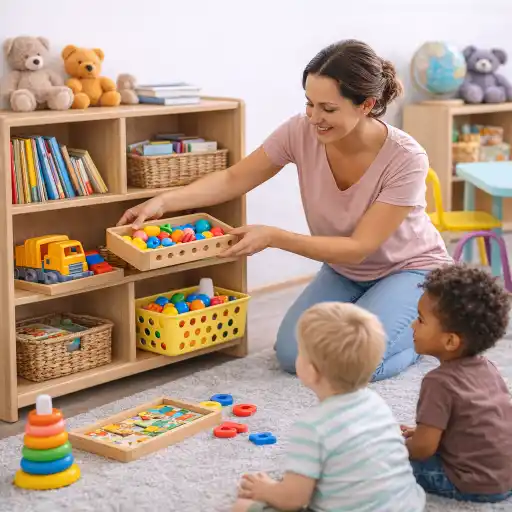
Think “add, adapt, or invite” before you think “replace.” A focused provocation can deepen familiar play while keeping the center recognizable. In the block area, add photos of bridges or a basket of people and vehicles. At the art table, offer new paper shapes or a different tool. In dramatic play, introduce menus, appointment cards, or objects connected to a story the group enjoys.
ChildCareEd’s practical activity-center refresh ideas include swapping a featured material, adding a prompt or photo, reusing clean household items, and linking a center to a book. Keep changes manageable and purposeful: select a few open-ended materials instead of filling every shelf. This can reduce visual clutter and make it easier for children to select, use, and return materials independently.
Preserve familiar favorites and adjust one or two areas at a time. Invite children to help prepare the space, talk about what they might do with a new material, and revisit expectations as needed. A tiny change—a new question beside the sensory table or a collection of natural objects—can spark a surprising investigation. Keep safety, accessibility, cultural representation, and active supervision in view whenever you introduce materials.
How can your team plan rotations efficiently and inclusively?
A simple shared system turns rotation from a last-minute task into a manageable part of curriculum planning. Store less-used materials in clearly labeled bins, record what is currently available, and note the learning intention for each planned change. Consistent center types with varied materials can make the environment predictable while still offering new possibilities.
- Keep a brief rotation log: center, materials, learning intention, date introduced, and observations.
- Prepare a small “next invitation” bin for each center so staff can make a quick, intentional swap.
- Plan around children’s languages, cultures, interests, abilities, and sensory preferences; consult families when their perspectives can inform material choices.
- Introduce unfamiliar tools or routines with a short demonstration, then allow children to explore.
- Coordinate staff roles so setup and supervision do not compromise sight lines or engagement.
Do not equate an engaging center with a complicated theme or expensive supplies. Clean recycled containers, blocks, fabric, photos, and books can support rich play when selected with intention. ChildCareEd’s course Classroom Designers ONLINE Buy Now $24.00 offers further learning on age-appropriate classroom design and materials selection. For broader professional learning, Early Childhood Education Buy Now $99.00 covers learning environments, curriculum, and observation, while Every Moment Matters: Schedules and Transitions Buy Now $55.00 focuses on predictable routines and smoother transitions.
What common rotation mistakes should you avoid?
Changing too much, too often can interrupt sustained play and add unnecessary work. A completely new room each week may feel fresh to adults but confusing to children who rely on familiar organization and materials. Instead, retain the center’s basic purpose and make a targeted adjustment when observations suggest it will help.
Another common pitfall is rotating materials without a clear reason. A seasonal theme can be enjoyable, but it should not crowd out children’s questions or limit them to a scripted outcome. Ask what the materials invite children to do, what skill or idea they may explore, and how children with different abilities can participate. Avoid responding to every moment of mess or conflict by removing materials; these moments may show that expectations, group size, or access need attention.
Finally, do not confuse scheduled center rotations with rotating the materials in learning centers. Some classrooms use teacher-directed movement between stations, while others provide daily free choice; both require clear routines and thoughtful planning.
Conclusion: How often should you rotate preschool learning centers?
Rotate preschool center materials when observation, children’s interests, learning goals, or safety needs indicate that a change would help—not simply because a weekly deadline has arrived. As a practical starting point, keep the main centers stable, make small additions or swaps every one to three weeks, and review the overall setup monthly or as needed. Adjust this rhythm to your group and protect time for children to revisit ideas.
Look for meaningful engagement, listen to children’s questions, and make purposeful changes that are manageable for staff and accessible to every child. Keep favorite materials when they support sustained play, introduce new invitations gradually, and teach routines that help children use and care for the environment. Thoughtful rotation is not about constant novelty; it is about creating a responsive space where preschoolers can explore, connect, and grow.
- CDA Preschool Credential
- CDA Preschool Credential with Portfolio Review
- Bienvenido! Welcoming All Families
- CDA Bridge Bundle: Preschool
- CDA Bridge Bundle: Preschool without Portfolio Review
- Creating Environments that Nurture Growth and Community
- Texas Director Credential Renewal
- Texas Director Credential
- Spicing Up the Classroom: Learning Centers
- 🚨 Reporte Obligatorio en Nevada
- Proporciones de Cuidado Infantil y Tamaños de Grupo por Edad en Nueva Jersey (Guía Rápida para Centros y Hogares)
- How can I organize an effective preschool classroom?
- Learning Through Creative Daycare Activities
- How can I create engaging learning centers in my classroom?
- Celebrando la amistad en el cuidado infantil durante el Día de los Mejores Amigos
- Diversión fresca de verano: actividades del Día Nacional del Helado para niños
- Canciones, juegos y preguntas de círculo para niños
- Organized Classrooms: Why Layout, Design, and Space Matter
- Preschool Curriculum Types: Play-Based, Montessori, Reggio, and More
- What Is Play-Based Learning in Preschool and How Do We Do It Well?
- How can I create engaging learning centers for preschoolers?
- How does room arrangement shape behavior, engagement, supervision, and learning?
- Free Downloadable Lesson Plans for Preschool Teachers
- How Can I Create Engaging Learning Centers for Preschoolers?
- Preschool Schedule That Works: When to Plan Centers, Circle Time, and Outdoor Play
- How Can Recycled Materials Create Engaging Learning Centers?
- How Can Child Care Providers Create Effective Learning Centers in Small Spaces?
- How Can Providers Rotate Classroom Materials Without Overwhelming Children?
- How Often Should You Rotate Preschool Learning Centers?
