When preschoolers sort picture cards into playful rhyming groups, they are doing more than enjoying a seasonal game: they are learning to listen closely to how spoken words sound. Build your understanding of this early reading skill with ChildCareEd’s Science of Reading Foundations in the Pre-K Classroom Buy Now $16.00, which explores phonological awareness alongside other emergent literacy foundations. This training can help you plan purposeful, developmentally appropriate language experiences and strengthen your classroom practice; explore it as a next step while you discover how rhyme sorting works.
Why does rhyming matter before children begin to read?
Reading begins well before children decode printed words. Preschoolers first build awareness of spoken language: they listen to words, notice patterns, and experiment with how sounds fit together. Rhyming invites them to attend to the ending sounds in words such as “cat” and “hat.” That listening practice is part of #phonological awareness, the broad ability to hear and work with the sound structure of spoken language.
Rhyming is one piece of a larger developmental picture, not a test of whether a child is ready for school. Sound play can also strengthen attention, oral language, vocabulary, and enjoyment of books and songs. It offers educators an accessible way to make language itself the subject of joyful exploration, without asking children to read or write independently.
Sound awareness develops alongside other skills, including noticing syllables and repeated beginning sounds. It supports later learning about how spoken sounds connect with print, but it is not the same as phonics, which explicitly links sounds and letters. Head Start’s guidance on phonological awareness and NAEYC’s discussion of playful word learning throughout the day emphasize sound experiences embedded in meaningful interactions.
For providers, the practical takeaway is encouraging: a short rhyme game can turn an everyday moment into a meaningful language experience. Children can participate by listening, pointing, speaking, moving, or watching before they are ready to explain the pattern in words.
What does a rhyme-sorting activity teach children to notice?
Sorting asks children to compare words and make a decision: which pictures belong together because their names sound alike at the end? In the Pumpkin Rhyme Sorting Printable for Older Preschoolers Buy Now $2.00, fall-themed pictures provide a familiar visual context for older preschoolers to listen, name, and group rhyming words. The seasonal theme may spark interest, but the core learning is auditory: children attend to the sounds in spoken names rather than matching pictures by color or category.
Make the listening step explicit. Name each picture clearly, then say the possible pair aloud with a slight pause: “Does ___ sound like ___ at the end?” Model the answer by stretching the relevant sound pattern without exaggerating or distorting pronunciation. Children can place a picture on a mat, point, hand a card to a peer, or tell you their choice.
- Begin with a small number of familiar pictures and one clear target pair.
- Say the picture names aloud; do not assume children know every item.
- Ask children to listen again before sorting, and model the comparison.
- Invite children to explain in their own words or simply indicate a choice.
Picture sorting makes an abstract sound pattern tangible, while still keeping the focus on spoken language. For another example of matching and identifying rhymes through playful practice, see Reading Rockets’ rhyming games.
How can educators make rhyme play developmentally appropriate?
Children vary in language experience, attention, confidence, and readiness to recognize rhymes. A developmentally responsive approach begins with enjoyment and recognition before asking children to generate rhyming words on demand. Sing familiar rhymes, repeat a short chant, or pause during a predictable read-aloud so children can supply a word they already know. Repeated exposure helps children hear the pattern without turning each turn into a performance.
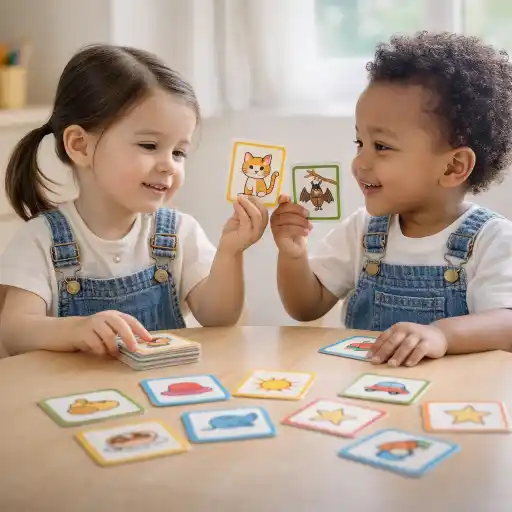
Use scaffolds that let every child take part. Pair spoken words with pictures, gestures, objects, or movement. Offer two choices rather than a large set, repeat the words slowly, and provide a model: “Bear and chair sound alike at the end. Let’s listen again.” If a child is not ready to identify a pair, they may still listen, watch, or join in with the repeated words. Those are meaningful forms of participation.
Keep activities brief and responsive. If children lose interest, shift to a song or story and return to sorting another time. Use familiar vocabulary, and consider whether a child recognizes the pictured object before interpreting an incorrect answer as difficulty with rhyme. The goal is to nurture curiosity about words, not to secure perfect responses in one sitting.
Children who speak more than one language bring valuable knowledge about sound patterns. Rhymes may differ across languages, so use songs and words from children’s home languages where possible, and invite families to share familiar rhymes. A supportive classroom honors children’s linguistic strengths while helping them explore English sounds as appropriate.
How can rhyme games fit into a busy preschool day?
Rhyme practice does not need to be a separate lesson or a long block of table work. Short, joyful moments woven into daily routines can provide repeated chances to listen and respond. NAEYC describes rhyme as something educators can bring into routines, play, songs, and movement; this approach helps sound awareness feel connected to children’s real experiences.
- 🎵 During transitions: Chant a familiar rhyme while children line up or move to the next activity.
- At snack: Name familiar foods or utensils and invite children to listen for a rhyming pair.
- In a small group: Use pumpkin picture cards to sort a few pairs together, taking turns naming and placing them.
- During read-alouds: Pause occasionally at a predictable rhyming word and let children complete the phrase.
- In movement play: Clap or sway as the group repeats two rhyming words.
Offer different ways to participate, including pointing, choosing between two cards, echoing your words, or moving a picture. For children ready for an added challenge, invite them to think of a third rhyming word; silly or invented words can keep the exploration light. Keep the group size and number of picture choices manageable so children have time to listen.
Connect the activity to vocabulary and conversation: “What is this picture? Where have we seen a pumpkin?” That exchange gives children a reason to talk as well as listen. For further professional learning about early literacy in the pre-K classroom, explore ChildCareEd’s Language and Literacy Foundations in Pre-K  Buy Now $16.00.
What common pitfalls should providers avoid?
Even a fun game can become frustrating if the language task is unclear or too difficult. One common pitfall is moving too quickly from recognizing a rhyme to generating one. Generating a new rhyming word is more demanding than deciding whether two familiar words rhyme, so begin with listening and matching. Increase the challenge only when children show interest and confidence.
Another pitfall is relying on picture matching alone. A child may group images by theme—pumpkin with another autumn picture—rather than by the sound of the names. Say each word aloud and draw attention to how the words sound at the end. Also make sure children know the names of the pictures; unfamiliar vocabulary can obscure what the sound activity is asking.
- Avoid overcorrecting: Model the sounds calmly and invite another listen instead of treating errors as failure.
- Avoid long, repetitive drills: Use brief rounds, movement, songs, or a story to maintain engagement.
- Avoid assuming all children progress alike: Adjust the number of choices, pace, and response method.
- Avoid treating rhyme as a reading test: Keep the focus on playful oral language, not letters or worksheets alone.
Observe children’s responses informally: Do they notice when two words sound alike? Do pictures or repetition help? Use what you notice to decide whether to repeat the same level of support or offer a new challenge. If concerns about a child’s language or hearing persist, follow your program’s process for discussing observations with the family and appropriate professionals. State requirements vary - check your state licensing agency.
How can providers turn rhyme play into a consistent practice?
A simple plan makes rhyme games easier to sustain and easier to adapt. Choose a few familiar words or pictures, decide how you will model the rhyme, and identify one low-pressure way children can respond. A pumpkin sorting activity can be one invitation within a broader language-rich classroom—not a stand-alone measure of reading readiness. Revisit the words during a song, a book, or a transition so children encounter the sound pattern in more than one context.
Notice both accuracy and engagement. A child who listens closely, repeats a pair, or changes their choice after hearing a model is showing useful information about their learning. Share observations with colleagues and families in strengths-based language, such as, “We have been listening for words that sound alike at the end during songs.” Families can extend the same playful idea in the language they use most comfortably at home.
For additional classroom ideas, consider ChildCareEd’s Classroom Tools for Emergent Literacy Buy Now $25.00 or Reading Aloud and Storytelling Buy Now $16.00. These English-language courses address practical ways providers can create literacy-rich experiences, including interactive reading and storytelling.
Conclusion: How do rhyming games help preschoolers prepare for reading? They help children listen for sound patterns, compare spoken words, and enjoy exploring language—skills that contribute to phonological awareness. Keep games brief, model the listening process, use familiar words and pictures, and welcome every form of participation. With a playful pumpkin sort, a song, or a rhyming read-aloud, providers can make early literacy both intentional and joyful.
- Understanding Print Knowledge in Preschool
- CDA Preschool Credential with Portfolio Review
- TEAM: Together Everyone Achieves More
- Birth to Five CDA Credential with Portfolio Review
- CDA Bridge Bundle: Preschool
- Setting the Stage: Story Time
- Art from the Heart for Preschoolers: Open Ended Art Projects that Build Self-Esteem
- CDA Bridge Bundle: Preschool without Portfolio Review
- Texas Director Credential
- Phonological Awareness
- CDA Certification en Español: Recursos y Consejos para Educadores Bilingües
- Boosting Language Through Play
- 📖 ¿Cómo puedo hacer que la hora del cuento sea la parte más poderosa de mi día?
- Actividades de Motricidad Gruesa que Desarrollan el Equilibrio, la Coordinación y la Fuerza
- Capacitación en Salud y Seguridad Preventiva en Línea para Proveedores de Cuidado Infantil
- Lista para Guardería en Casa en Illinois: Cómo Iniciar una Guardería en el Hogar
- Lista para Guardería en Casa en Texas: Cómo Iniciar una Guardería en el Hogar
- Cómo Trabajar en el Cuidado Infantil en Carolina del Norte: Requisitos y Pasos
- What fun literacy activities do Florida VPK classrooms need now?
- How can we teach letters, numbers, and early literacy to young children?
- What are fun language-learning games preschool teachers can use?
- Celebrando la amistad en el cuidado infantil durante el Día de los Mejores Amigos
- Canciones, juegos y preguntas de círculo para niños
- How can preschool programs build early literacy every day?
- Dr. Seuss Book List for Teachers: Easy Ways to Use It for Story Time and Learning
- Why Do Predictable Books Help Preschoolers Feel Like Readers?
- How Can Child Care Providers Build Phonological Awareness in Preschool?
- How Do Rhyming Games Help Preschoolers Prepare for Reading?
- Why Do Some Preschoolers Struggle to Hear Rhyming Words?
