When a child can name every pumpkin picture but cannot tell which words sound alike at the end, it can be hard to know what support to offer. A few playful adjustments can make rhyme easier to hear and give you practical ways to observe progress. Bring these skills into your classroom with ChildCareEd’s Pumpkin Rhyme Sorting Printable for Older Preschoolers Buy Now $2.00, a hands-on resource featuring picture cards and a sorting mat that help children listen for matching ending sounds, identify rhyming words, and practice phonological awareness through play. For deeper professional learning, explore Science of Reading Foundations in the Pre-K Classroom Buy Now $16.00 to strengthen your understanding of emergent-literacy foundations, and Language and Literacy Foundations in Pre-K  Buy Now $16.00 for strategies supporting listening, speaking, and vocabulary. Together, these resources can help you create engaging, developmentally appropriate literacy experiences while supporting your professional growth.
Why can recognizing rhymes be harder than it looks?
Rhyming asks children to listen to the ending parts of spoken words and compare them. That is a less visible task than matching objects by color or category: children must attend to sound, hold a word in mind, and notice a shared pattern. A preschooler may understand the activity but still need more time and experience to hear the match.
Several factors can make rhyme recognition challenging. A child may not know the pictured object’s name, may be distracted by a busy set of cards, or may focus on what the objects have in common rather than on how their names sound. Speech and language differences, experience with English, and the familiarity of the words can also affect a response. An incorrect choice is information about the task—not a verdict on the child’s ability.
Rhyme is one part of phonological awareness, the broader ability to notice and work with patterns in spoken language. It develops through playful exposure and practice; it is not a stand-alone test of reading readiness. Keeping this perspective helps educators respond with curiosity and support rather than pressure.
What should educators check before interpreting a child’s response?
Before concluding that a child is having difficulty hearing rhyme, check that the words and task are accessible. Start by naming every picture clearly. Ask the child what they see, and introduce unfamiliar vocabulary with a real object, gesture, or short explanation. If the child does not recognize a picture as a pumpkin, for example, the barrier may be vocabulary rather than sound awareness.
Next, simplify the listening demand. Use a small number of familiar cards and one clear rhyming pair. Say the words aloud so the child is comparing sounds, not guessing from pictures. Ask a direct question such as, “Do ‘cat’ and ‘hat’ sound the same at the end?” rather than beginning with “What rhymes with cat?” Generating a new word usually asks more of a learner than recognizing a pair.
- Check whether the child can name or repeat each picture word.
- Use two choices at a time before presenting a larger group.
- Repeat the pair naturally and invite the child to listen again.
- Notice whether attention, group size, noise, or timing affects participation.
For children learning more than one language, consider how rhyme patterns and vocabulary differ across languages. Invite familiar songs and rhymes from home languages, and treat them as strengths. The Massachusetts early literacy guidance notes that meaningful opportunities to hear English sounds, alongside recognition of home-language knowledge, can support participation.
How can pumpkin picture-card sorting make ending sounds easier to hear?
Picture cards give children something concrete to handle while they attend to an abstract sound pattern. The Pumpkin Rhyme Sorting Printable for Older Preschoolers can provide a seasonal context for naming pictures, comparing words, and sorting possible rhyming groups. The pictures help children remember the words while the educator keeps attention on how those words sound.
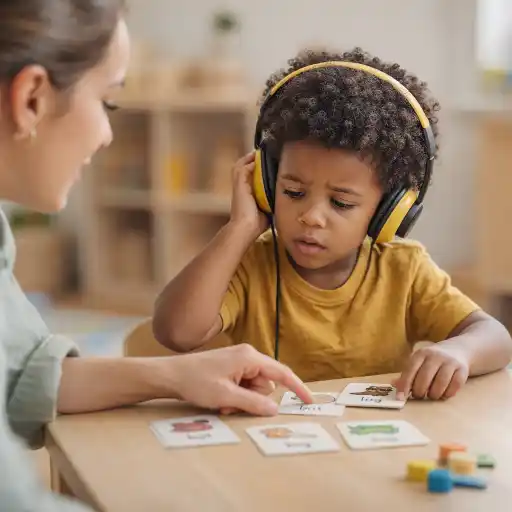
Model the process first. Pick two familiar pictures, name them, and say the words in a steady, natural voice: “Let’s say ‘log’ and ‘frog.’ Do they sound alike at the end?” Avoid stretching or changing pronunciation so much that the words sound unnatural. Invite the child to place a card, point, gesture, or explain a choice. Each response offers a way to take part.
- Start with one clear pair and a few nonmatching choices.
- Have children name the pictures before sorting them.
- Say both words aloud and ask what they notice at the end.
- Use a mat or two spaces to make the sorting decision visible.
- Let children work together, taking turns naming and placing cards.
Sorting is most useful when it is auditory, not just visual. If a child groups two autumn pictures because they belong together in a pumpkin patch, say both names again and ask whether their endings sound alike. For examples of playful ways to practice recognition, see Reading Rockets’ rhyming games.
How can providers scaffold practice without making it feel like a test?
Build from easy recognition toward more independent thinking. Begin with songs, chants, and rhyming books that children can enjoy without needing to answer questions. Then invite them to join a repeated word or choose between two picture cards. Once recognizing pairs feels familiar, offer a supported “What else sounds like ___?” prompt, supplying a few examples if needed. There is no need to rush children to invent a string of rhymes.
Keep practice short and responsive. A few minutes during small group, story time, or a transition can provide useful repetition without turning sound play into a drill. The National Association for the Education of Young Children recommends embedding word play in authentic routines and play. Movement and shared laughter can help children stay engaged while they listen.
- 🎵 Sing a familiar rhyme and pause so children can join in with the repeated ending.
- During read-alouds, briefly compare two words that sound alike.
- Let children sort cards on the floor, move a picture, or point to a match.
- Offer an extra challenge by asking a child to find another picture with the same ending.
Provide different response options. A child may listen, point, use an AAC system, repeat a word, or participate in a home language before speaking in English. Praise the effort to listen and compare, not speed or perfect accuracy. For additional professional learning, Reading Aloud and Storytelling Buy Now $16.00 explores interactive approaches that support oral language and early literacy.
How can educators observe progress and avoid common pitfalls?
Observe how children approach the task, not only where they place a card. Does the child name the image? Do they change their choice after hearing the words again? Do pictures, modeling, or two-choice prompts help? Brief notes over multiple experiences can reveal which supports are useful and whether the child is beginning to notice shared endings.
Avoid interpreting one activity as a diagnosis or a definitive measure of readiness. Common pitfalls include using too many cards at once, relying on unfamiliar picture names, correcting a child sharply, and asking for rhyme generation before recognition is comfortable. If a child seems frustrated, simplify the task or return to songs and stories. If concerns about hearing, speech, or language persist across contexts, follow your program’s observation and family-communication procedures and consult appropriate professionals. State requirements vary - check your state licensing agency.
- Record the words and prompt used, along with the child’s response.
- Repeat opportunities on different days and in familiar routines.
- Adjust the number of choices, pace, and adult modeling.
- Share observations with families in specific, strengths-based language.
Directors can help by ensuring staff have shared prompts, accessible materials, and time to compare observations. For a focused course on documentation and planning, explore Assessment of Language and Literacy Skills Buy Now $24.00.
Conclusion: How can we help preschoolers hear rhymes with confidence?
Some preschoolers struggle with rhyme because they are still learning to attend to the ending sounds of spoken words—and because vocabulary, language experience, attention, and task complexity all matter. Educators can make the task more approachable by naming familiar pictures, modeling how to compare word endings, and starting with a small number of clear choices.
Pumpkin picture-card sorting makes sound practice hands-on, social, and easy to revisit. Keep the experience playful, offer several ways to respond, and use observations to decide what support comes next. The goal is not a perfect sort in one sitting; it is helping each child become curious about the sounds words share.
For more practical ideas, explore ChildCareEd’s Classroom Tools for Emergent Literacy Buy Now $25.00. Together, intentional practice and supportive professional learning can help providers make rhyme a welcoming part of the preschool day.
- CDA Home Visitor Subject Area 3 Part 3 Birth to 5
- Tracking Progress, Shaping Futures: Observation & Assessment Skills
- Birth to Five CDA Credential with Portfolio Review
- CDA Bridge Bundle: Preschool
- Pediatric RSV First Aid & CPR/AED
- CDA Bridge Bundle: Preschool without Portfolio Review
- Lesson Planning for Preschoolers
- Supporting Children with Hearing Loss
- Phonological Awareness
- CDA Certification en Español: Recursos y Consejos para Educadores Bilingües
- ¿Cómo puedo usar escenarios de juego de roles de primeros auxilios en mi aula?
- Actividades de Motricidad Gruesa que Desarrollan el Equilibrio, la Coordinación y la Fuerza
- Capacitación en Salud y Seguridad Preventiva en Línea para Proveedores de Cuidado Infantil
- Actividades de Otoño Fáciles para Preescolares esta Temporada
- Lista para Guardería en Casa en Illinois: Cómo Iniciar una Guardería en el Hogar
- Lista para Guardería en Casa en Texas: Cómo Iniciar una Guardería en el Hogar
- Capacitación Previa al Servicio para Proveedores de Cuidado Infantil en Dakota del Norte
- Cómo Ser Maestra de Preescolar en Virginia
- What are fun language-learning games preschool teachers can use?
- Celebrando la amistad en el cuidado infantil durante el Día de los Mejores Amigos
- Cómo simplificar la capacitación para sus empleados de daycare
- Dr. Seuss Book List for Teachers: Easy Ways to Use It for Story Time and Learning
- Preschool Classroom Rules: How to Teach Expectations Without Constant Reminders
- How Can Songs and Rhymes Build Young Children’s Language Skills?
- How Can Seasonal Picture Sorting Build Phonemic Awareness in Early Childhood?
- Why Do Some Preschoolers Struggle to Listen and Follow Directions During Group Games?
- How Do Rhyming Games Help Preschoolers Prepare for Reading?
- Why Do Some Preschoolers Struggle to Hear Rhyming Words?
