A familiar sequence can turn a difficult goodbye, a missed nap, or a rushed transition into moments of connection and confidence. Washington infant and toddler teachers can build emotional security without forcing every child onto the same clock; Behind the Scenes: Baby Routines ONLINE  Buy Now $24.00 offers focused learning on age-appropriate schedules and nurturing care practices to help strengthen that work.
For ideas about arranging play spaces that support exploration alongside dependable care, explore Playful Spaces for Infants & Toddlers Buy Now $24.00 as a complementary next step.
Why do predictable routines help toddlers feel secure and ready to learn?
Infants and toddlers do not yet understand time the way adults do. They come to know the day through repeated experiences, familiar people, and the sequence of care: a teacher greets them, notices their cues, helps them eat or rest, and returns when they need comfort. When these experiences are dependable, children can begin to anticipate what comes next and trust that their needs will be met.
That security matters because emotional energy spent wondering what will happen can make it harder to explore, communicate, and play. Predictability gives children a sturdy framework for trying new things. Routines also support emerging #trust and #independence: a toddler who knows the handwashing steps may begin to reach for the towel, while an infant may relax when a familiar caregiver begins a gentle diaper-change sequence.
Consistency is not the same as rigid timing. The useful distinction is between a schedule—the broad flow of the day—and a routine—the familiar steps within an experience. Washington’s Early Learning and Development Guidelines offer a state framework for understanding children’s development and learning. A classroom can keep a reliable sequence while adjusting the pace and timing to each child.
Daily care is also relationship-building, not a break from learning. A greeting, meal, diaper change, or quiet wind-down offers repeated chances to communicate, connect, and notice what a child can do.
How can arrival and departure routines create reassuring connections?
Arrival marks a significant shift from home to group care. A calm, familiar ritual helps the child and family know how the separation will unfold. Welcome each child by name, get down to their level, and share a brief exchange with the family about relevant changes—such as a short night of sleep or a different pickup plan. Then follow a recognizable sequence: greet, put belongings away, share a goodbye ritual, and move toward a familiar person or activity.
For an infant, the ritual might be a parent’s brief cuddle and a teacher’s familiar greeting before the child settles into a quiet space. A toddler may wave at the window, place a comfort item in a designated spot, and choose a book. Acknowledge feelings without hurrying them away: “You’re sad Dad is leaving. I’m here with you. Let’s look at your book together.” Whenever possible, avoid sneaking away; a predictable goodbye helps children understand that the family member has left and can be trusted to return.
Departure is another transition and a chance to reconnect. Use a consistent handoff: greet the arriving family member, share a specific positive moment and practical care information, and help the child gather belongings. Keep the goodbye-to-family ritual clear and warm, even when pickup is busy.
- Agree with families on a short, realistic goodbye ritual and revisit it as the child adjusts.
- Use the family’s familiar words, songs, or comfort strategies when appropriate.
- Share concise updates about sleep, meals, diapering, mood, and meaningful moments.
These repeated bookends communicate belonging: children are welcomed, cared for, and reunited with the people they love.
How can meals, naps, and diapering become dependable care routines?
For very young children, feeding and sleep are individual needs, not simply group events. Keep the steps of care recognizable while following each child’s cues, family information, and applicable health and safety procedures. A meal routine might include handwashing, finding a seat, offering food or a bottle according to the child’s plan, and cleaning up together. Describe what is happening in a calm voice and allow the child time to signal interest, fullness, or a preference.
Nap routines can follow a familiar wind-down—lowering stimulation, using a quiet phrase or song, and preparing for rest—while the timing and duration vary by child. Follow your program’s safe-sleep procedures and individual plans; never use a classroom timetable as a reason to delay a child’s rest needs. Communicate with families about changes in sleep patterns and relevant routines from home.
Diapering is a private, one-to-one care moment that can strengthen connection and participation. Tell the child what you are going to do, gather what you need, and move at a respectful pace. An older toddler might help hold a clean diaper or step toward the changing area when invited. Follow program hygiene procedures and required checks. The Virtual Lab School’s guidance on schedules and routines emphasizes responsive care and individual differences rather than making infants fit a uniform clock.
- Keep core steps and caregiver language familiar, but let the child’s cues guide the pace.
- Use routine moments to talk, pause, observe, and respond—not to rush through a checklist.
- Share relevant care information accurately across staff shifts and with families.
How can transitions be predictable without becoming rigid?
Every change—from play to lunch, indoors to outdoors, or active exploration to rest—asks a young child to shift attention and let go of what they are doing. Transitions become easier when adults make the next step understandable and avoid unnecessary waiting. Use a familiar song, a simple phrase, or a gesture as a cue. For toddlers, a brief warning such as “After this book, we’ll wash hands for lunch” gives time to process what is coming. Infants also benefit when adults speak before lifting or moving them and pause for their response.
Make the transition itself manageable. Prepare materials before inviting children to an activity, move in small groups when appropriate, and offer a simple helper role or choice. Instead of expecting a toddler to stop instantly, acknowledge their play and give a clear next step: “You’re building a tall tower. One more block, then we’ll go wash hands.” If a child needs extra processing time, build that time into the plan.
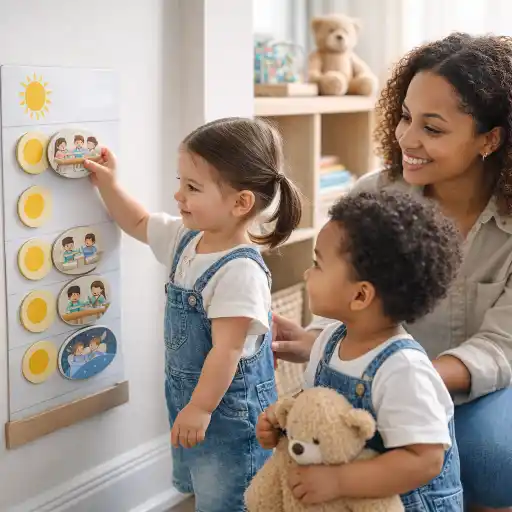
When something unexpected changes, name what is different and what will stay familiar: “We’re staying inside because it’s raining. First we’ll put the toys away, then we’ll have songs in the cozy area.” A small picture sequence or object cue can make the change easier to understand.
- 🔔 Use the same short cue or song consistently, then allow time for children to respond.
- Reduce long lines and waiting by preparing the room and staggering movement where feasible.
- Notice attempts and effort: “You heard the song and brought the basket over.”
Predictability provides a dependable pathway, not a demand for instant compliance.
What flexible daily rhythms respect developmental needs and family preferences?
A useful infant-toddler plan combines a steady classroom flow with individualized care. Instead of assigning every child the same nap or feeding time, plan recurring anchors—arrival, meals, outdoor or movement play, rest opportunities, and departure—then adjust each child’s timing and support. This “individual care within a shared rhythm” helps staff coordinate while respecting differences in age, temperament, sleep patterns, feeding needs, disability, culture, and family practices.
For example, an infant may follow a repeating sequence of arrival, feeding when hungry, connection, play while alert, and rest when tired. Another infant in the same room may need a shorter wake period and more frequent sleep opportunities. Toddlers can share group anchors such as morning play, meals, and outdoor time, while an open or staggered snack period lets a child eat when ready. A toddler who is not sleepy at the group rest period might have a quiet, supervised option consistent with program policy.
Family partnership makes these plans more meaningful. Ask what words, songs, foods, soothing approaches, and goodbye rituals feel familiar. Share the classroom flow, listen to family preferences, and explain any safety or program limits with respect. Observe what works, record useful patterns, and revisit the plan as the child grows or circumstances change. #Routines should create continuity—not erase a child’s individuality.
- Keep a recognizable sequence, but let timing and duration flex in response to children.
- Use simple photos or objects to preview the day for toddlers who benefit from visual cues.
- State requirements vary - check your state licensing agency.
Conclusion: How do consistent routines help Washington toddlers feel safe?
Consistent daily routines help toddlers feel safe because familiar experiences and responsive adults make the day easier to understand. Arrival and departure rituals support connection; meals, naps, and diapering offer dependable care; and thoughtful transition cues help children prepare for change. Across these moments, children can develop trust, participate with growing independence, and spend more time exploring and learning.
The key is dependable order with flexible timing. Observe children’s cues, learn from families, coordinate staff practices, and adapt routines as children’s needs change. Choose one part of the day to strengthen this week: agree on a short cue, teach the steps gently, and notice how children respond. Small, consistent adjustments can help make the classroom feel more welcoming and secure for children and families alike.
For additional professional learning, explore Behind the Scenes: Baby Routines ONLINE Buy Now $24.00, Playful Spaces for Infants & Toddlers Buy Now $24.00, Balancing Act: Schedules and Routines Buy Now $16.00, CDA Infants/Toddlers: Importance of Consistent Care Buy Now $24.00, and Positive Attention: Interactions & Supervision for Infants & Toddlers Buy Now $35.00.
- 45 Hour Child Growth and Development
- Positive Attention: Interactions and Supervision of Infants and Toddlers: For Workforce Solutions
- What Makes Me Special: An Overview of Autism and ADHD
- CDA Bridge Bundle: Infant/Toddler without Portfolio Review
- Positive Attention: Interactions & Supervision for Infants & Toddlers
- Texas Director Credential
- CDA Infants/Toddlers: Importance of Consistent Care
- 45-Hour Infant and Toddler Curriculum
- Every Moment Matters: Schedules and Transitions
- Recursos en Español sobre el Sueño Seguro del Bebé
- Capacitación en Salud y Seguridad Preventiva en Línea para Proveedores de Cuidado Infantil
- Lista para Guardería en Casa en Texas: Cómo Iniciar una Guardería en el Hogar
- Cómo Ser Maestra de Preescolar en Dakota del Norte
- How can Washington early childhood educators support outdoor play, safety, and learning in daycare?
- How can Washington, D.C. child care providers keep children safe during transitions, drop-off, and pick-up?
- How can Washington child care providers observe children during indoor and outdoor learning?
- How can Washington child care programs keep playgrounds safe from stinging insects, slugs, and harmful plants?
- How can Washington early childhood programs keep children safe from poisonous plants and forest wildlife outdoors?
- How can Washington classrooms be more inclusive using nature, play, and community?
- Did Washington’s Infant and Early Childhood Conference Put Inclusion and Family Partnerships in Focus?
- What Can Washington Providers Learn from Children’s Own Little Worlds?
- What Does Washington’s Early Learning Expansion Mean for Infants, Toddlers, and Working Families?
- Washington Child Care Ratios and Group Sizes by Age: Daycare Center Guide
- How to Become a Childcare Worker in Washington: Requirements and Steps
- Should Early Childhood Programs Give Children More Outdoor Time?
- How Can Child Care Providers Introduce Simple Routines to Infants and Toddlers?
- How Can Washington Early Childhood Educators Create More Inclusive Classrooms?
- How Do Consistent Daily Routines Help Washington Toddlers Feel Safe?
- How Can Washington Preschool Teachers Build Calmer Classrooms Without Punishment?
