When a child hits, your calm response can protect safety while teaching a skill that yelling cannot. Start with Ouch! Biting & Hitting Hurts Buy Now $35.00 to build practical guidance strategies for responding to aggression, understanding its causes, and supporting children’s social-emotional development. The course can strengthen your professional knowledge and provide ideas you can apply during real classroom moments.
Why does a child hit, and why does the adult response matter?
Hitting is often communication rather than evidence that a child is “bad.” Young children may lack the language, impulse control, or emotional regulation needed to express frustration, protect a toy, request space, or tolerate a transition. Behavior can also be influenced by fatigue, hunger, sensory overload, stress, developmental differences, or patterns a child has observed elsewhere.
That interpretation does not make hitting acceptable; it helps us choose an effective response. Child Care.gov explains that challenging behavior can communicate needs children cannot yet express clearly. A provider’s task is therefore both immediate and developmental: stop harm and teach a safer way to communicate.
Yelling and shame may produce momentary silence, but they can increase fear, dysregulation, and disconnection. The CDC identifies yelling, spanking, and embarrassment as unhealthy forms of negative attention that can weaken relationships and interfere with emotional and behavioral development. Calm, consistent guidance protects dignity while making learning more likely.
What should you do immediately when a child hits?
In the moment, use fewer words and more purposeful action. A child who is highly upset is not ready for a lecture or a detailed discussion about empathy. Follow a consistent sequence:
- 🛡️ Protect everyone: Move between the children, gently block the hit, and create physical space.
- State one clear limit: “I won’t let you hit. Hitting hurts.”
- Attend to the injured child: Check for injury, offer comfort, and follow your program’s health and documentation procedures.
- Support the child who hit: Stay nearby and say, “You are having a hard time. I will help you keep your hands safe.”
- Offer one replacement: “Say, ‘Stop,’” “Ask for help,” or “Use gentle hands.”
Use a firm, neutral voice—not a permissive or threatening one. Position your body to protect rather than intimidate, and avoid grabbing, pulling, or restraining unless an immediate safety situation requires action consistent with training, policy, and applicable law. ChildCareEd’s practical scripts for preschool aggression emphasize safety, brief limits, care for the injured child, and later teaching.
A useful script is: “You hit. I won’t let you hurt people. Let’s calm your body. You can say, ‘My turn.’” Repeat the same language across staff so the child encounters a predictable response.
How can you teach a child what to do instead of hitting?
“Don’t hit” is a limit, but it is not a complete lesson. Children need a replacement behavior that is concrete, physically possible, and practiced before the next conflict. Select one skill based on the likely function of the hitting:
- For toy conflicts: “My turn,” “Can I play?” or “Help me wait.”
- For unwanted contact: “Stop,” “Move back,” or a visual stop card.
- For frustration: squeezing a pillow, pushing against a wall, stomping safely, or taking breaths with an adult.
- For transitions: handing an adult a transition card or asking, “What comes next?”
Teach during calm moments through puppets, role-play, stories, photographs, and brief rehearsals. Model the exact words and body movements: “The puppet wants the truck. Watch: ‘My turn, please.’” Then let the child practice with support. Children who use limited speech or communicate through gestures may benefit from signs, picture symbols, or an individualized communication system.
Notice success immediately and specifically: “You wanted the truck and used ‘my turn.’ That kept everyone safe.” Specific positive attention helps strengthen the behavior adults want repeated. The CDC likewise recommends praise and positive consequences to encourage desired behavior.
Repair should be meaningful rather than forced. A child may bring a tissue, help rebuild a tower, check whether a peer is okay, or practice gentle touch. Requiring an automatic “sorry” before the child is regulated can become performative; guided repair teaches responsibility more effectively.
How can the classroom environment prevent hitting?
Prevention is not avoiding limits; it is arranging conditions in which children can succeed. Observe when, where, and with whom hitting occurs. Common high-risk situations include crowded centers, popular toys, long waits, rushed cleanup, noisy group times, and late-day fatigue.
- Provide duplicates of highly desired materials when possible.
- Define play spaces clearly so children have personal room.
- Use visual schedules, first–then language, timers, and transition warnings.
- Reduce waiting by offering books, jobs, songs, or manipulatives.
- Place adults near predictable hot spots rather than supervising only from a distance.
- Build movement and sensory breaks into the daily rhythm.
- Offer limited choices: “Would you like blocks or play dough?”
Environmental design is especially valuable for children who become overwhelmed by noise, crowding, or unpredictable changes. A cozy area can support co-regulation when it is presented as a safe reset with adult support—not exile or humiliation. Keep expectations visible and positively phrased, such as “Hands help” or “Use walking feet.”
The CSEFEL What Works Brief on Positive Behavior Support describes a three-part approach for persistent behavior: prevent triggers, teach a replacement skill, and respond consistently so aggression no longer accomplishes the child’s goal. This is practical #prevention, not blame.
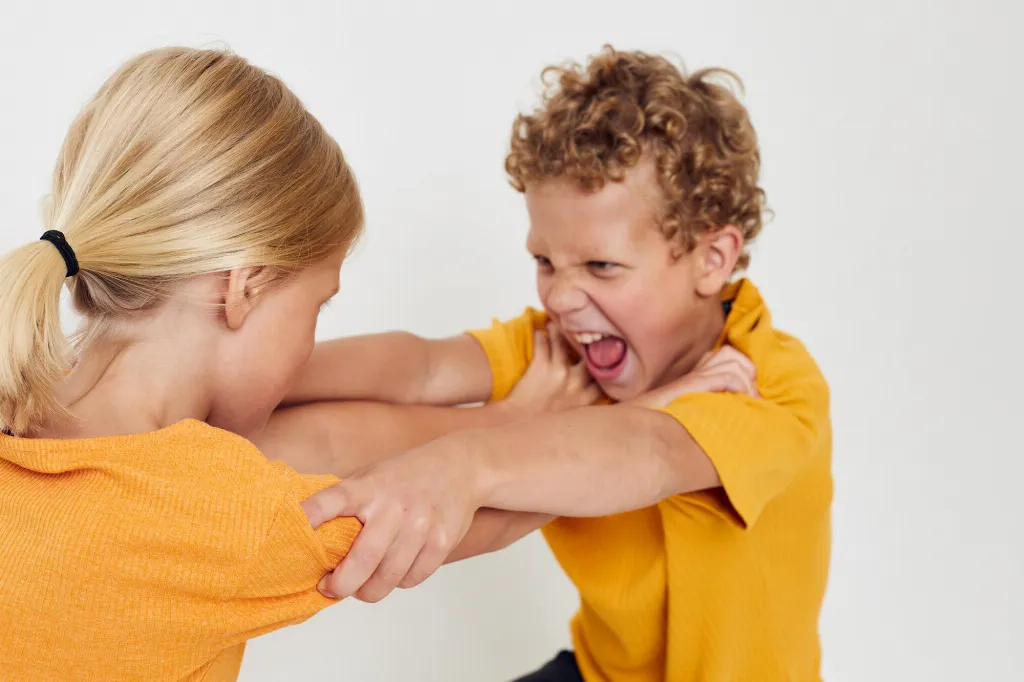
How should you respond when stress or trauma may be involved?
Some children’s nervous systems are especially sensitive to stress. A child who has experienced frightening events, instability, or repeated conflict may react rapidly to ordinary classroom demands. Trauma-informed care does not remove boundaries; it changes the path used to reach them. The sequence is often: regulate, relate, then reason.
- Regulate: Lower your voice, slow your movements, reduce stimulation, and offer a familiar calming routine.
- Relate: Communicate safety and connection: “I’m here. We will get through this.”
- Reason: After the child is calm, discuss the limit and rehearse the replacement skill.
Avoid interpreting every incident as intentional defiance. Ask whether a transition, loud sound, separation, sensory demand, or relational conflict preceded the behavior. Maintain predictable routines and prepare the child for changes with visual or verbal warnings.
Providers should not diagnose trauma or mental health conditions. If aggression is persistent, severe, injurious, or accompanied by marked fear, withdrawal, sleep changes, or other concerning changes, involve the director and follow referral procedures. Consider consultation with qualified mental health or developmental professionals, with family consent and in accordance with program policy.
Support yourself as well. If you feel close to yelling, ensure the group is safe, ask a colleague to step in when possible, take one slow breath, and return to your prepared script. Professional self-regulation is a strength, not a sign that the work is easy.
How can providers partner with families and decide when more help is needed?
Families deserve information without blame. Share facts privately: what happened, where and when it occurred, how staff protected the children, and what skill you will teach next. Begin with a strength when appropriate: “Maya is deeply engaged in building. Today, hitting occurred twice when another child reached for her blocks.” Then describe the plan: “We will use a timer, stay close during block play, and practice ‘my turn.’”
Invite collaboration:
- “What words or calming strategies work at home?”
- “Have you noticed this during particular routines or times of day?”
- “Is there a recent change that may help us understand what Maya is communicating?”
Use an ABC record to identify patterns: Antecedent, what happened before; Behavior, the observable action; and Consequence, what happened afterward. Avoid labels such as “aggressive child.” Record observable facts such as “hit peer’s shoulder after peer took truck.” Review data with the team and choose one to three measurable supports.
Seek additional support when hitting is frequent, intense, causes injury, occurs across settings, interferes substantially with participation, or does not improve after consistent prevention and teaching. Directors can coordinate a behavior support plan, staff coaching, family meetings, and referrals. Remember that state requirements vary - check your state licensing agency.
Conclusion: How do you stop hitting without yelling or shaming?
You stop hitting most effectively by combining a calm limit with active teaching. Protect children immediately, comfort the child who was hurt, keep language brief, and guide the child who hit toward one practiced replacement skill. Then examine patterns, adjust the environment, reinforce success, and partner with the family.
The goal is not simply to suppress a behavior for the moment. It is to help children learn: “My feelings are manageable, my needs can be communicated, and adults will keep me safe while I practice.” For additional professional development, consider these relevant ChildCareEd options:
- The ABCs of Behavior: Turning Challenges into Learning Opportunities
 Buy Now
 $55.00$45.00 — learn to use antecedent-behavior-consequence information to understand patterns and plan positive supports. - Viewing Guidance in a Positive Light Buy Now $24.00 — strengthen developmentally appropriate guidance and classroom management practices.
- Solutions NOT Punishments Buy Now $16.00 — explore prevention and discipline strategies that teach rather than shame.
- Social Foundations and Responsive Classrooms Buy Now $24.00 — support self-regulation, conflict resolution, and responsive relationships.
- Roots & Resilience: Understanding What Shapes a Child Buy Now $55.00 — deepen trauma-informed and resilience-focused practice.
Your steady presence is one of the most powerful teaching tools in the room. Clear boundaries and compassion can coexist—and, together, they help children learn safer ways to belong, communicate, and connect.
- CDA Certification en Español: Recursos y Consejos para Educadores Bilingües
- 😤💬 ¿Qué Le Digo a un Niño que Acaba de Morder a Otro?
- Requisitos Para Ser Maestra Principal En Un Daycare: Lo Que Necesitas Para Empezar
- ¿Qué Se Necesita para Comenzar una Guardería en Casa en Texas?
- 10 Ejemplos de Cómo la Cultura Influye en el Desarrollo Infantil
- ¿Cuál es la Diferencia Entre la Crianza Respetuosa y la Crianza Permisiva?
- Cómo Ser Maestra de Preescolar en Illinois
- Biting Behavior in Early Childhood: Causes and Solutions
- How Can North Dakota Providers Respond to Toddler Biting Without Shaming?
- How should Michigan child care providers manage toddler biting incidents?
- Why Do Toddlers Bite and How Should Child Care Providers Respond?
- How should child care providers respond to biting, hitting, and aggressive behavior?
- How to Stop a Child From Hitting Others Without Yelling or Shaming
- What Should Child Care Providers Do When a Child Keeps Hitting, Biting, or Pushing?
- How Can Teachers Support Children With Big Emotions?
- How Can Daycare Providers Stop Children From Hitting Each Other?
- How Should Child Care Providers Respond to and Document Biting Incidents?
- How Can Child Care Providers Support Social-Emotional Development?
- How Can You Handle Challenging Behavior in Preschool Without Yelling?
- Why Do Toddlers Bite, and How Should Child Care Providers Respond?
