After a conflict, a preschooler may need time, reassurance, and help figuring out how to return to play. Once children are calm, revisit a relevant visual on the Preschool Classroom Rules Poster Buy Now $1.49, such as safe hands or taking turns, and practice what that could look like when the child feels ready to rejoin. ChildCareEd’s You’re Not My Friend Anymore: Learning Conflict Resolution  Buy Now $16.00 offers developmentally appropriate ways to support problem-solving and repair, while Social Foundations and Responsive Classrooms Buy Now $24.00 explores relationships and classroom climate. Read on for ways to help children reconnect while respecting their feelings and readiness.
Why does returning to the group matter after conflict?
Rejoining is more than walking back to the block area or circle. It helps a child experience that a hard moment does not cancel their place in the classroom community. When adults guide the process with warmth and clear boundaries, children can learn that conflict is something they can work through, not a reason to feel permanently rejected or labeled as “the problem.”
Preschoolers are still developing emotion regulation, communication, and perspective-taking. A child may need time to calm their body before they can listen, speak, or participate in a repair conversation. The goal is not to rush a child into an apology or back into shared play; it is to support safety, dignity, and a realistic next step.
Guidance that treats mistakes as opportunities to learn can preserve connection while still addressing harm. NAEYC’s guidance on using guidance instead of discipline underscores the importance of teaching skills without shaming a child. When adults consistently coach children through repair, they build the conditions for belonging and stronger peer relationships.
- Make sure all children are safe and any immediate needs are addressed.
- Give the child time and support to regain a sense of calm.
- Offer a clear, respectful path back into the group.
How can you help a child calm down without isolating them?
Start with your own regulation. A steady voice, relaxed posture, and patient pace help communicate safety. If you feel frustrated or hurried, take a breath before speaking; your calm presence is part of the support. Move children apart if needed to prevent further harm, but make clear that separation is for safety and regulation—not punishment or rejection.
Use a few concrete words: “You’re upset. I’m here. I won’t let anyone get hurt.” Avoid asking a long series of questions while the child is crying, shouting, or physically tense. In that state, complex language and reasoning may be difficult to access. Stay nearby, offer a quiet spot or familiar calming tool, and allow the child to choose among simple options when possible.
A calming space works best when children have learned how to use it during peaceful moments. It should be available as a supportive choice, not a place where a child is sent in disgrace. A feelings picture, breathing cue, soft book, or a few minutes with a trusted adult may help. Follow the child’s communication style; pointing, gesturing, or using a familiar phrase can count as meaningful participation.
- Try: “Would you like to sit beside me or take a quiet minute in the calm space?”
- Try: “Your body looks ready. We can talk now, or I can stay with you a little longer.”
- 🌱 Notice small signs of readiness—slower breathing, relaxed hands, or looking toward the activity—rather than expecting instant composure.
What should you say when you revisit the conflict?
Once the child is calmer, briefly describe what you observed without assigning a character label or deciding intent: “You pulled the truck from Maya’s hands, and she started crying.” This helps the child connect the action to its impact while keeping the conversation focused on what happened. Acknowledge emotion too: “You really wanted the truck and felt frustrated.” Naming a feeling does not excuse unsafe behavior; it shows the child you understand the need beneath it.
When appropriate, invite each child to share their perspective. Keep questions simple and allow time to answer: “What happened?” “What did you want?” “How do you think Maya felt?” A child may need you to model the words, offer two choices, or accept a gesture. NAEYC’s three-step approach to helping children navigate conflict recommends stating the behavior, explaining its implications, and guiding an appropriate alternative.
Keep the discussion short enough for preschoolers to manage. Avoid turning the moment into an interrogation or demanding that a child explain why they acted that way. Focus on what can happen next. For additional practical examples, see ChildCareEd’s ideas for teaching children to solve problems with words.
- “You both wanted to use the same truck.”
- “Grabbing can hurt or surprise a friend. Next time, you can ask for a turn or ask me for help.”
- “What would help make things better now?”
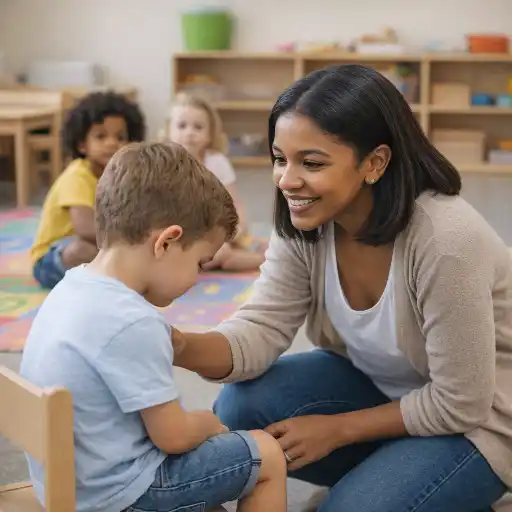
How can you support meaningful repair and a safe return?
Repair is not a performance. A forced “sorry,” hug, or immediate return to play may not help children understand what happened or feel ready to reconnect. Instead, offer concrete, age-appropriate ways to address the impact and respect both children’s boundaries. Repair might mean returning an item, helping rebuild a knocked-down structure, checking whether a peer needs space, or offering a kind phrase when ready.
Ask the child who was affected what would feel helpful, without making them responsible for comforting the other child. Then guide the child who caused harm to choose a feasible repair: “Would you like to bring the blocks back, help rebuild, or give your friend some space?” The other child may decline interaction. Respect that choice and explain that repair can begin with making the situation safer or restoring materials.
Once safety and repair have been addressed, make re-entry specific and low-pressure. The child might watch first, join a nearby activity, take a helper role, or return to the original play with a clear plan. You can say, “The blocks are ready. You can ask, ‘Can I build here?’ or choose the art table.” Acknowledge the effort: “You helped rebuild and waited for your friend to be ready.”
- Offer a small number of appropriate choices rather than demanding immediate group participation.
- Check in with both children after they resume activities.
- Use repair as a bridge to belonging—not a test the child must pass.
How can classroom routines make rejoining easier?
Repeated conflicts and difficult returns may reflect conditions in the room as well as developing skills. Observe when and where incidents happen: a crowded center, limited materials, a rushed transition, or unclear play roles can make it harder for children to cooperate. Adjusting the environment is not “giving in”; it is thoughtful prevention that supports children’s capacity to succeed.
Teach a simple conflict routine during calm parts of the day. With pictures or gestures, practice: stop and get safe, calm the body, say what you need, choose a solution, and check whether it worked. Puppets and short role-play let children rehearse phrases such as “Can I play?” “I need space,” and “Can I have a turn when you’re done?” Repeat familiar wording across adults, and make it accessible to children who communicate in different ways or languages.
Directors can support consistency by agreeing on a few shared phrases and discussing examples in staff meetings. Families can be partners when adults share observations objectively and describe the teaching plan without blame. Document recurring patterns briefly and confidentially; if behavior is frequent, intense, or unsafe, collaborate with families and appropriate specialists. State requirements vary - check your state licensing agency.
For additional professional learning, consider Teach with Respect ONLINE Buy Now $24.00, which includes strategies for respectful relationships and helping children resolve conflict, Viewing Guidance in a Positive Light Buy Now $24.00, which focuses on positive, developmentally appropriate guidance, and Staying Positive: Guidance for Preschoolers Buy Now $24.00, which explores positive guidance and social-emotional development.
Conclusion: What helps a preschooler rejoin after conflict?
A preschooler is more likely to rejoin the group when adults first ensure safety, support regulation, and then guide a realistic repair and return. Use calm, observable language; give children time; and offer choices that respect both the child’s readiness and the peer’s boundaries. Rejoining may mean watching, helping, choosing another center, or returning to shared play later—not necessarily resuming the original activity immediately.
Most of all, communicate that the child remains part of the classroom community while holding clear limits on unsafe behavior. Consistent practice, accessible communication, and thoughtful room routines help children build skills over time. Your steady presence turns a painful moment into an opportunity to practice #belonging, #regulation, #empathy, #repair, and #communication.
- CDA Preschool Credential
- CDA Preschool Credential with Portfolio Review
- Birth to Five CDA Credential with Portfolio Review
- CDA Bridge Bundle: Preschool
- CDA Bridge Bundle: Family Child Care
- Art from the Heart for Preschoolers: Open Ended Art Projects that Build Self-Esteem
- CDA Bridge Bundle: Preschool without Portfolio Review
- Texas Director Credential
- CDA Certification en Español: Recursos y Consejos para Educadores Bilingües
- Sweet Home Alabama: How Can You Create Classroom Harmony.
- 💛🧩 ¿Cómo puedo hacer que mi enseñanza sea inclusiva para los niños con autismo?
- ¿Cómo empiezo mi certificación CDA en Florida en línea?
- Cómo Trabajar en el Cuidado Infantil en Carolina del Norte: Requisitos y Pasos
- Celebrando la amistad en el cuidado infantil durante el Día de los Mejores Amigos
- Canciones, juegos y preguntas de círculo para niños
- Cómo simplificar la capacitación para sus empleados de daycare
- Time-In or Time-Out? 7 Real Classroom Scenarios and What to Try
- How Can Child Care Providers Use Natural and Logical Consequences with Young Children?
- When a Child Refuses to Follow Directions, What Should Teachers Do?
- Why Is My Preschooler Suddenly Aggressive, and How Can Child Care Providers Help?
- How Can Preschoolers Learn to Make Safer Classroom Decisions?
- How Can You Help a Preschooler Recover After a Difficult Drop-Off?
- How Can You Help a Preschooler Rejoin the Group After a Conflict?
- How Can Teachers Help Children Rejoin Play After a Conflict?
- How Can Teachers Help Preschoolers Recognize When They Need a Break?
- How Can Preschoolers Learn to Ask for a Break Before Walking Away?
- How Can Teachers Help Children Learn to Wait Without Becoming Frustrated?
- How Can Preschool Teachers Encourage Sharing and Cooperation During Halloween?
