A sudden change in a preschooler’s behavior can leave even an experienced provider worried, frustrated, and unsure what to do next. Understanding the message beneath the behavior can help you protect the group, support the child, and build more effective classroom practices; Ouch! Biting & Hitting Hurts Buy Now $35.00 offers focused professional learning on why these behaviors occur and how to respond with positive guidance. For a broader framework, explore the related From Tantrums to Triumphs: Equipping Preschoolers with Self-Regulation Skills Buy Now $25.00 course to strengthen practical strategies for emotional regulation and challenging behavior.
Why does a preschooler suddenly become aggressive?
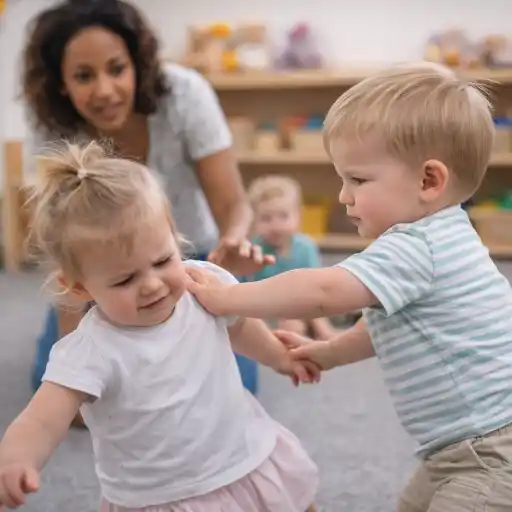
Aggression may appear as hitting, biting, kicking, scratching, pushing, throwing, threatening language, or destroying materials. Although the behavior is unacceptable when it harms others, it is not necessarily evidence that a child is “bad,” uncaring, or destined to have long-term difficulties. Young children may act before they can explain, “I am frustrated,” “I need space,” or “I do not know how to enter the play.”
Preschoolers are still developing impulse control, emotional vocabulary, flexible thinking, and social problem-solving. A child who previously managed well may become aggressive after a change in sleep, health, family circumstances, classroom relationships, or daily routine. The first question should therefore be investigative rather than judgmental: What changed, and what might this behavior be communicating?
Common contributors include:
- Frustration related to language, turn-taking, or peer conflict
- Fatigue, hunger, illness, pain, or sensory overload
- Transitions, crowded spaces, or loss of access to a preferred toy
- Stress, trauma, family changes, or feeling unsafe
- Difficulty understanding expectations or generating a safer response
Research on preschool aggression connects difficulties with emotion regulation and social-information processing to aggressive responses. In practical terms, a child may feel intense anger, interpret an ambiguous event as threatening, and lack access to a safer solution quickly enough. This is why behavior should be treated as information that guides teaching—not as a character judgment.
Why does this matter for the whole classroom?
Sudden aggression affects more than the child involved. The injured child needs comfort and protection, peers may feel frightened, and staff can experience stress or self-doubt. A calm, predictable adult response communicates that the classroom is #safe while also showing that difficult emotions can be managed without humiliation.
Early support matters because persistent aggressive behavior can interfere with peer relationships, learning, and participation. At the same time, providers should avoid catastrophizing a single incident. Developmentally appropriate expectations and careful observation help distinguish an isolated reaction from a pattern requiring individualized support.
High-quality prevention includes relationships, environmental design, direct instruction, and collaboration with families. NAEYC emphasizes positive guidance and developmentally appropriate responses, while the Encyclopedia on Early Childhood Development identifies early social-emotional interventions as an important opportunity to strengthen emotion knowledge, self-control, problem-solving, and prosocial behavior.
A strengths-based lens is especially valuable. Notice when the child connects warmly, persists in play, communicates a need, or recovers with support. These observations identify skills to build on and prevent the child from being defined by a difficult moment.
What should providers do immediately when aggression occurs?
During an incident, the priority is safety—not a lengthy explanation. Use a consistent sequence that every staff member can remember:
- Interrupt safely. Move between children, block the action, remove a dangerous object, and create space. Protect without threatening or escalating.
- Check the injured child. Offer comfort and first aid according to program policy. This shows the group that adults respond when someone is hurt.
- State one clear limit. Say, “I will not let you hit. Hitting hurts.” Keep your voice low, firm, and brief.
- Support regulation. Reduce noise, move peers away, and offer a nearby calm space or familiar regulating tool. This should not be framed as shame or exclusion.
- Teach one replacement. If the child is receptive, prompt “Say, ‘Stop,’” “Show me ‘help,’” or “Use gentle
 hands.” Save reflection for later.
Short scripts are easier to use under pressure. Avoid yelling, threats, forced apologies, public lectures, or labels such as “aggressive child” or “biter.” Guidance from ChildCareEd’s practical response framework similarly emphasizes safety, concise limits, comfort for the hurt child, and teaching when everyone is calm.
Document objectively after the situation stabilizes. Record what happened before the incident, the observable behavior, the adult response, injuries or first aid, and required notifications. Do not infer motives in the record. State requirements vary - check your state licensing agency.
How can the classroom prevent aggression before it starts?
Prevention is not simply reminding children to “be nice.” It is the intentional design of routines, relationships, materials, and teaching so children can participate successfully. Begin with an ABC observation: the antecedent is what happened before, the behavior is what the child did, and the consequence is what happened afterward.
Look for patterns across several observations:
- Does aggression occur before meals, rest, or outdoor play?
- Is it concentrated in crowded centers or during cleanup?
- Does the child hit when a preferred toy is removed or when peers enter play?
- Does aggression help the child escape, gain attention, obtain an object, or regulate sensory needs?
Then adjust the environment and teach a replacement that serves the same purpose. Helpful strategies include:
- Use visual schedules, transition warnings, songs, timers, and first-then language.
- Provide duplicates of highly desired toys and reduce unnecessary waiting.
- Define play areas and preserve a quieter space for children who become overwhelmed.
- Place adults near predictable “hot spots” and increase supervision during transitions.
- Offer regular movement, water, meals, rest, and sensory opportunities.
- Teach emotional vocabulary through books, puppets, role-play, and daily conversations.
The Center of Excellence’s teaching tools also highlight visual schedules, cue cards, scripted stories, feeling vocabulary, and routine-based supports. These tools make expectations more concrete and help children communicate before behavior escalates.
How do providers teach safer replacement skills?
A replacement skill must be observable, simple, and immediately useful. “Control yourself” is too abstract; “touch the help card,” “say ‘my turn,’” “move back,” or “ask an adult” can be modeled and practiced. Select one skill first rather than presenting a long list of expectations.
Teach during calm moments. Model the skill, prompt the child, rehearse it briefly, and respond immediately when the child attempts it. For example, when a child reaches for a block another child has, the teacher might say, “You want a turn. Show me the turn card.” After the child uses the card, the teacher can say, “You asked safely. I will help you wait.” The replacement should produce meaningful support—not merely delay access through another demand.
Use specific encouragement:
- 🌟 “You said ‘stop’ instead of pushing. I heard your words.”
- “You moved back when the space felt crowded.”
- “You waited while Maya finished. That was careful turn-taking.”
- “You brought me the help card. I can help you now.”
Repair can follow once the child is regulated. The child might check on the peer, help retrieve materials, practice the script, or draw a caring picture. Do not force an apology that the child does not understand; accountability should restore safety and connection rather than create humiliation.
Team consistency matters. Agree on the same short scripts, visual cues, replacement skill, and documentation process. Providers also need support: taking one breath, asking a colleague for coverage, and using a planned response can prevent adult stress from escalating the interaction.
When should providers involve families or seek additional support?
Families are essential partners and should not be contacted only as a disciplinary measure. Begin with a strength, describe observable facts, explain what staff did, and share the next plan: “Jordan enjoys building and connects warmly with teachers. Today, during cleanup, Jordan hit twice after the music ended. We blocked the hits, comforted the other child, and practiced asking for help. Tomorrow we will provide a two-minute warning and a visual cleanup card.”
Invite family knowledge:
- “When does this behavior happen at home?”
- “What words, gestures, or calming strategies help?”
- “Have there been changes in sleep, health, routines, relationships, or stress?”
- “What helps your child rejoin play after becoming upset?”
Protect confidentiality, avoid naming other children, and use neutral language. A short team plan may include one to three prevention strategies, one replacement skill, staff responsibilities, and a review date within several days.
Consider additional support when aggression is frequent, intense, injurious, persistent, developmentally unusual, or unresponsive to consistent classroom strategies. Repeated injuries, inability to calm with adult support, severe disruption to learning, or sudden behavior accompanied by concerning changes in functioning warrant discussion with the director and family. Depending on the circumstances, the team may consult an early childhood mental health professional, developmental specialist, or other appropriate community resource. Providers should not diagnose children independently.
Trauma may affect regulation, attachment, attention, and reactions to reminders of frightening experiences. Trauma-informed practice emphasizes predictable routines, relational safety, calm responses, and curiosity about triggers.
For focused professional development, providers may explore Mysteries of Challenging Behavior Solved  Buy Now
 $24.00$18.00, The ABCs of Behavior: Turning Challenges into Learning Opportunities Buy Now $55.00, Trauma-Sensitive Care: Supporting Young Children with Empathy Buy Now $16.00$11.00, or Heart-to-Heart Communication: Challenging Behaviors Buy Now $16.00. Each course addresses a different part of the work: understanding behavior, using observation, responding to stress, or partnering with families.
Conclusion: What should providers remember when a preschooler becomes aggressive?
A suddenly aggressive preschooler is often showing that a skill, need, or sense of safety requires attention. The behavior must be stopped when it causes harm, but the child should not be reduced to the behavior. Effective practice combines immediate safety, calm limits, emotional connection, prevention, direct teaching, objective documentation, and family collaboration.
Start with a manageable plan: interrupt harm, comfort the injured child, state one limit, help the child regulate, teach one replacement, identify the trigger, and review progress with the team. Continue noticing strengths and small improvements. With steady support, children can develop #communication, self-regulation, empathy, and safer ways to participate in relationships.
- Lesson Planning for Preschoolers
- 45 Hour Preschool Methods and Materials
- The ABCs of Behavior: Turning Challenges into Learning Opportunities
- 45 Hour Infant and Toddler Methods and Materials
- CDA Bridge Bundle: Preschool
- CDA Bridge Bundle: Family Child Care without Portfolio Review
- CDA Bridge Bundle: Infant/Toddler without Portfolio Review
- CDA Bridge Bundle: Preschool without Portfolio Review
- Texas Director Credential
- Anxiety: Signs & Strategies
- CDA Certification en Español: Recursos y Consejos para Educadores Bilingües
- 👶 ¿Cuáles son las proporciones y grupos requeridos en Dakota del Norte? 🏫
- Requisitos Para Ser Maestra Principal En Un Daycare: Lo Que Necesitas Para Empezar
- Cómo usar tu certificación de 90 horas en Maryland para completar tu CDA
- Que es Título 22 en California?
- ¿Cómo empiezo mi certificación CDA en Florida en línea?
- ¿Cómo solicito la licencia para una guardería en California?
- Regulaciones de Licenciamiento de Cuidado Infantil en California para Centros y Hogares de Cuidado Infantil Familiar
- Proporciones de Cuidado Infantil y Tamaños de Grupo por Edad en Maryland (Guía Rápida para Centros y Hogares)
- Proporciones de Cuidado Infantil y Tamaños de Grupo por Edad en Virginia (Guía Rápida para Centros y Hogares)
- Lista para Guardería en Casa en Texas: Cómo Iniciar una Guardería en el Hogar
- Cómo Trabajar en el Cuidado Infantil en Carolina del Norte: Requisitos y Pasos
- Cómo Trabajar en el Cuidado Infantil en California: Requisitos y Pasos
- Cómo Trabajar en el Cuidado Infantil en Wisconsin: Requisitos y Pasos
- Cómo Ser Maestra de Preescolar en Wisconsin
- Cómo Ser Maestra de Preescolar en Maryland
- Celebrando la amistad en el cuidado infantil durante el Día de los Mejores Amigos
- Canciones, juegos y preguntas de círculo para niños
- Cómo simplificar la capacitación para sus empleados de daycare
- Why Is My Preschooler Suddenly Aggressive, and How Can Child Care Providers Help?
