Introduction
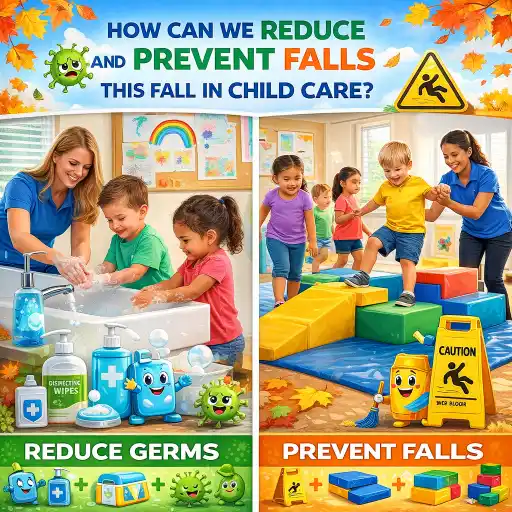
This short guide helps child care providers remember easy steps to fight germs and stop falls during the autumn season. Fall brings rainy days, leaves at the door, and more respiratory bugs like #flu and RSV. A few simple reminders keep children, staff, and families healthier and safer.
Why it matters: When we stop germs and reduce slips, we keep classrooms open and kids learning. Preventing illness and injuries saves time, worry, and keeps parents at work. Our role as caregivers means we set routines and practices that protect everyone. For trusted training and tools, see Infection Control Practices for Child Care Settings on ChildCareEd.
Note: state requirements vary - check your state licensing agency.
What simple daily steps stop germs in my program?
1. Teach and do hand hygiene every day. Handwashing is the top defense. Show staff and children how to wash for 20 seconds. Use songs or timers. See our handwashing tips at Infection Control Practices for Child Care Settings. Remember: #handwashing helps stop #germs.
2. Clean and disinfect surfaces often. Use soap and water to clean, then disinfect high-touch spots (tables, door handles, toys). The difference between cleaning and disinfecting is explained by MedlinePlus.
3. Use a mouthed-toy bin. Put toys a child chews in a separate bin. Wash and sanitize those toys daily. ChildCareEd suggests this in courses like Shoo, Germs! Don't Bother Me!  Buy Now $24.00.
4. Follow illness checks and exclusion rules. Use an illness chart to decide who should stay home. See the Illness Exclusion Quick Reference Chart Buy Now $0.00 for clear guidance. Also review guidance on recognizing and preventing specific infections; see What is Mpox and how to Protect the Children in your Care for CDC-informed information on mpox symptoms and steps to protect children in your care.
How should we remind staff and parents about seasonal illnesses this fall?
1. Make a short fall memo for families that lists 3 actions: vaccinate, watch for symptoms, and stay home when sick. The CDC recommends annual flu shots; link families to Preventing Seasonal Flu.
2. Share quick tips with staff at a meeting. Use bullet points and role-play how to separate a child with sniffles. ChildCareEd resources like Germs Happen! give practical scripts. For a brief, interactive staff course with role-play scenarios and printable scripts, see Shoo, Germs! Don't Bother Me!.
3. Post visible signs: where to wash hands, how long to scrub, and when to use tissues. Also post your sick policy and emergency contacts. For templates, check ChildCareEd’s Emergency Form Buy Now $0.00.
4. Remind families about extra steps after a child returns: mask for 5 days indoors if needed and good hand hygiene. CDC guidance on respiratory illness prevention is helpful: Preventing Respiratory Illnesses.
What can we do to prevent slips, trips, and falls on wet fall days?
1. Improve housekeeping. Clean spills right away and mark wet floors with signs. Use a wet-floor sign when mopping. You can find printable signs and ideas here: Wet Floor Signs.
2. Check walkways at arrival and dismissal times: remove wet leaves, rugs, and boots that clutter the door area. Good lighting and clear paths reduce trips.
3. Use safe floor treatments and mats that lie flat. Secure rugs and check that carpeting has no wrinkles. The CCOHS guide lists simple prevention steps: Prevention of Slips, Trips and Falls.
4. Encourage proper footwear and slow walking. Teach children to step carefully indoors during wet weather. Staff should model safe walking and quick clean-up routines.
5. Add a short checklist for rainy days: 1) place welcome mat outside, 2) set a boots bin, 3) post wet-floor sign if needed. These five steps make drop-off safer.
How do we avoid common mistakes and handle tricky situations?
Common mistakes and quick fixes:
- 🔸 Forgetting to sanitize mouthed toys — fix: keep a labeled bin and set a time to wash daily.
- 🧼 Skipping handwashing at key times — fix: staff reminders and handwashing charts at sinks.
- ⚠️ Leaving wet floors unmarked — fix: use wet-floor signs and clean spills immediately.
- 📋 Not updating parents about sick policy — fix: send a clear, short notice each season.
- 🔍 Assuming children will tell when they feel sick — fix: do a morning health check and watch behavior (sleepy, pale, rash).
When to call parents or send a child home: follow your exclusion chart. If a child has fever, vomiting, or contagious illness signs, contact the family and separate the child in a supervised, comfy place. For step-by-step training, consider ChildCareEd’s Prevention and Control of Infectious Diseases Buy Now $16.00.
FAQ
- Q: How long should children wash hands? A: At least 20 seconds. Sing a short song twice.
- Q: Can we use sanitizer instead of soap? A: Use sanitizer when soap and water are not available. It should be at least 60% alcohol.
- Q: What if a toy is mouthed during the day? A: Put it in the mouthed-toy bin and clean it before reuse.
- Q: When should we use wet-floor signs? A: Anytime a floor is wet or slippery from rain, spills, or cleaning.
- Q: Where to learn more? A: ChildCareEd courses and CDC pages linked above offer reliable guidance.
Conclusion
Use these fall reminders as a quick checklist for every day. Simple acts — handwashing, cleaning mouthed toys, marking wet floors, and telling families your policies — make a big difference. Keep it visible, keep it short, and practice the steps with staff and children. For more tools and printable resources, visit ChildCareEd and the CDC links above. Stay safe this season and remember: small routines protect many. #safety #fall
- Handling and Storage of Hazardous Materials
- How To Keep A Healthy Class: Six Tips for Germ Control
- How To Keep A Healthy Class: Six Tips for Germ Control
- 45-Hour Infant and Toddler Curriculum
- Safe Sleep Training
- Texas Director Credential
- Prevention of Sudden Infant Death Syndrome and Use of Safe Sleep Practices
- Family Child Care: Building, Premises, and Outdoor Safety
- IEPs and IFSPs in Family Child Care
- CDA Certification en Español: Recursos y Consejos para Educadores Bilingües
- Capacitación en Salud y Seguridad Preventiva en Línea para Proveedores de Cuidado Infantil
- Proporciones de Cuidado Infantil y Tamaños de Grupo por Edad en Maryland (Guía Rápida para Centros y Hogares)
- Cómo Trabajar en el Cuidado Infantil en California: Requisitos y Pasos
- How can childcare programs prevent the spread of illness?
- How can child care programs keep playgrounds safe every day?
- How can food safety training protect children in my child care program?
- Cómo simplificar la capacitación para sus empleados de daycare
- How can child care programs keep playgrounds safe every day?
- How can child care programs prevent infections and keep kids healthy?
- How can childcare settings prevent the spread of illness?
- How can child care programs keep playgrounds safe for infants through school-age children?
- How should I prepare my classroom for cold and flu season beyond cleaning?
- Playground Safety Checklist Template for Child Care Programs
- How Can Daycare Programs Prevent the Spread of Common Illnesses?
- How Can Classrooms Prevent the Spread of Illness During Cold and Flu Season?
- How Can Child Care Programs Prevent Common Playground Injuries?
- How Can Child Care Providers Prevent the Spread of Illness in the Classroom?
- Cleaning, Sanitizing, and Disinfecting in Child Care: What’s the Difference?
- How Can Child Care Programs Reduce Germ Spread in Shared Bathrooms?
