Wildfire #smokedays can arrive fast. As a Washington child care leader, you want clear steps to protect little lu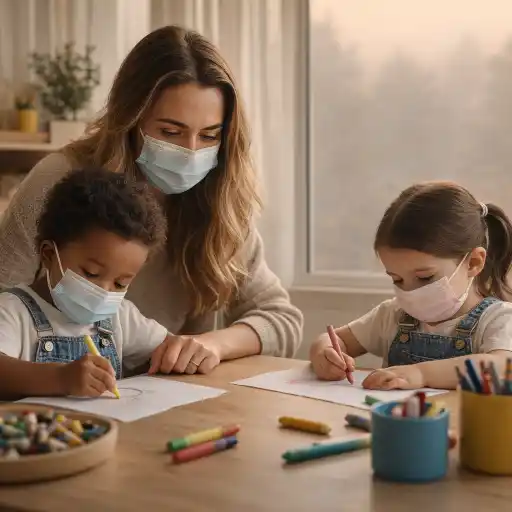 ngs, keep kids calm, and keep learning going. This short guide provides simple, numbered steps you can use today. Use the Air Quality Index (AQI), pick one clear cutoff for your program, and make a simple indoor plan. For quick AQI help and printable charts, see ChildCareEd's AQI guide and the Wildfire Smoke planning tips at ChildCareEd. Remember: state requirements vary - check your state licensing agency. Here are five things to remember: #children #airquality #HEPA #AQI #smokedays
How do we decide when to keep children inside on smoky days?
Use the AQI (Air Quality Index) as your main rule. The AQI gives a simple number and color that shows health risk. Child care teams often use a traffic-light cutoff so staff make the same choice every time. See ChildCareEd's easy AQI explanation for help: Air Quality Index Explanation.
- 🟢 AQI 0–50 (Good): Go outside as planned.
- 🟡 AQI 51–100 (Moderate): Outdoor play usually OK; watch sensitive kids.
- 🟠 AQI 101–150 (Unhealthy for Sensitive Groups): Shorten outdoor time or move active play indoors.
- 🔴 AQI 151–200 (Unhealthy): Keep all children indoors and reduce vigorous activity.
- 🟣 AQI 201+ (Very Unhealthy/Hazardous): Stay indoors, use a clean-air room, follow public health alerts.
Quick tools and habits:
- Check AQI before morning outdoor time and before afternoon outdoor time (and any time smoke is seen or smelled).
- Use a nearby monitor—don’t rely on a reading from far away. ChildCareEd suggests AirNow and local readings: air quality tips.
- Write AQI and your decision on the daily log (example: “AQI 128 at 9:00 → indoor play”).
Why this matters: kids breathe more air per pound than adults and their lungs are still growing. Using a clear AQI cutoff keeps decisions fast and fair for staff and families. For Washington-focused preparedness read local tips at the Washington Smoke Blog.
How can we make indoor air safer when smoke keeps us inside?
Your goal is to lower tiny particles (PM2.5) indoors so children breathe cleaner air. Follow simple numbered steps so anyone can do them.
- 🏠 Close doors and windows and limit how often doors open to the outside.
- 🔁 Run HVAC/AC on recirculate if you can and use the best filter your system accepts (ask facilities staff). ChildCareEd and the EPA explain HVAC steps: EPA Wildfires & Indoor Air and ChildCareEd.
- ✨ Use portable HEPA air cleaners sized for the room. Canada and EPA guides explain sizing and placement: Guidance for Cleaner Air Spaces and Choosing a portable purifier.
- 🧰 Pick a "clean-air room" (fewest doors to outside) for infants and children with asthma and run a HEPA there continuously.
- 🛑 Avoid indoor pollution: don’t fry foods, burn candles, or vacuum without HEPA during heavy smoke.
- 🛠️ If budgets are tight, consider a Corsi-Rosenthal box but follow safety steps and supervision rules.
Keep respirators (N95) for staff who must work outside briefly, but because NIOSH respirators are not sized for many young children, the primary protection for kids is cleaner indoor air. See CDC guidance on children and smoke: CDC Wildfire Smoke and Children.
What indoor activities help children move, learn, and stay calm on smoke days?
Smoke days can feel long for children. Plan movement, calm play, and learning centers so the day still feels normal. Use numbered activity blocks and rotate them during the day.
- 📚 Quiet movement + story: act out a short story with slow animal walks and stretching (5–10 minutes).
- 🧩 Centers rotation: blocks, playdough, puzzles, sensory bottles—rotate every 15–20 minutes. For ready-to-use puzzle activities that build memory, problem-solving, and creativity during indoor center time, see our National Puzzle Day activity ideas at National Puzzle Day activities.
- 🧘 Short yoga/breathing: 3–5 kid-friendly poses + “smell the flower, blow the candle” breaths.
- 🎵 Music & gentle dance: 2 minutes active, then water break and a calming table activity.
- 🧗 Low-energy obstacle course: pillows, tape lines to step over, crawl tunnels—no heavy running.
- 🎨 Table art and science: simple painting, nature jars, or magnifying glass station for calmer curiosity.
Keep activity intensity low when AQI is in the 101–150 range. Children with asthma should follow their health plan and have rescue medications ready. For indoor idea starters see ChildCareEd’s indoor activity resources and weather guides: California Weather & Outdoor Time and ChildCareEd course  Buy Now $24.00.
Note on masks: For young children masks often fit poorly and are not a full solution. Focus on cleaner indoor air for protection. Staff who must be outside briefly should follow employer rules for respirators and training (check local L&I/OSHA guidance).
How do we train staff, communicate with families, and avoid common mistakes?
Clear roles, a posted policy, and short family messages keep everyone calm and informed. Use these numbered steps to set up your plan.
- 📌 Post one AQI cutoff (example: "We stay indoors at AQI 151+") near exits and in the staff room. Use ChildCareEd printable charts: Air Quality and Outdoor Activity Guidance Buy Now $0.00.
- 👥 Assign roles: who checks AQI, who sets up the clean-air room, who messages families, who brings meds/Go-Bag.
- 🧰 Prepare a smoke-day kit: attendance sheet, meds per policy, HEPA unit, quiet activity supplies, spare water.
- 🗣️ Family message template (copy/paste): "Our local AQI is ___. We are staying indoors and using our indoor play plan. Please send asthma meds per your child's health plan. We will update you if conditions change." Post on sign-in and send by text or email.
- 🧪 Practice a quick drill: move groups inside calmly, set up HEPA, check meds. Debrief 1–2 improvements.
Common mistakes to avoid:
- ❌ Relying on a distant AQI reading — Fix: use local monitor and re-check during the day.
- ❌ Waiting for coughing to start — Fix: act at your AQI cutoff early.
- ❌ No indoor plan or activities — Fix: prepare smoke-day centers ahead of season.
FAQ (short):
- Q: How often to check AQI? A: Before each outdoor block and anytime smoke is seen/smelled.
- Q: Can kids wear N95s? A: NIOSH respirators are sized for adults; focus on indoor air for kids. See CDC: Wildfire Smoke and Children.
- Q: Who decides? A: The director or assigned staff member is using your posted policy.
- Q: Where to get quick staff training? A: ChildCareEd courses like Emergency & Disaster Preparedness help teams practice: ChildCareEd training Buy Now
$55.00$45.00.
Conclusion: Keep it simple: 1) check AQI, 2) follow one posted cutoff, 3) improve indoor air with HEPA/filters, 4) plan calm indoor activities, and 5) tell families clearly. Use ChildCareEd and public health resources to build templates and trainings. For local tips and smoke readiness see the Washington Smoke Blog and EPA guidance: EPA Wildfires & IAQ. Small, repeated actions protect little lungs and keep your program steady on smoky days.
- How To Keep A Healthy Class for Infants/Toddlers
- How To Keep A Healthy Class: Six Tips for Germ Control
- Mastering Supervision: Keeping Children Safe in All Settings
- Bienvenido! Welcoming All Families
- 1,2,3, Eyes on Me: Classroom Safety
- CDA Infants/Toddlers: Health and Safety
- Play Safe, Think Big: Literacy Through Play
- CDA Infants/Toddlers: Abuse and Neglect Reporting Requisites
- Texas Director Credential
- Preventative Health and Safety
- Recursos en Español sobre el Sueño Seguro del Bebé
- Capacitación en Salud y Seguridad Preventiva en Línea para Proveedores de Cuidado Infantil
- Proporciones de Cuidado Infantil y Tamaños de Grupo por Edad en Maryland (Guía Rápida para Centros y Hogares)
- Proporciones de Cuidado Infantil y Tamaños de Grupo por Edad en Virginia (Guía Rápida para Centros y Hogares)
- Portland Air Quality and Child Care: When Is It Safe to Play Outside?
- Air Quality and Child Care in Georgia: Outdoor Play Safety Tips
- Air Quality and Child Care in California: Outdoor Play Safety Tips
- Air Quality and Child Care in Virginia: Outdoor Play Safety Tips
- Air Quality and Child Care in Illinois: Outdoor Play Safety Tips
- Air Quality and Child Care in Wisconsin: Outdoor Play Safety Tips
- Air Quality and Child Care in North Carolina: Outdoor Play Safety Tips
- How can Nevada child care programs keep children safe outdoors when air quality is poor?
- How can Minnesota child care programs prepare for severe weather and poor air quality?
- Canciones, juegos y preguntas de círculo para niños
- How can child care programs protect children with asthma during Minnesota air-quality alerts?
- When the Sky Turns Hazy: How Should North Dakota Child Care Providers Protect Kids from Wildfire Smoke?
- How can California child care providers prepare for wildfire smoke, power outages, and closed classrooms?
- How can Washington providers keep children safe and learning when wildfire smoke forces us indoors?
- Air Quality and Outdoor Play: Guidance for Schools and Child Care Programs
- What AQI Should Kids Stay Inside? A Child Care Guide to Safe Outdoor Play
