When a preschooler is learning English, the words they already know at home are a foundation—not a barrier. Washington educators can build children’s English skills while affirming the languages and relationships that matter to them; Building Bridges for Dual Language Learners Buy Now $25.00 offers practical strategies for language-rich activities, responsive classrooms, and family partnership. For additional support with cross-language family collaboration, explore Training Guide for Families from Diverse Language and Cultural Backgrounds  Buy Now $24.00.
Why does supporting both English and home languages matter?
Dual language learning is the development of English alongside one or more languages a child uses with family or in the community. Children’s home languages carry relationships, knowledge, stories, and identity. When a child is welcomed to use those languages, educators can recognize more of what the child understands and communicate that the child and family belong.
Continuing to develop a home language does not prevent English learning. Knowledge and skills—such as concepts, vocabulary, storytelling, and print awareness—can connect across languages. The Washington State Department of Children, Youth, and Families describes dual language learning as supporting language and literacy, cultural understanding, identity, and learning. Washington also recognizes multilingual practices and family partnership through its Dual Language Designation for eligible programs.
This matters across Washington’s varied communities. Urban programs may serve families using many languages in one classroom; rural programs may face fewer nearby bilingual resources, or serve Tribal communities working to revitalize Indigenous languages. Neither setting should be treated as culturally uniform. Learn from each family, and approach every child as an individual rather than a representative of a language or culture.
- Preserve children’s access to family communication and cultural knowledge.
- Make classroom participation possible before children are ready to speak much English.
- Support #belonging, #identity, and meaningful relationships alongside communication growth.
How can multilingual labels and picture cards make routines accessible?
Visible language helps children connect words with real objects and actions. Start with high-use areas—arrival, handwashing, meals, toileting, cleanup, and the book corner—and pair a clear image with the English word and, where possible, the child’s home-language word. A label is most useful when it prompts conversation: point to the cup, name it, describe what it is for, and invite the child to find or use it.
Picture cards can support choices, transitions, and requests. Use a few at a time, with familiar photographs or simple illustrations, and model how children can point, gesture, speak, or combine these ways to communicate. Keep visuals consistent and accessible at children’s eye level. In a classroom with several home languages, ask families to help verify translations and pronunciations; do not assume that one word or dialect fits every family.
Use these supports as bridges, not as substitutes for warm interaction. Say the words aloud, demonstrate the action, pause, and allow time for a response. Children may understand before they speak, and a gesture or home-language word is meaningful communication. Environmental print, family photos, and authentic materials from children’s communities can also make the room feel more familiar without turning culture into decoration.
- Choose a small set of routine words such as “help,” “more,” “water,” and “outside.”
- Pair each word with an image, object, gesture, and predictable routine.
- Invite family review of translations and update materials as classroom languages change.
How can songs and storytelling strengthen language development?
Songs, rhymes, and oral stories invite children to listen, anticipate, repeat, move, and take part without requiring fluent English. Ask caregivers which songs, fingerplays, sayings, or stories their child enjoys, and invite contributions in ways that feel comfortable. A family recording, shared lyrics, or a staff member’s carefully practiced greeting can help a home language be heard as part of everyday classroom life.
During shared reading, use expressive voice, props, pictures, and pauses. Encourage children to predict what happens next, point to details, act out a character, or retell a story in English, a home language, or both. If the same book is available in more than one language, connect familiar scenes and ideas rather than treating one version as the “real” story and the other as a translation exercise. Repetition builds familiarity and gives children multiple opportunities to join in.
Storytelling can also grow from family photographs, local places, classroom play, and children’s own experiences. Invite children to add an idea, dictate a phrase, draw a scene, or use a prop. Do not put a child on the spot to perform or translate for peers. Participation should be voluntary and varied: listening attentively is also a valid way to engage.
- 🎵 Use a familiar transition song with motions so every child can join in.
- Tell a short story with objects or picture cards, then invite children to retell or act it out.
- Make room for #stories and songs from families without asking one person to speak for a whole community.
How can family involvement and peer interactions support bilingual growth?
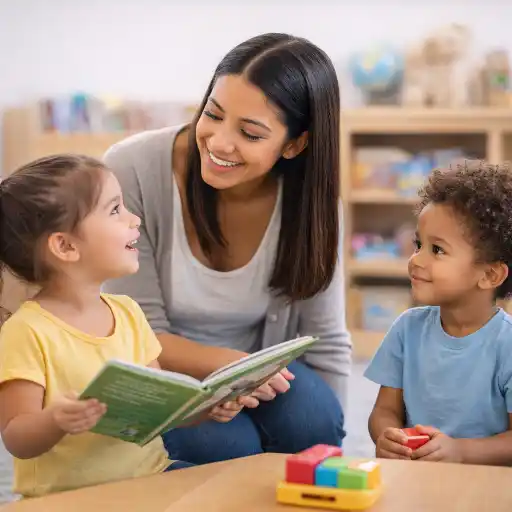
Families are the experts on the languages children hear and use, their preferred names and pronunciations, and the routines and stories that help them feel secure. Ask open-ended questions: Which languages does your child use with different family members? What words help with comfort or daily needs? What books, songs, or games does your child enjoy? Revisit these conversations over time, because children’s language experiences change.
Offer more than one way to contribute: a voice note, a word or phrase, a photograph, a favorite book title, or a brief conversation at pickup. Use qualified interpreters or trusted translation processes for important or sensitive communication; avoid asking children to interpret for adults. Share observations with families and ask what they notice at home, making the relationship genuinely two-way.
Peers can create authentic reasons to communicate. Set up cooperative play—building a structure, caring for a pretend shop, or working on a garden task—where children can point, demonstrate, negotiate, and share words naturally. Pair children thoughtfully, without making a bilingual child responsible for translating or supporting another child. Model kind curiosity and protect each child’s right to use, decline to share, or simply listen to a language.
Washington programs may have different staffing, materials, and community connections in urban and rural areas. Directors can build local partnerships with libraries, family organizations, Tribal language programs, and community language speakers, while respecting each family’s preferences and privacy.
What pitfalls should educators avoid, and how can they plan next steps?
Well-intended practices can unintentionally discourage home-language use when they imply that English is the only language for learning or that families should speak less of their strongest language. Avoid correcting children’s language choices, requiring them to translate, or interpreting limited English as limited understanding. Mixing languages, gestures, periods of observation, and a gradual increase in spoken English can be part of language learning; consider the child’s full communication across settings and languages.
Also avoid tokenism. A holiday display or a single cultural activity cannot stand in for daily representation, and one child or family cannot represent an entire language community. Ask rather than assume, verify materials, and make sharing voluntary. For developmental concerns, collect observations over time and partner with families and qualified professionals; do not draw conclusions from an English-only snapshot.
Try a manageable team plan:
- Record each family’s language and communication preferences confidentially.
- Add a few accurate labels and visual supports to one routine or learning area.
- Introduce one multilingual song or family-contributed story and invite peer participation.
- Review what helped children communicate, and ask families for feedback.
For Washington-specific program information, consult DCYF’s Dual Language Learning guidance and its information on professional development and training. State requirements vary - check your state licensing agency.
Conclusion: How can educators support both languages every day?
Washington preschool educators can nurture English development without asking children to leave their home languages at the door. Make language visible with accurate labels and picture cards, use songs and storytelling to create joyful participation, invite family expertise, and structure peer play so children can communicate in multiple ways. These practices are useful in both urban and rural programs, while recognizing that families’ languages, cultures, and preferences are distinct.
Begin with one achievable change, listen to families, and observe how children respond. The central goal is not perfect translation or identical language exposure for every child; it is a responsive learning community where children can build English while their home languages remain valued resources for connection, learning, and #communication.
For a family-friendly activity that welcomes words from any home language, share Clapping Word Parts at Home: A Family Syllable Activity Buy Now $0.00.
Further ChildCareEd courses: Bridging Cultures: Family Communication & Collaboration Buy Now $55.00$42.00; Supporting Families and Caregivers in Language and Literacy Buy Now $16.00; Language and Literacy Foundations in Pre-K Buy Now $16.00.
- Understanding Print Knowledge in Preschool
- CDA Preschool Credential with Portfolio Review
- Building Bridges for Dual Language Learners: For Workforce Solutions
- What Makes Me Special: An Overview of Autism and ADHD
- CDA Bridge Bundle: Preschool
- CDA Bridge Bundle: Family Child Care without Portfolio Review
- CDA Bridge Bundle: Infant/Toddler without Portfolio Review
- CDA Bridge Bundle: Preschool without Portfolio Review
- Building Bridges for Dual Language Learners
- Supporting Families and Caregivers in Language and Literacy
- CDA Certification en Español: Recursos y Consejos para Educadores Bilingües
- Cuáles Son las Señales de Alerta en el Desarrollo Infantil que Todo Educador Debe Conocer?
- Apoyo en Español para Capacitaciones Grupales Presenciales y por Zoom en Cursos Selectos
- Apoyo en Preescolar para Retrasos del Habla: Estrategias Simples que Ayudan
- Retraso del Habla en la Guardería: Cómo Pueden Ayudar los Proveedores
- How can I support English Language Learners in Michigan childcare classrooms?
- How can preschool classrooms best support language development?
- How can Minnesota child care settings support Dual Language Learners?
- Canciones, juegos y preguntas de círculo para niños
- How can child care programs best support Dual Language Learners?
- Why Do Bilingual Classroom Activities Matter for Dual Language Learners?
- Why Do Home-Language Resources Matter for Preschool Families?
- How Does Counting Shapes Build Early Number Sense Through Play?
- How Can Educators Support Peer Language Help Without Making One Child the Classroom Interpreter?
- How Can Preschoolers Explore Different Languages Without Being Expected to Translate?
- How Can District of Columbia Child Care Providers Help Dual Language Learners Thrive?
- Why Should Children Be Encouraged to Use Their Home Language in Early Childhood Programs?
- How Can Child Care Providers Better Support Dual Language Learners?
- How Can Washington Preschool Educators Support Dual Language Learners Without Discouraging Home Languages?
