When a small task—threading a bead, opening scissors, or fastening a button—feels impossible, frustration can quickly take over the learning moment. With calm co-regulation and a well-matched level of challenge, teachers can help children feel understood while building persistence and hand skills; the From Tantrums to Triumphs: Equipping Preschoolers with Self-Regulation Skills Buy Now $25.00 course offers a deeper learning experience in practical ways to foster emotional regulation and confidence.
Children’s frustration during fine-motor work is not simply a behavior to stop. It can tell us that a task, tool, sensory experience, or level of support needs attention. Thoughtful responses help children participate, practice, and experience themselves as capable learners.
Why does frustration during fine-motor activities matter?
Fine-motor activities ask children to coordinate vision, posture, hand strength, finger control, and planning. A task adults view as simple may involve several demanding steps for a young child. When effort repeatedly ends in failure, a child may begin avoiding drawing, puzzles, dressing routines, or other opportunities to practice.
Frustration is also meaningful communication. Crying, pushing materials away, going quiet, or asking for help may be a child’s way of saying, “This is too hard right now,” “I need a break,” or “I want to do it myself.” A supportive teacher notices the message beneath the reaction without labeling the child as difficult.
Recognizing feelings and supporting the underlying goal can strengthen problem-solving and mastery motivation—the willingness to keep trying when a task is challenging. The goal is not to prevent every struggle. It is to make the struggle manageable, preserve the child’s agency, and help them see that effort and support can move them forward.
How can teachers respond in the moment?
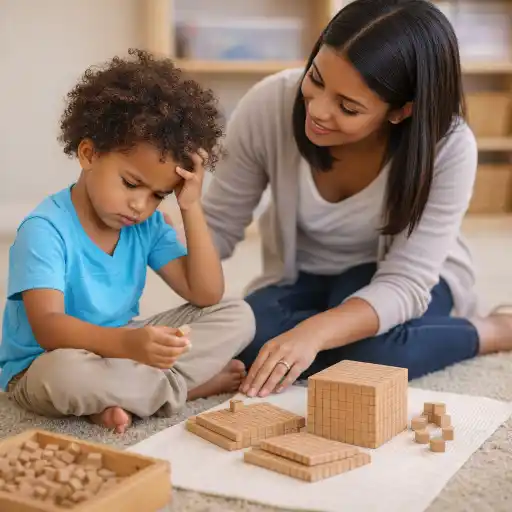
Start by slowing down. Your voice, posture, and pace help set the emotional tone. Move nearby, get to the child’s level, and acknowledge what you observe without rushing to correct the feeling: “That bead keeps slipping, and you look frustrated.” Give the child a moment to respond. Being understood can make it easier to accept help.
Then find out what support the child wants. Offer a small choice rather than taking over: “Would you like me to hold the string, or would you like to try again by yourself?” A calm invitation—“I’m here if you want help”—respects independence while keeping assistance available. If the child is too upset to continue, pause. A brief reset with breathing, a quiet space, or a familiar calming activity may help before returning to the task.
- Keep language short and specific: “The paper is moving. Let’s hold it here.”
- Offer one useful cue at a time, such as turning a puzzle piece or stabilizing the paper.
- Notice the process: “You changed your grip and tried a different way.”
- 🌿 Let the child choose whether to continue, pause, or switch to another activity when appropriate.
Acknowledge the feeling without making the task disappear automatically. When the child is ready, help them address the problem that caused the frustration. This communicates that frustration is acceptable and challenges can be worked through—with support, time, and adaptations.
How can teachers make the activity feel achievable?
Match the activity to the child’s current abilities and interests. A task that is too difficult can overwhelm; one that is too easy may not invite meaningful practice. Adjust the materials, space, or steps while keeping the child’s purpose intact. For example, use a larger bead and a stiff lace end before moving to smaller beads and a flexible string.
Break complex tasks into short, visible steps. Demonstrate once, invite the child to try, and allow time for processing. Model how to pinch playdough, hold paper with one hand while cutting with the other, or stabilize a container while opening it. Offer just enough help to make progress possible, then reduce the prompt as the child gains control.
- Use chunky crayons, larger puzzle pieces, easy-open containers, or adapted tools when helpful.
- Secure paper with tape or place work on a tray so materials stay in position.
- Offer a choice of tools, textures, or activity themes to increase interest and comfort.
- Keep practice brief and enjoyable; return to a task later rather than pushing through fatigue.
Playful options—playdough, stickers, tongs, blocks, lacing, or tearing paper—can strengthen hands and coordination without making every experience feel like a test. The ChildCareEd guide to increasing fine-motor skills describes ways to weave hands-on practice into classroom materials and routines.
How can teachers build persistence without taking over?
Children develop persistence when they have meaningful challenges, opportunities to make choices, and time to try their own ideas. Resist the understandable impulse to finish the task for a child simply to end the frustration. Instead, make the smallest adjustment that helps them participate: hold the paper steady, show where the puzzle piece might turn, or offer a verbal hint and wait.
Use specific feedback that draws attention to strategy and effort rather than fixed traits or perfect results. “You tried the zipper from the bottom this time” tells a child what helped. “You’re so smart” may feel positive, but it offers less information about how their effort shaped the result. Celebrate attempts, small gains, and asking for help as useful problem-solving behaviors.
Provide repeated opportunities across familiar routines, not just at a special activity table. Children can practice finger control while turning pages, using utensils, dressing up, sorting classroom materials, or helping prepare a snack. Offer choice and avoid comparing one child’s pace with another’s. Individual progress may be seen in greater control, longer engagement, a new strategy, or less adult help—not only in completing a product.
When should teachers adapt further or seek collaboration?
Occasional frustration is a common response to learning something new. Pay closer attention when a child regularly avoids fine-motor experiences, becomes distressed across many tasks, tires quickly, or continues to struggle despite thoughtful adjustments and repeated opportunities. Observe patterns across activities and routines, including the tools used, the amount of support needed, and what seems to help.
Document objective examples rather than conclusions. For instance: “During three art periods this week, the child pushed the scissors away after two snips; with playdough scissors, the child made several cuts and stayed engaged.” Notes like these support respectful conversations with families and help the team plan responsive strategies.
- Share strengths and specific observations with the family; invite their perspective and ask what works at home.
- Consult program leaders and, when appropriate, specialists or early intervention resources.
- Use developmental milestones as general guides, not as a diagnosis or a rigid pass/fail test.
- Follow age-appropriate supervision and material-safety practices, especially with small objects.
Families and specialists can help identify accommodations or strategies that support participation. If concerns persist or affect everyday routines, encourage the family to discuss them with a qualified health or developmental professional. State requirements vary - check your state licensing agency for applicable safety and program requirements.
Conclusion: What helps children keep trying when fine-motor work is hard?
Teachers can support children who become frustrated during fine-motor activities by treating frustration as information, responding calmly, and preserving the child’s role as a problem solver. Acknowledge the feeling, ask what kind of help the child wants, and adjust the task in small ways so success is possible without removing the challenge entirely.
Offer choices, model useful strategies, praise specific effort, and provide playful practice throughout the day. Observe persistent patterns and partner with families and specialists when additional support may be helpful. The central question—how can teachers support a frustrated child?—has a practical answer: connect first, make the challenge manageable, and help the child discover that trying again can lead somewhere new.
For more structured professional learning, explore From Tantrums to Triumphs: Equipping Preschoolers with Self-Regulation Skills Buy Now $25.00. It focuses on supporting self-regulation and confidence in preschool classrooms, complementing the responsive strategies described here.
Related ChildCareEd courses:
- How Preschoolers Develop
 Buy Now $32.00 — deepen your understanding of preschool development and age-appropriate instruction.
 - Inclusive Lessons for Preschoolers Buy Now $16.00 — explore ways to adapt materials and lessons for varied abilities.
- Developmental Screening in Early Childhood Buy Now $16.00 — learn about screening, documentation, and collaboration with specialists.
- Lesson Planning for Preschoolers Buy Now $24.00 — strengthen developmentally appropriate planning for preschool learning experiences.
- CDA Home Visitor Subject Area 3 Part 3 Birth to 5
- Building Equity: Inclusionary Practices in Preschool
- From Tantrums to Triumphs: Equipping Preschoolers with Self-Regulation Skills
- The ABCs of Behavior: Turning Challenges into Learning Opportunities
- Pediatric RSV First Aid & CPR/AED
- CDA Bridge Bundle: Family Child Care without Portfolio Review
- CDA Bridge Bundle: Infant/Toddler without Portfolio Review
- CDA Bridge Bundle: Preschool without Portfolio Review
- Texas Director Credential
- How to boost fine motor skills: Holiday Edition
- Increasing Fine Motor Skills in the Early Childhood Education Classroom
- How motor skills shape child development and creative ways educators can foster them.
- CDA Certification en Español: Recursos y Consejos para Educadores Bilingües
- Ready, Set, Kindergarten!
- 🔍 ¿Qué ves cuando observas a un niño aprender?
- 💛🧩 ¿Cómo puedo hacer que mi enseñanza sea inclusiva para los niños con autismo?
- Cómo Celebrar el Día Nacional del Kindergarten
- How can we prepare preschoolers for kindergarten success?
- How can North Dakota classrooms build toddler fine motor skills with simple activities?
- How can child care programs build prewriting skills without worksheets?
- What fun, practical activities help build fine and gross motor skills in early childhood classrooms?
- Why Do Pre-Writing Skills Still Matter in Early Childhood?
- Social-Emotional Activities for 2-Year-Olds: Big Feelings, Little Words, Big Growth
- Happy or Sad? Preschool Activities That Help Children Read Emotional Clues
- What Makes Task Cards Perfect for Small-Group Instruction?
- How Can Child Care Providers Strengthen Fine Motor Development Through Play and Daily Routines?
- How Do Mazes Strengthen Pencil Control and Problem-Solving in Preschool?
