Starting school again can feel big for you, your staff, and the children. This article gives short, clear steps you can use to get ready, teach routines, help families, and keep the day calm and safe. For a compact set of routines, activity ideas, and professional-development suggestions tailored for early childhood educators, see Going Back to School. You will find simple lists, quick ideas, and links to helpful resources. Use the tips that fit your program and your group.
Why it matters: When the room is set up well and routines work, children feel safe, teachers teach more, and families see progress. Calm beginnings save time and reduce stress later. For planning ideas, see Getting Ready for the New School Year and the Rethinking Your Classroom Arrangement. Remember: state requirements vary - check your state licensing agency.
Key words: your #classroom, your #routines, your #teachers, the #children, smooth #transitions.
What should I do before the first day to set up the room and plans?
2) Arrange the space with purpose. Think about how many children you will have and choose centers that fit the space. Use permanent features (sinks, windows) for messy or nature activities. See Rethinking Your Classroom Arrangement for tips.
3) Prep simple visuals: a daily picture schedule, job chart, and a welcome sign with names and photos. Take photos of kids at play in the first weeks and add them to the schedule to help children know what comes next (Getting Ready for the New School Year).
4) Gather basic materials into labeled baskets so you can grab them fast. Make a teacher basket with songs, attention cues, and a short script for greetings.
5) Practice your first-day script with staff. Agree on one set of words for drop-off, transitions, and guidance. Consistent language across adults helps children learn faster.
How do I teach routines and calm transitions so the day runs smoothly?
2) Use a visual schedule at child eye level. Review it each morning. When children see the pictures they know what is next and feel safe (Getting Ready for the New School Year).
3) Make short cues and songs for transitions. Try a 2-minute warning, a 30-second cue, then one clear action. Example routine for cleanup:
- 🔔 Two-minute warning.
- 🎶 Cleanup song plays once; teacher names tasks.
- ✅ Each child has 1–3 simple jobs.
- 👏 Quick praise when done.
4) Teach line-up with practice drills and floor markers. Rotate line leader jobs so everyone has a chance. For circle time, keep it short and interactive: sing, ask one question, then end.
Common mistakes and fixes:
- 🚫 Too many rules — keep 3–5 clear rules and teach them.
- 🚫 No practice — role-play transitions for a week.
- 🚫 Different adult cues — rehearse staff scripts so responses match.
How can I support children and families at drop-off and the first weeks?
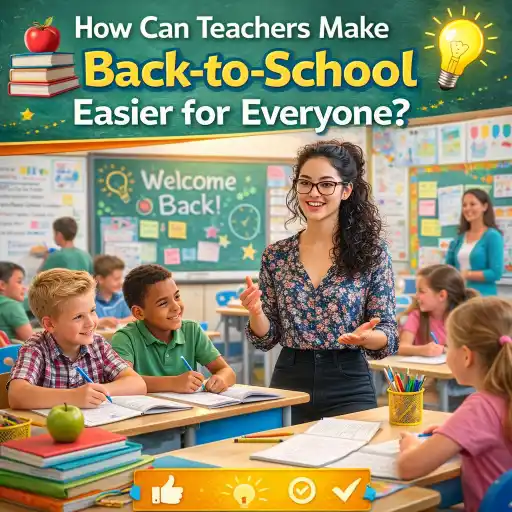
1) Welcome families with a simple routine. Greet each child by name, share one positive note about the child, and give a short goodbye ritual. Keep goodbyes brief and loving. See ideas in Easing Drop-Off Anxiety.
2) Help anxious children with small steps: offer a comfort item, sit with them briefly, or give an adult helper for 5–10 minutes. Model confidence — children read your feelings.
3) Communicate with families daily in a short way: a quick note, photo, or two-sentence message. Share one thing the child did well and one plan for the day. This builds trust fast (5 Ways to Make Back to School Fun).
4) Invite families to visit or join the first-week activities. Give a one-page guide for home routines to match your classroom language. Consistency between home and school helps children adjust.
5) If a child struggles after two weeks, gather simple data: when, where, and who. Work with the family and your director to try small supports. If behavior is severe or safety is at risk, refer to specialists early.
How do I manage behavior and keep the group safe every day?
1) Set clear expectations and use positive reinforcement. Teach expected behaviors and praise effort. Short, specific praise helps others repeat the behavior (Mastering Classroom Management).
2) Use calm redirection and brief coaching (time-in). Teach skills like asking, sharing, and calming instead of using long time-outs. Many simple classroom strategies are in Classroom Management in Preschool.
3) Plan for safety: set supervision zones, name helpers, and post emergency steps. Make a daily cleaning and safety checklist. For health and injury prevention guidance, see the CDC safety recommendations and the ChildCareEd safety resources like Protect Your Back Buy Now $0.00.
4) Train staff together so everyone uses the same routines, cues, and rules. Consider short in-house practice sessions or an online course for refreshers. For emotional climate and program calm, see Developing Program Tranquility Buy Now $35.00.
FAQ (short answers):
- Q: How long should circle time be? A: 5–10 minutes for toddlers, 10–20 for preschoolers.
- Q: How many rules? A: 3–5 clear, positive rules.
- Q: When to call for outside help? A: If a child’s behavior is intense, long-lasting, or harms learning.
- Q: Where to find quick trainings? A: Check ChildCareEd course pages like Back-to-School Success.
Conclusion
Back-to-school success comes from small, steady steps. Focus on 1) a simple room plan, 2) teaching one routine at a time, 3) short family communication, and 4) consistent staff responses for safety and behavior. Try one change this week—maybe a visual schedule or a cleanup song—and build from there. You are doing important work. Use the linked resources on ChildCareEd and trusted sites like the CDC when you need detailed guides. state requirements vary - check your state licensing agency. Good luck — small routines and kind practice make big differences.
1) Make a short plan. Write one-sentence goals for each part of the day (arrival, circle time, play, snack, nap, dismissal). Keep the plan on one page. For ideas, see Preschool Lesson Plan Ideas.1) Teach one routine at a time. Start with arrival or circle time. Model the steps, practice 3–5 times, and praise small successes. See step-by-step ideas in Transition Trouble?.- Lesson Planning for Infants and Toddlers
- Building a Back-to-School Routine: Balancing Homework, Extracurriculars, and Family Time
- CDA Certification en Español: Recursos y Consejos para Educadores Bilingües
- 💛🧩 ¿Cómo puedo hacer que mi enseñanza sea inclusiva para los niños con autismo?
- How Can DC Child Care Programs Keep Staff During Workforce Shortages?
- Why Child Care Owners Need an Exit Plan
- How can teachers make back-to-school easier for everyone?
- How is online childcare training helping New York educators deliver better early childhood education?
- Celebrando la amistad en el cuidado infantil durante el Día de los Mejores Amigos
- Canciones, juegos y preguntas de círculo para niños
- Cómo simplificar la capacitación para sus empleados de daycare
- How can infant teachers use Safe Sleep Training to keep babies safe?
- What Makes Task Cards a Teacher’s Time-Saving Favorite?
- How Can Providers Teach Children to Notice When a Friend Needs Space?
- What Should You Do When Older Children Say After-School Rules Are for Babies?
- What Should Experienced Child Care Staff Review in a Safe Sleep Refresher?
- How Can Early Childhood Teachers Encourage Problem-Solving Without Giving the Answer?
- How Can Teachers Help Children Rejoin Play After a Conflict?
- How Can Teachers Help Children Understand Personal Space and Boundaries?
- How Can Teachers Support Children Who Become Upset When They Lose a Game?
