When families see only blocks, paint, or pretend play, they may miss the rich learning taking place underneath. Providers can make that learning visible through purposeful explanations, authentic documentation, and respectful partnerships; for a deeper foundation, explore The Best Promotion is Play  Buy Now $24.00 to strengthen classroom practice and connect play with children’s cognitive, physical, social, and emotional development.
Why Does Making Play Visible Matter?
Families understandably want to know that their children are learning. Some may associate learning with worksheets, letters copied on paper, or an adult-led lesson. When they see children pouring water, negotiating roles, or rebuilding a tower, they may recognize enjoyment but not the intentional learning embedded in the experience.
That uncertainty is not a failure of families. It is an invitation for providers to explain their professional decisions in accessible language. NAEYC emphasizes that play supports cognitive, language, literacy, social, emotional, and physical development, while teachers intentionally design environments and interactions around meaningful learning goals.
Clear communication also strengthens trust. Families learn that play is not a break from teaching; it is a primary context for #learning. Strong partnerships help providers understand children’s interests and cultures, and they help families continue playful learning at home.
What Learning Can Families See in Everyday Play?
Begin with a concrete episode rather than a broad statement such as “play supports development.” Describe what the child did, said, tried, and changed. A block-building experience, for example, may involve spatial reasoning, measurement, balance, fine-motor coordination, vocabulary, persistence, and collaboration.
- In dramatic play, children use symbolic thinking, storytelling, vocabulary, social roles, and perspective taking.
- At a water or sand table, children predict, compare, measure, observe cause and effect, and practice coordination.
- During art, children strengthen hand control, plan representations, make choices, and communicate ideas.
- In outdoor play, children develop balance, strength, body awareness, risk assessment, and cooperation.
- In games with rules, children practice memory, attention, turn-taking, flexibility, and self-regulation.
NAEYC’s guidance on talking with parents about play recommends using familiar examples and avoiding unnecessary jargon. Instead of saying “executive function,” try “Your child remembered the rules, waited for a turn, and changed the plan when the tower fell.” Specific language gives families evidence they can understand.
How Can Providers Explain Play Without Sounding Defensive?
Families may ask, “When will my child do real schoolwork?” A defensive response can unintentionally create distance. A collaborative response acknowledges the question and then connects play to the family’s goal.
Try a three-part explanation:
- Affirm the goal: “You want your child to be ready for kindergarten and confident with early math.”
- Describe the evidence: “Today, your child counted five pretend apples, wrote a price sign, and explained why one basket held more.”
- Connect the development experience: “That play supported counting, early writing, comparison, language, and problem-solving.”
It is also helpful to explain the difference between self-directed and guided play. Children need time to initiate and direct their own activity, while educators may thoughtfully add materials, vocabulary, questions, or challenges. The goal is not to take over the play but to extend thinking while preserving children’s agency.
Use phrases such as:
- “We planned the environment to invite…”
- “I noticed your child was working on…”
- “The next step we are considering is…”
- “You may see this same skill at home when…”
Which Documentation Strategies Make Learning Visible?
Documentation should show a process, not merely display a finished product. A photograph of a completed tower is less informative than a short sequence showing the child planning, testing stability, revising the structure, and explaining the result.
Effective documentation may include:
- One or two photographs that show action and context.
- A brief, objective observation describing what the child did or said.
- The child’s words, dictation, drawing, writing, or work sample.
- A plain-language caption naming the developing skill.
- A possible next step for classroom or home exploration.
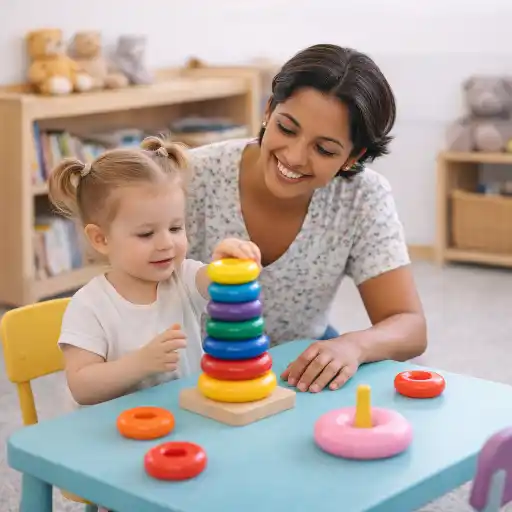 For example: “Maya placed the widest blocks at the base, tested the bridge with a car, and said, ‘It needs more support.’ She used spatial reasoning, prediction, problem solving, and engineering language. At home, invite her to build a bridge with boxes and test which objects can cross.
Portfolios and learning stories can help families follow growth over time. The documentation and assessment guidance explains that photographs, children’s quotes, observations, and work samples can communicate both the learning goal and the child’s thinking process. Documentation should remain respectful, understandable, and connected to planning.
Protect children’s privacy and keep technology from interrupting relationships. State requirements vary - check your state licensing agency, program policy, and family permissions before sharing images or digital records.
How Can Families Become Partners in the Learning Story?
Family engagement is more than sending information in one direction. Invite families to interpret, contribute, and extend the learning. Ask what the child builds, pretends, collects, or talks about at home. A family may reveal that a child has been repairing pretend appliances, cooking with grandparents, or drawing maps in another language—valuable context for planning.
Offer multiple ways to participate:
- Display a question beside documentation: “What does your child like to investigate at home?”
- Invite families to contribute photographs, words, songs, stories, or recycled materials.
- Send home simple invitations, such as sorting laundry, designing a menu, or measuring ingredients.
- Provide translated captions or interpretation when needed.
- Discuss documentation during conferences and ask families what they notice.
Family perspectives should be treated as expertise, not as an optional add-on. NAEYC’s principles of effective family engagement emphasize respect, reciprocity, communication, and shared goals. When families see their knowledge represented in the classroom, children experience greater continuity between home and care.
For providers seeking additional support, Family Voices Matter: Tools for Meaningful Collaboration Buy Now $55.00 offers practical strategies for culturally and linguistically responsive communication, family input, assessment, and goal setting.
What Common Mistakes Should Providers Avoid?
Even well-intentioned communication can obscure learning. The most common problem is using labels without evidence. Saying “This supports math” is less persuasive than describing how children counted, compared, measured, or revised a plan.
- Too much jargon: Replace technical terms with observable examples and define necessary vocabulary.
- Product-focused displays: Show children’s decisions, revisions, conversations, and strategies—not only the final craft.
- Over-documenting: Choose meaningful evidence rather than creating a large volume of paperwork that does not inform teaching.
- One-way communication: Ask families what they notice and value instead of assuming what they need to know.
- Deficit language: Begin with strengths and interests before discussing a concern or next goal.
- Interrupting play for photographs: Prioritize sustained interactions and children’s privacy over capturing a perfect image.
Directors can support consistency by giving teams a shared caption format: “What happened? What was the child working on? What evidence did we see? What might come next? How can families respond?” A short coaching conversation can help staff practice translating observations into family-friendly language.
How Can Providers Put These Ideas Into Practice This Week?
Start small. Choose one play episode that already occurs in the classroom and document it with intention. Observe before joining, record the child’s words, identify two or three developmental connections, and write a caption that a busy family can understand in under a minute.
- Choose a meaningful moment in block, dramatic, sensory, art, or outdoor play.
- Record observable actions and exact language without assumptions.
- Identify the learning: language, literacy, mathematics, science, social development, emotional development, or physical skills.
- Share one concise explanation with the family.
- Invite a response: “Does your child explore this at home?”
- Use the family’s response to plan the next experience.
Keep the tone warm and strengths-based. Families do not need a lecture; they need a window into their child’s thinking. When providers consistently connect play with evidence, intentional teaching, and family knowledge, the classroom becomes easier to understand, and the child’s capabilities become easier to celebrate.
Conclusion: How Can Providers Show Families the Learning Behind Play?
Providers show the learning behind play by making children’s thinking visible and understandable. Describe specific actions, connect them to developmental goals, document the process, and invite families to add their perspectives. Explain that play is not separate from learning: it is where children practice language, reasoning, movement, relationships, creativity, and self-regulation in meaningful contexts.
The strongest communication is ongoing, reciprocal, culturally responsive, and grounded in authentic observation. When families see the learning in a pretend store, a muddy investigation, or a carefully balanced tower, they can recognize what providers already know: purposeful play is serious, joyful, and intellectually rich work.
Frequently Asked Questions
How do I explain play to a family who wants more worksheets?
Respect the family’s goal, then provide specific evidence of skills developing through play. Explain how writing menus, counting objects, or solving a construction problem supports early academic foundations.
Does guided play mean the teacher controls the activity?
No. Guided play combines intentional adult planning with meaningful child choice. The educator may add materials, vocabulary, or a question while children retain agency.
What should a documentation caption include?
Include what happened, what the child said or did, the learning you observed, and a possible next step. Keep the language concise and understandable.
How often should families receive documentation?
Frequency depends on program capacity and requirements. Meaningful, sustainable documentation is more valuable than a large volume of rushed entries.
How can I include families who cannot attend events?
Use flexible communication, translated materials, brief digital or paper updates, home invitations, and questions that allow families to respond on their own schedule.
Explore related ChildCareEd courses:
- 45 Hour Child Growth and Development
- 45 Hour Preschool Methods and Materials
- Bienvenido! Welcoming All Families
- Birth to Five CDA Credential with Portfolio Review
- 45 Hour School Age Methods and Materials
- CDA Bridge Bundle: Family Child Care
- Play, Learn, Grow
- Creating Engaging and Meaningful Learning Experiences
- Texas Director Credential
- Montessori Cultural Activities: Exploring the World Through Play and Learning
- 10 Ejemplos de Cómo la Cultura Influye en el Desarrollo Infantil
- Proporciones de Cuidado Infantil y Tamaños de Grupo por Edad en Virginia (Guía Rápida para Centros y Hogares)
- Cute Fall Picture Ideas Teachers Can Try in the Classroom
- Capacitación CDA gratuita en Illinois
- How Do Art Activities Support Cognitive Growth in North Dakota Preschoolers?
- Celebrando la amistad en el cuidado infantil durante el Día de los Mejores Amigos
- Canciones, juegos y preguntas de círculo para niños
- Can Superhero Day Capes and Pretend Play Teach Children to Help Others?
- What Does Sesame Street Still Teach Us About Early Learning?
- How can I encourage child-led learning without losing structure?
- Bring the Pumpkin Patch Inside: Dramatic Play Ideas for Preschool
- How Can Child Care Providers Help Families Understand Play-Based Learning?
- How Can Child Care Providers Share Developmental Concerns with Sensitivity?
- How Can Child Care Providers Strengthen Language and Literacy Development?
- How Can Providers Show Families the Learning Behind Play?
- How Can Child Care Providers Help Families See the Learning Hidden Inside Messy Play?
- What Can Providers Say When Families Compare Their Child With Another Child?
- How Can Child Care Providers Help Children Understand How Community Helpers Contribute?
- How Can You Clean Up Mixed-Material Play Without Dismantling Children’s Ideas?
- How Can Providers Explain Different Classroom Expectations to Families with Siblings?
